


































Sustainable innovation research has emerged as one of the most important intellectual and technological movements of the modern era. As climate change intensifies, biodiversity declines, pollution increases, and natural resources become increasingly strained, societies around the world are being forced to rethink the foundations of economic growth and industrial development. Traditional industrial systems, which once prioritized efficiency and expansion above all else, are now being challenged by the urgent need for environmental sustainability and long-term ecological balance.
In response, researchers, engineers, policymakers, entrepreneurs, and environmental scientists are working together to develop innovative solutions capable of transforming the relationship between humanity and the planet. Sustainable innovation research seeks not only to create cleaner technologies but also to redesign entire systems of production, consumption, transportation, energy generation, agriculture, and urban development.
Unlike earlier environmental efforts focused mainly on regulation and conservation, modern sustainable innovation emphasizes proactive transformation. The goal is not simply to reduce environmental damage but to create regenerative systems capable of supporting both economic prosperity and ecological resilience simultaneously.
This shift represents one of the greatest research and innovation challenges in human history. The future of civilization may depend on humanity’s ability to innovate sustainably while maintaining social stability, economic opportunity, and technological progress.
The Origins of Sustainable Innovation Research
The roots of sustainable innovation research can be traced back to the environmental movements of the twentieth century. During the Industrial Revolution, rapid industrialization dramatically improved productivity and economic growth but also produced severe pollution, deforestation, habitat destruction, and public health crises.
By the mid-twentieth century, scientists and activists began warning that unlimited industrial expansion could threaten the planet’s ecological systems. Rachel Carson’s influential 1962 book Silent Spring exposed the environmental consequences of pesticide use and helped launch modern environmental awareness.
In the 1970s, the global oil crisis revealed the vulnerabilities of fossil fuel dependence. Governments and researchers began exploring alternative energy systems and resource conservation strategies.
The concept of sustainable development gained international prominence in 1987 through the Brundtland Report, which defined sustainability as development that meets present needs without compromising future generations’ ability to meet their own needs.
Over time, sustainability evolved from a primarily environmental concern into a multidimensional framework incorporating:
- Economic sustainability
- Social equity
- Environmental protection
- Resource efficiency
- Climate resilience
- Technological responsibility
Innovation research became increasingly central to sustainability because traditional industrial systems proved incapable of addressing large-scale environmental challenges effectively.
Today, sustainable innovation research spans numerous disciplines and industries, influencing everything from renewable energy to architecture, transportation, agriculture, finance, and artificial intelligence.
Renewable Energy and the Transformation of Power Systems
One of the most significant areas of sustainable innovation research involves renewable energy technologies. Fossil fuels have powered industrial civilization for more than two centuries, but their environmental consequences—including greenhouse gas emissions and air pollution—have accelerated the global climate crisis.
Researchers are now focused on developing cleaner, more efficient, and more scalable energy systems capable of replacing carbon-intensive infrastructure.
Solar Energy Innovation
Solar power has undergone remarkable technological advancement over the past two decades. Early photovoltaic systems were expensive and relatively inefficient. Modern solar technologies are far more affordable and accessible due to advances in materials science, manufacturing, and energy storage.
Researchers continue exploring:
- Perovskite solar cells
- Transparent solar materials
- Flexible photovoltaic surfaces
- Solar-integrated architecture
- High-efficiency energy conversion systems
Innovation research also investigates how solar systems can be integrated into urban infrastructure, transportation networks, and decentralized energy grids.
Wind Energy Development
Wind power has become another cornerstone of sustainable energy innovation. Offshore wind farms, advanced turbine designs, and AI-driven predictive maintenance systems are dramatically increasing efficiency.
Research now focuses on improving turbine durability, reducing environmental impact on wildlife, and enhancing energy storage integration.
Energy Storage Technologies
Renewable energy systems face a major challenge: intermittency. Solar and wind energy production varies depending on weather and environmental conditions.
As a result, battery research has become one of the most critical fields in sustainable innovation.
Scientists are developing next-generation storage systems including:
- Solid-state batteries
- Sodium-ion batteries
- Hydrogen fuel systems
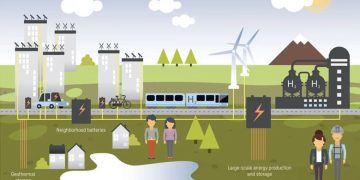
- Grid-scale storage solutions
- Thermal energy storage technologies
Efficient storage systems are essential for creating stable renewable energy infrastructure capable of supporting modern economies.
Smart Cities and Sustainable Urban Innovation
Urbanization represents one of the defining demographic trends of the modern world. More than half of the global population now lives in cities, and urban areas consume enormous amounts of energy, water, and materials.
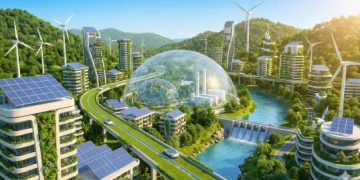
Sustainable innovation research increasingly focuses on smart cities—urban environments designed to optimize efficiency, reduce emissions, and improve quality of life through advanced technologies and integrated planning.
Intelligent Infrastructure
Modern smart city research explores how sensors, artificial intelligence, and connected systems can improve urban management.
Examples include:
- Smart traffic systems
- Energy-efficient buildings
- Intelligent water management
- Automated waste collection
- Real-time pollution monitoring
- Adaptive public transportation systems
Researchers analyze how data-driven urban infrastructure can reduce congestion, conserve resources, and improve environmental performance.
Green Architecture
Buildings account for a significant portion of global energy consumption and carbon emissions. Sustainable architecture research focuses on creating structures that minimize environmental impact while enhancing human well-being.
Innovations include:
- Passive cooling systems
- Green roofs
- Carbon-neutral construction materials
- Modular building systems
- Biophilic design principles
- Self-sustaining energy systems
Architects and engineers increasingly collaborate with environmental scientists and behavioral researchers to create buildings optimized for both sustainability and human health.
Urban Resilience
Climate change has increased the frequency of extreme weather events including floods, heatwaves, and hurricanes. Urban resilience research investigates how cities can adapt to environmental disruptions.
Sustainable innovation now includes disaster-resistant infrastructure, flood management systems, climate-adaptive architecture, and decentralized energy networks capable of functioning during emergencies.

Circular Economy Research and Waste Reduction
Traditional industrial systems operate according to a linear economic model:
Extract → Produce → Consume → Discard
This approach generates enormous amounts of waste and resource depletion. Sustainable innovation research increasingly promotes circular economy systems designed to minimize waste and maximize resource efficiency.
Product Lifecycle Innovation
Researchers explore how products can be designed for durability, repairability, recycling, and reuse.
Examples include:
- Modular electronics
- Biodegradable packaging
- Recyclable textiles
- Remanufactured industrial components
- Compostable consumer products
Companies increasingly adopt product-as-a-service models where consumers lease products rather than own them outright, encouraging manufacturers to prioritize longevity and repairability.
Industrial Symbiosis
Industrial symbiosis research investigates how waste from one industry can become raw material for another.
For example:
- Agricultural waste converted into biofuel
- Food waste transformed into fertilizers
- Industrial heat reused for district energy systems
- Recycled plastics integrated into manufacturing
These systems reduce environmental impact while improving economic efficiency.
Advanced Recycling Technologies
Innovation research also focuses on improving recycling systems through robotics, machine vision, chemical recycling, and AI-powered sorting technologies.
Researchers seek to overcome limitations of traditional recycling methods, particularly for complex materials such as electronic waste and mixed plastics.
Sustainable Agriculture and Food Innovation
Global food systems face immense challenges including population growth, climate change, soil degradation, and water scarcity. Sustainable innovation research plays a crucial role in redesigning agriculture for long-term resilience.
Precision Agriculture
Modern farms increasingly use sensors, drones, AI analytics, and satellite imaging to optimize agricultural productivity while reducing resource consumption.
Precision agriculture technologies allow farmers to:
- Minimize water use
- Reduce fertilizer application
- Improve crop monitoring
- Predict pest outbreaks
- Increase yield efficiency
Researchers investigate how digital agriculture can support food security while minimizing environmental damage.
Alternative Proteins
Livestock production contributes significantly to greenhouse gas emissions, land use, and water consumption. Researchers are therefore developing alternative protein systems including:
- Plant-based proteins
- Cultivated meat
- Fermentation-derived proteins
- Insect-based food systems
These innovations aim to reduce the environmental footprint of global food production while meeting rising nutritional demands.
Vertical Farming
Urban agriculture and vertical farming systems represent another major area of innovation research. Indoor farms use controlled environments, hydroponics, and LED lighting to grow crops efficiently within urban spaces.
These systems reduce transportation emissions, conserve water, and enable year-round food production.
Artificial Intelligence and Environmental Research
Artificial intelligence increasingly supports sustainable innovation research by improving environmental modeling, resource optimization, and predictive analysis.
AI systems assist researchers in:
- Climate modeling
- Biodiversity monitoring
- Energy optimization
- Environmental forecasting
- Carbon tracking
- Ecosystem analysis
Machine learning algorithms can process enormous environmental datasets, identifying trends and predicting risks more effectively than traditional analytical methods.
For example, AI-powered satellite systems monitor deforestation, glacier melting, ocean pollution, and wildlife populations in real time.
Researchers also use AI to optimize renewable energy grids and improve industrial efficiency.
However, sustainable innovation researchers also examine the environmental costs of AI itself. Large-scale data centers consume significant amounts of electricity and water. As AI systems become more powerful, reducing computational energy consumption becomes increasingly important.
Green Transportation Innovation
Transportation remains one of the largest sources of global carbon emissions. Sustainable innovation research focuses heavily on redesigning mobility systems.
Electric Vehicles
Electric vehicle technology has advanced rapidly due to improvements in battery efficiency, charging infrastructure, and manufacturing scalability.
Researchers continue working on:
- Longer battery life
- Faster charging systems
- Lightweight materials
- Battery recycling
- Sustainable mineral sourcing
Hydrogen Transportation
Hydrogen fuel systems may provide solutions for sectors where battery systems face limitations, such as aviation, shipping, and heavy industry.
Research focuses on improving hydrogen production efficiency and reducing infrastructure costs.
Autonomous and Shared Mobility
Smart transportation systems may reduce emissions through:
- Shared autonomous vehicles
- Intelligent traffic optimization
- Integrated public transit systems
- Mobility-as-a-service platforms
Innovation researchers study how mobility systems can become both environmentally sustainable and socially accessible.
The Economics of Sustainable Innovation
One of the major debates surrounding sustainability concerns economic feasibility. Critics sometimes argue that environmental policies hinder economic growth. However, sustainable innovation research increasingly demonstrates that green technologies can generate new industries, jobs, and investment opportunities.
The global green economy now includes sectors such as:
- Renewable energy
- Sustainable finance
- Clean manufacturing
- Environmental consulting
- Circular economy logistics
- Green construction
- Carbon management technologies
Governments increasingly use policy tools such as carbon pricing, green subsidies, and environmental regulations to encourage innovation.
Researchers study how financial systems can support sustainability transitions while maintaining economic stability.
Ethical and Social Dimensions of Sustainability
Sustainable innovation is not purely technological. It also involves ethical and social considerations.
Researchers examine questions such as:
- Who benefits from green technologies?
- How can sustainability transitions remain socially equitable?
- What happens to workers displaced from carbon-intensive industries?
- How can developing countries participate fairly in green innovation?
The concept of a “just transition” has become central to sustainability research. The goal is to ensure that environmental progress does not increase inequality or social instability.
Public participation also plays a critical role. Sustainable systems require behavioral change, community engagement, and political support.
Innovation research therefore integrates psychology, sociology, economics, and governance alongside engineering and environmental science.
Climate Adaptation and Resilience Research
Even with aggressive emissions reductions, some climate impacts are now unavoidable. Sustainable innovation research increasingly includes adaptation strategies designed to help societies cope with changing environmental conditions.
Key research areas include:
- Coastal protection systems
- Climate-resilient crops
- Water scarcity management
- Heat-resistant infrastructure
- Disaster prediction technologies
- Emergency response systems
Researchers emphasize resilience—the ability of systems to withstand shocks and recover effectively.
Climate adaptation innovation will likely become one of the defining research priorities of the twenty-first century.
The Future of Sustainable Innovation Research
The future of sustainable innovation research will depend on humanity’s ability to integrate technology, policy, economics, and ethics into coordinated global action.
Several emerging trends may shape the future:
Carbon-Negative Technologies
Researchers are developing systems capable of actively removing carbon dioxide from the atmosphere.
Synthetic Biology
Biological engineering may produce sustainable materials, fuels, and food systems.
Decentralized Energy Networks
Communities may increasingly generate and manage local renewable energy independently.
Regenerative Design
Future systems may restore ecosystems rather than merely reducing damage.
AI-Driven Sustainability
Artificial intelligence may optimize environmental systems at unprecedented scale.
Ultimately, sustainable innovation research represents more than a scientific challenge—it represents a civilizational transformation. Humanity is entering an era where technological progress must align with ecological limits and social responsibility.
The success of this transition will determine not only economic prosperity but also the long-term stability of the planet itself.













Discussion about this post