




























Space exploration has always represented one of humanity’s most ambitious and imaginative pursuits. From ancient civilizations studying the night sky to modern scientists designing interplanetary missions, the desire to explore space reflects a fundamental aspect of human nature: curiosity about the unknown. In the twenty-first century, however, space exploration is no longer driven solely by scientific curiosity or geopolitical rivalry. It has evolved into a complex ecosystem of innovation research involving governments, private corporations, universities, engineers, data scientists, biologists, and entrepreneurs working together to redefine humanity’s future beyond Earth.
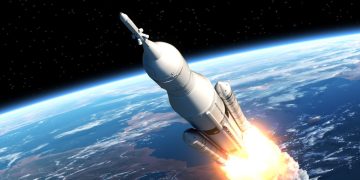
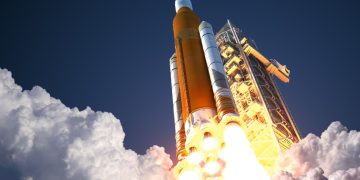
Modern space innovation research now extends far beyond launching rockets into orbit. Researchers are investigating sustainable space habitats, artificial intelligence-driven spacecraft, interplanetary resource extraction, autonomous robotics, deep-space medicine, advanced propulsion systems, and even the long-term possibility of human civilization becoming multi-planetary.
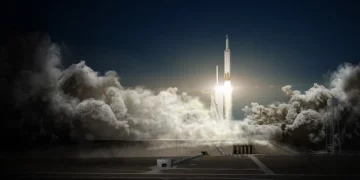
The growing commercialization of space has accelerated innovation dramatically. Companies such as SpaceX, Blue Origin, Rocket Lab, and many emerging aerospace startups have transformed the economics of launch systems and satellite technology. At the same time, international space agencies continue to pursue scientific missions that expand humanity’s understanding of the universe.
Space innovation research now sits at the intersection of engineering, physics, biology, computer science, environmental science, materials engineering, and international policy. The future of space exploration will likely depend not only on technological advancement but also on humanity’s ability to cooperate globally while managing ethical, economic, and environmental challenges.
The Historical Foundations of Space Innovation
The modern era of space exploration began during the Cold War. The launch of Sputnik 1 by the Soviet Union in 1957 marked humanity’s first successful artificial satellite and initiated the Space Race between the Soviet Union and the United States.
This competition accelerated enormous technological innovation. Governments invested heavily in aerospace engineering, telecommunications, materials science, and computing technologies. The Apollo program, culminating in the Moon landing in 1969, demonstrated humanity’s ability to achieve extraordinary scientific and engineering goals within a relatively short period.
The early decades of space exploration produced innovations that later transformed everyday life, including:
- Satellite communications
- GPS navigation
- Weather forecasting systems
- Advanced computing
- Miniaturized electronics
- Medical imaging technologies
- Materials engineering advances
However, space exploration remained extremely expensive and largely dependent on government funding throughout much of the twentieth century.
The twenty-first century introduced a major shift: the rise of private-sector space innovation.
Commercial Space Research and the New Space Economy
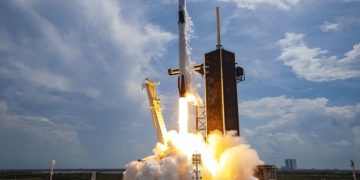
Private aerospace companies have fundamentally changed the economics and pace of space innovation research. Reusable rocket systems, commercial satellite networks, and private investment have dramatically reduced launch costs while increasing technological competition.
Reusable Rocket Technology
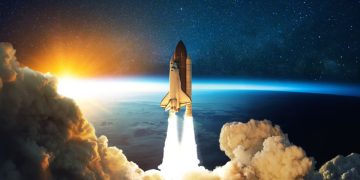
One of the most important breakthroughs in modern space innovation is reusable launch systems. Traditional rockets were discarded after single use, making space missions extremely expensive.
Reusable rocket technology allows launch vehicles to return safely and be flown multiple times. This innovation significantly lowers mission costs and increases launch frequency.
Researchers continue improving:
- Landing precision systems
- Lightweight materials
- Thermal protection technologies
- Autonomous flight control systems
- Fuel efficiency
Reduced launch costs are enabling broader access to space for universities, startups, and developing nations.
Satellite Innovation
Satellite technology has evolved rapidly due to miniaturization, AI integration, and advanced manufacturing methods.
Modern satellite systems support:
- Global internet connectivity
- Earth observation
- Climate monitoring
- Navigation systems
- Agricultural analysis
- Disaster response
- National security operations
Small satellites and CubeSats allow research institutions and startups to conduct space missions at far lower costs than traditional satellite systems.
Space Tourism
Commercial space tourism has emerged as another growing sector. Companies are developing systems designed to carry private citizens into suborbital and orbital space.
Although still limited to wealthy participants, researchers view early space tourism as part of a broader long-term effort to expand human activity beyond Earth.
Artificial Intelligence and Autonomous Space Systems
Artificial intelligence has become increasingly important in space innovation research because deep-space missions require systems capable of operating autonomously over long distances and extended periods.
Autonomous Navigation
Spacecraft traveling to distant planets cannot rely entirely on real-time human control due to communication delays. AI systems therefore assist with:
- Navigation
- Hazard detection
- Landing procedures
- Resource management
- Mission optimization
Mars rovers already use autonomous decision-making systems to navigate complex terrain independently.
AI-Assisted Scientific Discovery
Space telescopes and planetary missions generate enormous amounts of scientific data. AI systems help researchers analyze images, identify patterns, and detect anomalies more efficiently.
Machine learning assists astronomers in discovering:
- Exoplanets
- Black holes
- Gravitational wave events
- Cosmic structures
- Atmospheric signatures
Future AI systems may play increasingly active roles in scientific hypothesis generation and experimental planning.
Robotic Exploration
Robotics represents one of the most important fields within space innovation research. Human space travel remains expensive and dangerous, making robotic systems essential for exploration.
Researchers develop robots capable of:
- Planetary surface exploration
- Autonomous construction
- Equipment maintenance
- Resource extraction
- Hazardous environment operations
Future lunar and Martian missions may depend heavily on robotic infrastructure established before human arrival.
Mars Research and the Dream of Colonization
Mars has become the central focus of long-term human space exploration plans. Scientists consider Mars one of the most realistic candidates for future human settlement due to its relative proximity and environmental characteristics.
Scientific Research on Mars
Mars research seeks to answer fundamental scientific questions:
- Did Mars once support life?
- Can humans survive long-term on Mars?
- How can Martian resources support exploration?
- What does Mars reveal about planetary evolution?
Robotic missions continue studying Martian geology, atmosphere, and climate history.
Human Settlement Challenges
Establishing human presence on Mars presents enormous technical and biological challenges including:
- Radiation exposure
- Low gravity effects
- Psychological isolation
- Limited resources
- Extreme temperatures
- Food production
- Oxygen generation
Innovation researchers study how closed-loop ecosystems, advanced habitats, and resource recycling systems could support long-duration human missions.
In-Situ Resource Utilization
Transporting supplies from Earth is extremely expensive. Researchers therefore investigate how Martian resources can support local production systems.
Potential innovations include:
- Extracting water from Martian soil
- Producing oxygen from atmospheric carbon dioxide
- Manufacturing building materials locally
- Growing food in controlled environments
These systems are essential for sustainable extraterrestrial settlement.

Space Medicine and Human Biology Research
Space environments place extraordinary stress on the human body. Biomedical innovation research therefore plays a critical role in future space exploration.
Effects of Microgravity
Extended exposure to microgravity affects:
- Bone density
- Muscle mass
- Cardiovascular systems
- Vision
- Immune function
- Neurological systems
Researchers study how artificial gravity systems, exercise protocols, and pharmaceutical interventions may reduce long-term health risks.
Psychological Challenges
Isolation, confinement, and communication delays create significant psychological pressures during long-duration missions.
Space psychology research investigates:
- Team dynamics
- Stress management
- Cognitive performance
- Mental resilience
- Virtual reality support systems
These studies are increasingly relevant not only for space missions but also for extreme Earth environments.
Space-Based Medical Innovation
Microgravity environments also provide unique research opportunities. Scientists study how biological systems behave differently in space, leading to discoveries that may improve healthcare on Earth.
Research conducted aboard the International Space Station contributes to advances in:
- Protein crystallization
- Cancer research
- Tissue engineering
- Stem cell science
- Pharmaceutical development
Lunar Innovation and the Return to the Moon
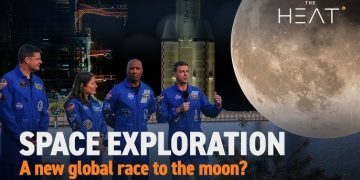
After decades of limited lunar exploration, many nations and companies are once again focusing on the Moon as a strategic research and development platform.
Lunar Infrastructure
Researchers explore how lunar bases could support scientific research, resource extraction, and preparation for deeper space missions.
Potential innovations include:
- Lunar habitats
- Solar energy systems
- Autonomous mining equipment
- Radiation shielding technologies
- 3D-printed lunar structures
Helium-3 and Resource Research
The Moon contains materials such as helium-3 that some researchers believe could potentially support future fusion energy technologies.
Lunar resource extraction remains highly experimental but represents an important area of long-term innovation research.
International Collaboration
Modern lunar exploration increasingly involves international cooperation among governments and private organizations.
The Moon may eventually become a testing ground for new models of global scientific collaboration.
Deep Space Exploration and Interstellar Research
While Mars and the Moon dominate near-term goals, some researchers investigate technologies for much deeper space exploration.
Advanced Propulsion Systems
Traditional chemical rockets are insufficient for efficient interstellar travel. Researchers study alternative propulsion methods including:
- Nuclear propulsion
- Ion engines
- Solar sails
- Fusion propulsion
- Antimatter concepts
Although many remain theoretical, propulsion innovation is essential for long-distance missions.
Space Telescopes and Cosmic Observation
Advanced telescopes continue transforming humanity’s understanding of the universe.
Innovation research focuses on improving:
- Imaging resolution
- Infrared observation
- Exoplanet detection
- Dark matter analysis
- Cosmological modeling
Future telescopes may identify potentially habitable worlds beyond our solar system.
Search for Extraterrestrial Life
Astrobiology research explores whether life exists elsewhere in the universe.
Researchers investigate:
- Extremophile organisms
- Planetary habitability
- Biosignatures
- Ocean worlds such as Europa and Enceladus
- Atmospheric chemistry on exoplanets
The discovery of extraterrestrial life would represent one of the most significant scientific breakthroughs in human history.
Space Sustainability and Orbital Debris
As space activity increases, sustainability has become a major concern.
Orbital Congestion
Thousands of satellites now orbit Earth, creating risks of collision and debris accumulation.
Researchers study:
- Debris tracking systems
- Satellite traffic management
- Active debris removal technologies
- Sustainable orbital policies
Environmental Impact
Rocket launches and satellite manufacturing also produce environmental consequences on Earth.
Innovation research increasingly considers how space exploration can remain environmentally responsible.
Ethical Governance
Questions surrounding resource ownership, militarization, and commercial exploitation of space require international legal and ethical frameworks.
Space governance research examines how humanity can prevent conflict while promoting scientific cooperation.
Space Innovation and the Global Economy
The space industry is becoming a major economic sector. Analysts predict that the global space economy could eventually exceed trillions of dollars in value.
Emerging industries include:
- Satellite internet services
- Space manufacturing
- Asteroid mining
- Orbital logistics
- Space tourism
- Lunar infrastructure
- Deep-space communications
Governments increasingly view space capability as strategically important for both economic competitiveness and national security.
Innovation ecosystems centered around aerospace technology continue expanding worldwide.
Education and the Future of Space Research
Future space innovation will require highly interdisciplinary talent. Researchers and engineers must combine expertise in:
- Aerospace engineering
- Artificial intelligence
- Biology
- Robotics
- Materials science
- Environmental systems
- Data analytics
Educational institutions increasingly develop specialized space research programs and international collaboration networks.
Public interest in space exploration also plays an important role in inspiring future generations of scientists and innovators.
The Future of Humanity in Space
The long-term future of space innovation research raises profound philosophical and civilizational questions.
Will humans eventually establish permanent settlements beyond Earth?
Could space-based industries transform global economies?
How will humanity govern extraterrestrial societies?
Can space exploration help ensure long-term species survival?
Some researchers argue that becoming a multi-planetary civilization may eventually become necessary for protecting humanity from existential risks such as asteroid impacts, environmental collapse, or planetary-scale disasters.
Others caution that humanity must first solve major social and environmental problems on Earth before expanding aggressively into space.
Regardless of perspective, space innovation research will continue shaping the future of science, technology, economics, and human imagination.
Space exploration ultimately represents more than technological achievement. It reflects humanity’s enduring drive to explore, discover, and expand the boundaries of possibility itself.













Discussion about this post