




























techfusionnews
  • Home
  • Digital Lifestyle
    Do You Really Own Your Digital Content, or Are You Just Borrowing It?

    Do You Really Own Your Digital Content, or Are You Just Borrowing It?

    Smart Green Architecture: The Ultimate Anti-Aging Secret?

    How Are Digital Economies Reshaping Local Communities?

    Digital Art: Can It Truly Capture Human Emotion, or Is It Just Pixels?

    Digital Art: Can It Truly Capture Human Emotion, or Is It Just Pixels?

    Is Artificial Reality More Authentic Than Real Life in Certain Situations?

    Is Artificial Reality More Authentic Than Real Life in Certain Situations?

    Is Your Digital Library a True Reflection of Who You Are?

    Is Your Digital Library a True Reflection of Who You Are?

    Can You Truly Escape Digital Overload with a Simple App?

    Can You Truly Escape Digital Overload with a Simple App?

  • Green Tech & Wellness
    How Does Eco-Conscious Travel Affect Your Mental Health?

    How Does Eco-Conscious Travel Affect Your Mental Health?

    Bio-Based Materials in Wearables: Can They Prevent Chronic Illness?

    Bio-Based Materials in Wearables: Can They Prevent Chronic Illness?

    Smart Green Architecture: The Ultimate Anti-Aging Secret?

    Smart Green Architecture: The Ultimate Anti-Aging Secret?

    How Can Eco-Friendly Virtual Reality Enhance Mental Clarity?

    How Can Eco-Friendly Virtual Reality Enhance Mental Clarity?

    Can Eco-Centric Tech Improve Your Neuroplasticity?

    Can Eco-Centric Tech Improve Your Neuroplasticity?

    How Much of Your Personality Is Crafted by Social Media Filters?

    How Much of Your Personality Is Crafted by Social Media Filters?

  • AI
    Can AI Explore Parallel Universes Through Data?

    Can AI Explore Parallel Universes Through Data?

    Will AI Ever Create Art That Challenges Our Understanding of Reality?

    Will AI Ever Create Art That Challenges Our Understanding of Reality?

    Can AI Identify Patterns in Nature That Humans Have Yet to Discover?

    Can AI Identify Patterns in Nature That Humans Have Yet to Discover?

    AI Capable of Decoding the Concept of Time Itself?

    AI Capable of Decoding the Concept of Time Itself?

    Can AI Predict the Future of Human Consciousness?

    Can AI Predict the Future of Human Consciousness?

    How Could AI Be Used to Recreate Lost Historical Events?

    How Could AI Be Used to Recreate Lost Historical Events?

  • Space Exploration
    How Does Space Radiation Affect Astronauts’ Health?

    How Does Space Radiation Affect Astronauts’ Health?

    Can We Mine Asteroids for Resources in the Future?

    Can We Mine Asteroids for Resources in the Future?

    Why Haven’t We Found Extraterrestrial Civilizations Yet?

    Why Haven’t We Found Extraterrestrial Civilizations Yet?

    Can Artificial Intelligence Lead the Next Space Missions?

    Can Artificial Intelligence Lead the Next Space Missions?

    What if Earth’s Atmosphere Was Not Perfect for Life?

    What if Earth’s Atmosphere Was Not Perfect for Life?

    Will We Ever Find a Parallel Universe Beyond Our Own?

    Will We Ever Find a Parallel Universe Beyond Our Own?

  • Innovation & Research
    Robotics: The Key to Overcoming Labor Shortages in Science?

    Robotics: The Key to Overcoming Labor Shortages in Science?

    How Can Artificial Intelligence Foster Creativity in the Arts?

    How Can Artificial Intelligence Foster Creativity in the Arts?

    What If We Could Edit Human Memories—Should We?

    What If We Could Edit Human Memories—Should We?

    Can 3D Printing Transform the Medical Field?

    Can 3D Printing Transform the Medical Field?

    Blockchain: The Future of Transparent and Secure Research

    Blockchain: The Future of Transparent and Secure Research

    What Will the Next Big Breakthrough in Renewable Energy Look Like?

    What Will the Next Big Breakthrough in Renewable Energy Look Like?

  • All Tech
    Could Wearable Tech Unlock Hidden Human Abilities?

    Could Wearable Tech Unlock Hidden Human Abilities?

    Can Virtual Reality Be the Next Frontier in Therapy?

    Can Virtual Reality Be the Next Frontier in Therapy?

    Is Biohacking the Next Step in Human Evolution?

    Is Biohacking the Next Step in Human Evolution?

    What If Robots Could Create Their Own Cultural Movements?

    What If Robots Could Create Their Own Cultural Movements?

    Are We Prepared for the Ethics of AI-Driven Space Exploration?

    Are We Prepared for the Ethics of AI-Driven Space Exploration?

    New Mythology for the Digital Age

    New Mythology for the Digital Age

techfusionnews
  • Home
  • Digital Lifestyle
    Do You Really Own Your Digital Content, or Are You Just Borrowing It?

    Do You Really Own Your Digital Content, or Are You Just Borrowing It?

    Smart Green Architecture: The Ultimate Anti-Aging Secret?

    How Are Digital Economies Reshaping Local Communities?

    Digital Art: Can It Truly Capture Human Emotion, or Is It Just Pixels?

    Digital Art: Can It Truly Capture Human Emotion, or Is It Just Pixels?

    Is Artificial Reality More Authentic Than Real Life in Certain Situations?

    Is Artificial Reality More Authentic Than Real Life in Certain Situations?

    Is Your Digital Library a True Reflection of Who You Are?

    Is Your Digital Library a True Reflection of Who You Are?

    Can You Truly Escape Digital Overload with a Simple App?

    Can You Truly Escape Digital Overload with a Simple App?

  • Green Tech & Wellness
    How Does Eco-Conscious Travel Affect Your Mental Health?

    How Does Eco-Conscious Travel Affect Your Mental Health?

    Bio-Based Materials in Wearables: Can They Prevent Chronic Illness?

    Bio-Based Materials in Wearables: Can They Prevent Chronic Illness?

    Smart Green Architecture: The Ultimate Anti-Aging Secret?

    Smart Green Architecture: The Ultimate Anti-Aging Secret?

    How Can Eco-Friendly Virtual Reality Enhance Mental Clarity?

    How Can Eco-Friendly Virtual Reality Enhance Mental Clarity?

    Can Eco-Centric Tech Improve Your Neuroplasticity?

    Can Eco-Centric Tech Improve Your Neuroplasticity?

    How Much of Your Personality Is Crafted by Social Media Filters?

    How Much of Your Personality Is Crafted by Social Media Filters?

  • AI
    Can AI Explore Parallel Universes Through Data?

    Can AI Explore Parallel Universes Through Data?

    Will AI Ever Create Art That Challenges Our Understanding of Reality?

    Will AI Ever Create Art That Challenges Our Understanding of Reality?

    Can AI Identify Patterns in Nature That Humans Have Yet to Discover?

    Can AI Identify Patterns in Nature That Humans Have Yet to Discover?

    AI Capable of Decoding the Concept of Time Itself?

    AI Capable of Decoding the Concept of Time Itself?

    Can AI Predict the Future of Human Consciousness?

    Can AI Predict the Future of Human Consciousness?

    How Could AI Be Used to Recreate Lost Historical Events?

    How Could AI Be Used to Recreate Lost Historical Events?

  • Space Exploration
    How Does Space Radiation Affect Astronauts’ Health?

    How Does Space Radiation Affect Astronauts’ Health?

    Can We Mine Asteroids for Resources in the Future?

    Can We Mine Asteroids for Resources in the Future?

    Why Haven’t We Found Extraterrestrial Civilizations Yet?

    Why Haven’t We Found Extraterrestrial Civilizations Yet?

    Can Artificial Intelligence Lead the Next Space Missions?

    Can Artificial Intelligence Lead the Next Space Missions?

    What if Earth’s Atmosphere Was Not Perfect for Life?

    What if Earth’s Atmosphere Was Not Perfect for Life?

    Will We Ever Find a Parallel Universe Beyond Our Own?

    Will We Ever Find a Parallel Universe Beyond Our Own?

  • Innovation & Research
    Robotics: The Key to Overcoming Labor Shortages in Science?

    Robotics: The Key to Overcoming Labor Shortages in Science?

    How Can Artificial Intelligence Foster Creativity in the Arts?

    How Can Artificial Intelligence Foster Creativity in the Arts?

    What If We Could Edit Human Memories—Should We?

    What If We Could Edit Human Memories—Should We?

    Can 3D Printing Transform the Medical Field?

    Can 3D Printing Transform the Medical Field?

    Blockchain: The Future of Transparent and Secure Research

    Blockchain: The Future of Transparent and Secure Research

    What Will the Next Big Breakthrough in Renewable Energy Look Like?

    What Will the Next Big Breakthrough in Renewable Energy Look Like?

  • All Tech
    Could Wearable Tech Unlock Hidden Human Abilities?

    Could Wearable Tech Unlock Hidden Human Abilities?

    Can Virtual Reality Be the Next Frontier in Therapy?

    Can Virtual Reality Be the Next Frontier in Therapy?

    Is Biohacking the Next Step in Human Evolution?

    Is Biohacking the Next Step in Human Evolution?

    What If Robots Could Create Their Own Cultural Movements?

    What If Robots Could Create Their Own Cultural Movements?

    Are We Prepared for the Ethics of AI-Driven Space Exploration?

    Are We Prepared for the Ethics of AI-Driven Space Exploration?

    New Mythology for the Digital Age

    New Mythology for the Digital Age

No Result
View All Result
Plugin Install : Cart Icon need WooCommerce plugin to be installed.
techfusionnews
No Result
View All Result
Home All Tech

The Role of Robotics in Revolutionizing Manufacturing and Logistics

January 27, 2025
in All Tech, Innovation & Research
The Role of Robotics in Revolutionizing Manufacturing and Logistics

Introduction: The Growing Use of Robotics in Industrial Sectors

The integration of robotics into manufacturing and logistics is reshaping industries in profound ways. From assembly lines to warehousing and packaging, robots are streamlining operations, increasing efficiency, and improving safety. In fact, the use of robots in industrial settings has expanded exponentially in recent years, driven by advances in technology, artificial intelligence (AI), and machine learning. What once seemed like futuristic innovations are now commonplace in factories, warehouses, and logistics centers around the world.

At its core, robotics in industrial sectors is about enhancing productivity and automating repetitive, time-consuming tasks that were once performed by humans. However, it’s not just about replacing human labor; it’s about creating a synergistic relationship between robots and workers that maximizes productivity and safety while minimizing human error. The increasing use of industrial robots, collaborative robots (cobots), and autonomous systems is poised to be a cornerstone of the next industrial revolution. This revolution is marked by faster production cycles, more flexible manufacturing processes, and an overall shift toward smart factories and intelligent logistics systems.

This article will explore the growing role of robotics in manufacturing and logistics, comparing the various types of robots used in industrial settings, highlighting the ways robots are transforming supply chains, and examining the challenges and future of robotics in these fields.

Industrial Robots vs. Collaborative Robots (Cobots): The Differences and Applications of Various Robotic Technologies

In manufacturing and logistics, robotic systems are typically divided into two major categories: industrial robots and collaborative robots (cobots). While both types of robots have a role to play in revolutionizing industries, they are designed with different purposes and operational models in mind.

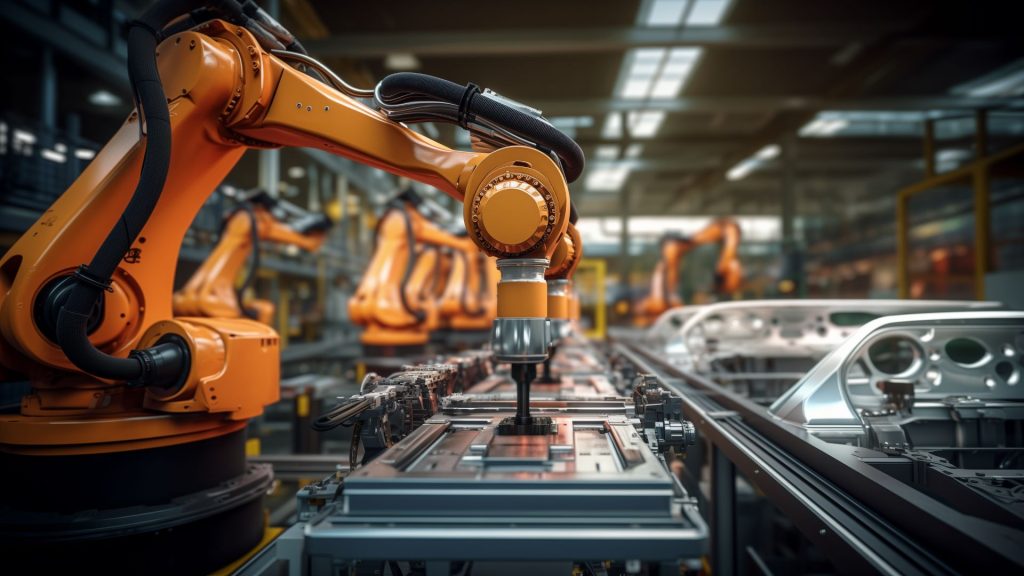
Industrial Robots have been used for decades in traditional manufacturing settings, particularly on assembly lines. These robots are large, heavy-duty machines designed to perform high-precision tasks, such as welding, painting, packaging, material handling, and assembly. Industrial robots typically operate in isolated environments where they are fenced off from human workers to ensure safety, as they are powerful and sometimes pose a risk of injury if they come into contact with people. These robots are built to perform repetitive tasks at high speed and with high accuracy, often in high-volume production environments.

However, as manufacturing has become more complex and flexible, the demand for collaborative robots has surged. Cobots are a newer generation of robots designed to work alongside human workers, rather than replacing them. Cobots are smaller, lighter, and equipped with advanced sensors and safety features that allow them to work in close proximity to humans without the need for safety cages or barriers. Their primary role is to assist workers in tasks that are physically demanding, repetitive, or dangerous, such as lifting heavy objects or assembling small parts.

One key advantage of cobots is their ability to adapt to different tasks and interact with humans. Cobots can be easily programmed and reprogrammed for different applications, making them highly flexible and ideal for industries with frequent changes in production requirements. For example, cobots are commonly used in small and medium-sized enterprises (SMEs) where the demand for automation is not as high as in large-scale manufacturing but where efficiency and cost-saving are still critical.

In contrast, industrial robots excel in high-volume, repetitive tasks and are often used in mass production environments where large numbers of identical products are made. These robots can operate continuously, working around the clock, and can achieve high levels of precision, making them ideal for tasks like welding, painting, or packaging.

Robotics in Supply Chain Automation: How Robots Optimize Warehousing, Packaging, and Logistics

The integration of robotics into supply chain and logistics operations is transforming how goods are stored, sorted, packed, and shipped. Traditionally, warehouses have relied on human labor to perform tasks like inventory management, order picking, and packing. However, as e-commerce has exploded, the need for faster, more efficient logistics has grown exponentially. This is where robots and automation are playing a key role.

Robots in warehousing are revolutionizing how inventory is handled. Automated Guided Vehicles (AGVs) and Autonomous Mobile Robots (AMRs) are used for material handling and transportation within warehouses. These robots can autonomously move goods from one location to another, reducing the need for human workers to transport items manually. This helps speed up the order fulfillment process and reduces labor costs, especially in large-scale distribution centers.

Robotic arms are also used in warehousing for tasks such as order picking and sorting. Advanced vision systems enable robots to identify and pick up products of various shapes, sizes, and weights with a high degree of accuracy. In warehouses like those run by Amazon and Alibaba, robots are used in tandem with AI systems to help manage inventory, track stock levels, and predict demand. These robots work alongside human workers in co-bots environments, where they handle the heavy lifting and repetitive tasks, leaving more complex decision-making and customer interaction to the human workforce.

Packaging is another area where robotics is making a significant impact. Robotic packaging systems are capable of automatically packaging products in various forms of packaging, such as boxes, bags, or pallets. These robots can pack items with precision, ensuring consistent product presentation and reducing the likelihood of human error. In addition, robots can perform quality control tasks, inspecting packaged products for defects or damage before they are shipped out.

Finally, robotic sorting systems are optimizing the logistics portion of supply chains. Robots are used in sorting facilities to rapidly and accurately sort packages based on size, weight, or destination, streamlining the process and improving overall efficiency. The ability to automate sorting and track packages in real-time ensures faster shipping times, reduced errors, and improved customer satisfaction.
AI and Robotics Integration: The Future of Autonomous Robots that Learn and Adapt in Real-Time

As robotics continues to evolve, the integration of artificial intelligence (AI) and machine learning is driving the development of autonomous robots that can learn, adapt, and make decisions in real time. Unlike traditional robots, which rely on predefined instructions, AI-powered robots are able to analyze their environment, make decisions based on that analysis, and adjust their behavior accordingly.

In the world of manufacturing, this means robots can adapt to new tasks, optimize workflows, and even predict maintenance needs before they occur. AI-powered robots can improve production schedules, identify bottlenecks, and optimize supply chains by processing data from various sensors, cameras, and other inputs in real time. This ability to learn and adapt not only increases the efficiency of production but also reduces downtime and enhances overall productivity.

For example, in smart factories, autonomous robots equipped with AI can work collaboratively with human employees, adjusting their actions based on the needs of the production line. These robots can identify when a task is complete and automatically move to the next task, minimizing idle time and reducing errors. Additionally, AI can be used to improve the accuracy of predictive maintenance, ensuring that machines are serviced before they break down and reducing costly repairs.

In logistics, AI-driven robots can autonomously optimize the entire supply chain process. By analyzing historical data, AI algorithms can predict demand patterns, adjust inventory levels, and recommend the best shipping routes. This leads to faster delivery times, lower transportation costs, and better overall service.

Challenges in Robotics Adoption: Overcoming Cost, Technical Complexity, and Workforce Displacement

While the advantages of robotics are clear, several challenges must be overcome to realize the full potential of this technology. Cost is one of the most significant barriers to widespread adoption. Although the cost of robotic systems has decreased over time, the initial investment in industrial robots or AI-driven systems can still be prohibitive for smaller businesses or companies in developing countries. Additionally, the maintenance and training required to operate these systems add to the overall cost.

Another challenge is the technical complexity involved in integrating robotics into existing manufacturing and logistics systems. Many companies must adapt their infrastructure to accommodate new robotic systems, which may involve overhauling production lines, updating software, and retraining employees. The complexity of deploying AI systems that can autonomously learn and adapt to real-world conditions also presents a significant hurdle.

Finally, workforce displacement is an ongoing concern. While robots can improve efficiency and reduce costs, they can also displace workers, especially in roles that involve repetitive tasks like packaging, order picking, or assembly. Companies will need to address the social and economic implications of robotics adoption by ensuring that workers have access to training programs that help them transition into new roles. In addition, governments and businesses must work together to ensure that the benefits of robotics are shared equitably across society.

Conclusion: Robotics as the Foundation of the Next Industrial Revolution

Robotics is poised to be the cornerstone of the next industrial revolution. By automating repetitive and dangerous tasks, improving supply chain efficiency, and integrating AI to create smarter and more adaptable systems, robotics is revolutionizing both manufacturing and logistics. The synergy between robots and human workers will drive future productivity and innovation, helping companies meet the demands of an increasingly fast-paced and globalized market.

While there are significant challenges—such as cost, technical complexity, and workforce displacement—these are not insurmountable. As technology advances and industries evolve, the adoption of robotics will continue to grow, and the benefits will become more accessible to companies of all sizes.

As we look ahead, robotics will be at the forefront of shaping the future of manufacturing, logistics, and supply chain management, setting the stage for smarter, safer, and more efficient industries around the world.


Tags: AI in RoboticsCollaborative RobotsIndustrial RobotsRobotics in Manufacturing
ShareTweetShare

Related Posts

Could Wearable Tech Unlock Hidden Human Abilities?
All Tech

Could Wearable Tech Unlock Hidden Human Abilities?

December 11, 2025
Robotics: The Key to Overcoming Labor Shortages in Science?
Innovation & Research

Robotics: The Key to Overcoming Labor Shortages in Science?

December 11, 2025
How Can Artificial Intelligence Foster Creativity in the Arts?
Innovation & Research

How Can Artificial Intelligence Foster Creativity in the Arts?

December 10, 2025
Can Virtual Reality Be the Next Frontier in Therapy?
All Tech

Can Virtual Reality Be the Next Frontier in Therapy?

December 10, 2025
Is Biohacking the Next Step in Human Evolution?
All Tech

Is Biohacking the Next Step in Human Evolution?

December 9, 2025
What If We Could Edit Human Memories—Should We?
Innovation & Research

What If We Could Edit Human Memories—Should We?

December 8, 2025

Discussion about this post

  • Trending
  • Comments
  • Latest
Eternal Luminary: Humanity’s Perpetual Fascination with the Sun

Eternal Luminary: Humanity’s Perpetual Fascination with the Sun

November 5, 2024
The Race Heats Up: OpenAI Joins the AI-Powered Search Arena

The Race Heats Up: OpenAI Joins the AI-Powered Search Arena

October 16, 2024
The Canon DIGITAL IXUS Legacy: Redefining Photography with Style and Innovation

The Canon DIGITAL IXUS Legacy: Redefining Photography with Style and Innovation

November 2, 2024
A New Hope: Exploring KarXT’s Potential in Treating Alzheimer’s-Related Psychosis

A New Hope: Exploring KarXT’s Potential in Treating Alzheimer’s-Related Psychosis

December 5, 2024
The Lunar Symphony: Hal Clement’s Prophetic Fantasia

The Lunar Symphony: Hal Clement’s Prophetic Fantasia

Unlocking the Future with AI’s Latest Breakthroughs: A Journey into the Unchartered Frontier

Unlocking the Future with AI’s Latest Breakthroughs: A Journey into the Unchartered Frontier

The Transformative Power of Machine Learning: Shaping the Future of Technology and Beyond

The Transformative Power of Machine Learning: Shaping the Future of Technology and Beyond

The Emotional Intelligence of AI: Bridging the Gap Between Machines and Hearts

The Emotional Intelligence of AI: Bridging the Gap Between Machines and Hearts

Could Wearable Tech Unlock Hidden Human Abilities?

Could Wearable Tech Unlock Hidden Human Abilities?

December 11, 2025
Can AI Explore Parallel Universes Through Data?

Can AI Explore Parallel Universes Through Data?

December 11, 2025
How Does Space Radiation Affect Astronauts’ Health?

How Does Space Radiation Affect Astronauts’ Health?

December 11, 2025
Robotics: The Key to Overcoming Labor Shortages in Science?

Robotics: The Key to Overcoming Labor Shortages in Science?

December 11, 2025
techfusionnews

Discover the essence of innovation at "Tech Aggregator," where the latest in tech converges. From cutting-edge gadgets to cosmic ventures and green breakthroughs, our site offers a streamlined look at the future of technology. Engage with concise, impactful content designed for those eager to stay ahead in an ever-evolving digital landscape. Join us at the forefront of the tech revolution.

© 2025 techfusionnews.com. contacts:[email protected]

No Result
View All Result
  • Home
  • Digital Lifestyle
  • Green Tech & Wellness
  • AI
  • Space Exploration
  • Innovation & Research
  • All Tech

© 2025 techfusionnews.com. contacts:[email protected]

Welcome Back!

Login to your account below

Forgotten Password?

Retrieve your password

Please enter your username or email address to reset your password.

Log In