





















techfusionnews
  • Home
  • Digital Lifestyle
    Do You Really Own Your Digital Content, or Are You Just Borrowing It?

    Do You Really Own Your Digital Content, or Are You Just Borrowing It?

    Smart Green Architecture: The Ultimate Anti-Aging Secret?

    How Are Digital Economies Reshaping Local Communities?

    Digital Art: Can It Truly Capture Human Emotion, or Is It Just Pixels?

    Digital Art: Can It Truly Capture Human Emotion, or Is It Just Pixels?

    Is Artificial Reality More Authentic Than Real Life in Certain Situations?

    Is Artificial Reality More Authentic Than Real Life in Certain Situations?

    Is Your Digital Library a True Reflection of Who You Are?

    Is Your Digital Library a True Reflection of Who You Are?

    Can You Truly Escape Digital Overload with a Simple App?

    Can You Truly Escape Digital Overload with a Simple App?

  • Green Tech & Wellness
    How Does Eco-Conscious Travel Affect Your Mental Health?

    How Does Eco-Conscious Travel Affect Your Mental Health?

    Bio-Based Materials in Wearables: Can They Prevent Chronic Illness?

    Bio-Based Materials in Wearables: Can They Prevent Chronic Illness?

    Smart Green Architecture: The Ultimate Anti-Aging Secret?

    Smart Green Architecture: The Ultimate Anti-Aging Secret?

    How Can Eco-Friendly Virtual Reality Enhance Mental Clarity?

    How Can Eco-Friendly Virtual Reality Enhance Mental Clarity?

    Can Eco-Centric Tech Improve Your Neuroplasticity?

    Can Eco-Centric Tech Improve Your Neuroplasticity?

    How Much of Your Personality Is Crafted by Social Media Filters?

    How Much of Your Personality Is Crafted by Social Media Filters?

  • AI
    Can AI Explore Parallel Universes Through Data?

    Can AI Explore Parallel Universes Through Data?

    Will AI Ever Create Art That Challenges Our Understanding of Reality?

    Will AI Ever Create Art That Challenges Our Understanding of Reality?

    Can AI Identify Patterns in Nature That Humans Have Yet to Discover?

    Can AI Identify Patterns in Nature That Humans Have Yet to Discover?

    AI Capable of Decoding the Concept of Time Itself?

    AI Capable of Decoding the Concept of Time Itself?

    Can AI Predict the Future of Human Consciousness?

    Can AI Predict the Future of Human Consciousness?

    How Could AI Be Used to Recreate Lost Historical Events?

    How Could AI Be Used to Recreate Lost Historical Events?

  • Space Exploration
    How Does Space Radiation Affect Astronauts’ Health?

    How Does Space Radiation Affect Astronauts’ Health?

    Can We Mine Asteroids for Resources in the Future?

    Can We Mine Asteroids for Resources in the Future?

    Why Haven’t We Found Extraterrestrial Civilizations Yet?

    Why Haven’t We Found Extraterrestrial Civilizations Yet?

    Can Artificial Intelligence Lead the Next Space Missions?

    Can Artificial Intelligence Lead the Next Space Missions?

    What if Earth’s Atmosphere Was Not Perfect for Life?

    What if Earth’s Atmosphere Was Not Perfect for Life?

    Will We Ever Find a Parallel Universe Beyond Our Own?

    Will We Ever Find a Parallel Universe Beyond Our Own?

  • Innovation & Research
    Robotics: The Key to Overcoming Labor Shortages in Science?

    Robotics: The Key to Overcoming Labor Shortages in Science?

    How Can Artificial Intelligence Foster Creativity in the Arts?

    How Can Artificial Intelligence Foster Creativity in the Arts?

    What If We Could Edit Human Memories—Should We?

    What If We Could Edit Human Memories—Should We?

    Can 3D Printing Transform the Medical Field?

    Can 3D Printing Transform the Medical Field?

    Blockchain: The Future of Transparent and Secure Research

    Blockchain: The Future of Transparent and Secure Research

    What Will the Next Big Breakthrough in Renewable Energy Look Like?

    What Will the Next Big Breakthrough in Renewable Energy Look Like?

  • All Tech
    Could Wearable Tech Unlock Hidden Human Abilities?

    Could Wearable Tech Unlock Hidden Human Abilities?

    Can Virtual Reality Be the Next Frontier in Therapy?

    Can Virtual Reality Be the Next Frontier in Therapy?

    Is Biohacking the Next Step in Human Evolution?

    Is Biohacking the Next Step in Human Evolution?

    What If Robots Could Create Their Own Cultural Movements?

    What If Robots Could Create Their Own Cultural Movements?

    Are We Prepared for the Ethics of AI-Driven Space Exploration?

    Are We Prepared for the Ethics of AI-Driven Space Exploration?

    New Mythology for the Digital Age

    New Mythology for the Digital Age

techfusionnews
  • Home
  • Digital Lifestyle
    Do You Really Own Your Digital Content, or Are You Just Borrowing It?

    Do You Really Own Your Digital Content, or Are You Just Borrowing It?

    Smart Green Architecture: The Ultimate Anti-Aging Secret?

    How Are Digital Economies Reshaping Local Communities?

    Digital Art: Can It Truly Capture Human Emotion, or Is It Just Pixels?

    Digital Art: Can It Truly Capture Human Emotion, or Is It Just Pixels?

    Is Artificial Reality More Authentic Than Real Life in Certain Situations?

    Is Artificial Reality More Authentic Than Real Life in Certain Situations?

    Is Your Digital Library a True Reflection of Who You Are?

    Is Your Digital Library a True Reflection of Who You Are?

    Can You Truly Escape Digital Overload with a Simple App?

    Can You Truly Escape Digital Overload with a Simple App?

  • Green Tech & Wellness
    How Does Eco-Conscious Travel Affect Your Mental Health?

    How Does Eco-Conscious Travel Affect Your Mental Health?

    Bio-Based Materials in Wearables: Can They Prevent Chronic Illness?

    Bio-Based Materials in Wearables: Can They Prevent Chronic Illness?

    Smart Green Architecture: The Ultimate Anti-Aging Secret?

    Smart Green Architecture: The Ultimate Anti-Aging Secret?

    How Can Eco-Friendly Virtual Reality Enhance Mental Clarity?

    How Can Eco-Friendly Virtual Reality Enhance Mental Clarity?

    Can Eco-Centric Tech Improve Your Neuroplasticity?

    Can Eco-Centric Tech Improve Your Neuroplasticity?

    How Much of Your Personality Is Crafted by Social Media Filters?

    How Much of Your Personality Is Crafted by Social Media Filters?

  • AI
    Can AI Explore Parallel Universes Through Data?

    Can AI Explore Parallel Universes Through Data?

    Will AI Ever Create Art That Challenges Our Understanding of Reality?

    Will AI Ever Create Art That Challenges Our Understanding of Reality?

    Can AI Identify Patterns in Nature That Humans Have Yet to Discover?

    Can AI Identify Patterns in Nature That Humans Have Yet to Discover?

    AI Capable of Decoding the Concept of Time Itself?

    AI Capable of Decoding the Concept of Time Itself?

    Can AI Predict the Future of Human Consciousness?

    Can AI Predict the Future of Human Consciousness?

    How Could AI Be Used to Recreate Lost Historical Events?

    How Could AI Be Used to Recreate Lost Historical Events?

  • Space Exploration
    How Does Space Radiation Affect Astronauts’ Health?

    How Does Space Radiation Affect Astronauts’ Health?

    Can We Mine Asteroids for Resources in the Future?

    Can We Mine Asteroids for Resources in the Future?

    Why Haven’t We Found Extraterrestrial Civilizations Yet?

    Why Haven’t We Found Extraterrestrial Civilizations Yet?

    Can Artificial Intelligence Lead the Next Space Missions?

    Can Artificial Intelligence Lead the Next Space Missions?

    What if Earth’s Atmosphere Was Not Perfect for Life?

    What if Earth’s Atmosphere Was Not Perfect for Life?

    Will We Ever Find a Parallel Universe Beyond Our Own?

    Will We Ever Find a Parallel Universe Beyond Our Own?

  • Innovation & Research
    Robotics: The Key to Overcoming Labor Shortages in Science?

    Robotics: The Key to Overcoming Labor Shortages in Science?

    How Can Artificial Intelligence Foster Creativity in the Arts?

    How Can Artificial Intelligence Foster Creativity in the Arts?

    What If We Could Edit Human Memories—Should We?

    What If We Could Edit Human Memories—Should We?

    Can 3D Printing Transform the Medical Field?

    Can 3D Printing Transform the Medical Field?

    Blockchain: The Future of Transparent and Secure Research

    Blockchain: The Future of Transparent and Secure Research

    What Will the Next Big Breakthrough in Renewable Energy Look Like?

    What Will the Next Big Breakthrough in Renewable Energy Look Like?

  • All Tech
    Could Wearable Tech Unlock Hidden Human Abilities?

    Could Wearable Tech Unlock Hidden Human Abilities?

    Can Virtual Reality Be the Next Frontier in Therapy?

    Can Virtual Reality Be the Next Frontier in Therapy?

    Is Biohacking the Next Step in Human Evolution?

    Is Biohacking the Next Step in Human Evolution?

    What If Robots Could Create Their Own Cultural Movements?

    What If Robots Could Create Their Own Cultural Movements?

    Are We Prepared for the Ethics of AI-Driven Space Exploration?

    Are We Prepared for the Ethics of AI-Driven Space Exploration?

    New Mythology for the Digital Age

    New Mythology for the Digital Age

No Result
View All Result
Plugin Install : Cart Icon need WooCommerce plugin to be installed.
techfusionnews
No Result
View All Result
Home All Tech

Can Brain-Computer Interfaces Enhance Human Cognitive Abilities?

March 14, 2025
in All Tech, Innovation & Research
Can Brain-Computer Interfaces Enhance Human Cognitive Abilities?

Introduction: The Concept of Brain-Computer Interfaces (BCIs) and Their Potential to Enhance Human Capabilities

Brain-computer interfaces (BCIs) are rapidly emerging as a transformative technology with the potential to enhance human cognitive abilities in unprecedented ways. BCIs are systems that enable direct communication between the brain and external devices, bypassing traditional pathways such as speech or muscle movement. These interfaces, which range from non-invasive devices like EEG-based headsets to invasive implants, offer new opportunities for enhancing brain functions, restoring lost abilities, and even augmenting the brain’s natural processing power.

At the core of BCIs lies the goal of creating a seamless connection between human cognition and technology. By enabling the brain to interact with computers, prosthetics, or other devices in real-time, BCIs have the potential to dramatically alter the way humans experience the world. In the medical field, they could restore lost functions in individuals with neurological conditions. In other areas, such as education, entertainment, and productivity, BCIs could facilitate cognitive enhancements that push the boundaries of human potential.

As the technology progresses, the possibilities seem endless—enhanced memory, accelerated learning, and even direct brain-to-computer communication. However, with these promising possibilities come significant challenges, both technical and ethical. This article will explore the current applications of BCIs, the potential they hold for cognitive enhancement, and the hurdles that must be overcome for these systems to reach their full potential.

Current Applications: Medical Uses Such as Restoring Movement in Paralyzed Individuals and Enhancing Cognitive Functions

The current landscape of brain-computer interface research and development is heavily focused on medical applications, particularly those aimed at improving the quality of life for individuals with disabilities. One of the most prominent uses of BCIs today is in restoring lost movement for individuals suffering from conditions like paralysis, stroke, or spinal cord injuries.

  1. Restoring Movement in Paralyzed Individuals

One of the most remarkable uses of BCIs has been in the realm of neuroprosthetics. In cases of paralysis, BCIs can enable individuals to control robotic limbs or exoskeletons directly with their minds. These systems work by interpreting the electrical activity generated by the brain and translating it into movements in an external device. For example, people with spinal cord injuries have used BCIs to operate robotic arms, move their hands, or even walk again using exoskeletons.

Several clinical trials and research studies have demonstrated the potential of BCIs to restore movement in paralyzed individuals. In one famous experiment, a paraplegic patient used a BCI to control a robotic arm by thinking about moving his hand, a breakthrough that was once considered science fiction. The technology is still in its early stages, and challenges such as device precision, speed, and long-term use remain. However, the impact on the lives of those suffering from paralysis is already evident, offering hope for many individuals who have lost the ability to move due to injury or disease.

  1. Enhancing Cognitive Functions

In addition to restoring movement, BCIs are also being explored for their potential to enhance cognitive functions in individuals with neurological disorders. For example, patients with Alzheimer’s disease, Parkinson’s disease, or other cognitive impairments may benefit from BCIs that help stimulate the brain, improve memory, or enhance attention span.

In some experiments, BCIs have been used to enhance memory retention or help individuals recall forgotten information. By providing electrical stimulation to specific areas of the brain, researchers have shown that BCIs can temporarily boost cognitive performance. These interventions have led to improvements in learning and memory, which could potentially aid in the treatment of neurodegenerative diseases.

Furthermore, BCIs are being tested as a tool to assist in cognitive rehabilitation for individuals who have suffered from brain injuries. These devices help patients retrain their brains to regain lost cognitive abilities, whether it be through improving motor skills, sensory processing, or memory. While the applications in cognitive rehabilitation are still developing, they show great promise for individuals recovering from brain injuries or neurological diseases.

Future Possibilities: Memory Enhancement, Learning Acceleration, and Direct Brain-to-Computer Communication

Looking to the future, BCIs could usher in a new era of cognitive enhancement, enabling individuals to push the limits of their brain’s capacity in ways that were previously unimaginable. Some of the possibilities include memory enhancement, accelerated learning, and even direct brain-to-computer communication.

  1. Memory Enhancement

Memory enhancement is one of the most exciting possibilities for BCIs. In the future, BCIs may be able to increase an individual’s ability to retain and recall information by directly stimulating certain brain regions associated with memory processes. Researchers are already exploring techniques such as deep brain stimulation (DBS) to improve memory in individuals with conditions like Alzheimer’s or traumatic brain injuries. By optimizing the brain’s neural activity, BCIs could theoretically help individuals remember information more easily and retain it for longer periods.

For example, a future scenario could involve using BCIs to help students learn new subjects at an accelerated rate, or for older adults to slow down cognitive decline. BCIs could assist in storing information directly within the brain, functioning like an external memory bank that enhances the brain’s natural capacity to absorb and process data.

  1. Learning Acceleration

Another fascinating possibility is the acceleration of learning. By integrating AI with BCIs, it may become possible to enhance the brain’s ability to absorb and process new information more efficiently. BCIs could potentially bypass traditional cognitive limitations by allowing the brain to “upload” information directly. Imagine being able to instantly acquire new skills, languages, or complex knowledge by simply connecting a BCI to a learning module. In this future scenario, the barriers to education could be dramatically lowered, offering opportunities for rapid, personalized learning that adapts to the individual’s needs and cognitive capacity.
  1. Direct Brain-to-Computer Communication

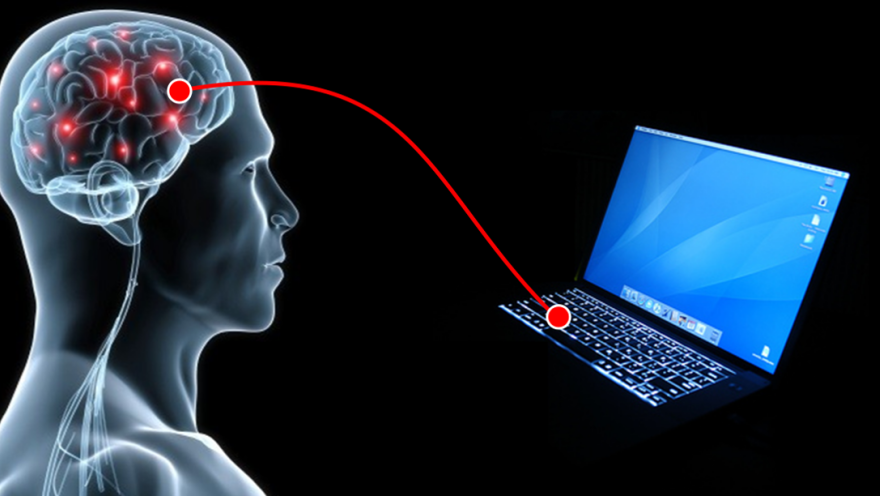
One of the most ambitious and futuristic concepts in BCI research is the idea of direct brain-to-computer communication. This would enable users to communicate with computers, AI systems, or other individuals purely through thought. Rather than typing on a keyboard, moving a mouse, or speaking into a microphone, users would be able to control devices, send messages, and even interact with virtual environments through their brain activity alone.

This kind of brain-to-computer interface could have profound implications for fields like virtual reality (VR) and artificial intelligence (AI). It could also open up new forms of communication for individuals who are physically disabled or non-verbal, allowing them to interact with the world in ways they never could before. For example, a person who is unable to speak might be able to communicate with others by transmitting thoughts directly to a computer that converts them into text or speech.

Challenges: Ethical Concerns, Safety, and Long-Term Effects on Brain Function

Despite the exciting potential of BCIs, there are several challenges that must be addressed before these technologies can be widely used. Among the most pressing concerns are the ethical implications of enhancing human cognition, the safety of BCI devices, and the long-term effects of direct brain stimulation.

  1. Ethical Concerns

One of the most debated topics surrounding BCIs is the ethical dilemma of cognitive enhancement. While the technology has the potential to improve the quality of life for individuals with disabilities or cognitive impairments, it also raises concerns about fairness, equity, and accessibility. Will cognitive enhancements become available only to the wealthy? Could BCIs lead to a society where cognitive enhancements are expected, creating pressure for individuals to “upgrade” their brains? Furthermore, there are concerns about privacy and the potential for misuse of brain data. If BCIs can access and decode thoughts, who controls this information, and how can it be kept secure?

  1. Safety

The safety of BCIs, especially invasive ones, is another critical challenge. Invasive BCIs, which require implants or electrodes placed within the brain, pose risks of infection, brain damage, or rejection by the body. Even non-invasive BCIs, which typically use sensors placed on the scalp, must be carefully calibrated to ensure they do not interfere with brain function. Ensuring that these devices are safe for long-term use is essential before they can be deployed on a large scale.

  1. Long-Term Effects on Brain Function

Another concern is the long-term effects of using BCIs on the brain. Continuous stimulation or manipulation of brain activity could have unintended consequences over time, such as neural adaptation or cognitive dependence on external devices. The long-term impact of BCIs on brain plasticity and overall cognitive health is still not fully understood, and more research is needed to determine the risks involved.

Conclusion: BCIs Could Revolutionize Human Cognition, but the Technology Requires Further Testing and Regulatory Oversight

Brain-computer interfaces are poised to revolutionize human cognition by restoring lost abilities, enhancing cognitive functions, and possibly even unlocking new levels of human potential. From medical applications in neuroprosthetics to the possibilities of cognitive enhancement, BCIs have the potential to reshape how we interact with the world and with our own minds. However, these technologies are still in the early stages of development, and several challenges—ethical, safety-related, and long-term—must be overcome before they can be widely adopted.

As research continues and regulations evolve, BCIs may become an integral part of healthcare, education, and personal productivity. With further testing, careful oversight, and advancements in technology, brain-computer interfaces could ultimately enhance human cognitive abilities and provide solutions to problems that were once thought insurmountable.


Tags: Brain-computer interfacescognitive enhancement
ShareTweetShare

Related Posts

Could Wearable Tech Unlock Hidden Human Abilities?
All Tech

Could Wearable Tech Unlock Hidden Human Abilities?

December 11, 2025
Robotics: The Key to Overcoming Labor Shortages in Science?
Innovation & Research

Robotics: The Key to Overcoming Labor Shortages in Science?

December 11, 2025
How Can Artificial Intelligence Foster Creativity in the Arts?
Innovation & Research

How Can Artificial Intelligence Foster Creativity in the Arts?

December 10, 2025
Can Virtual Reality Be the Next Frontier in Therapy?
All Tech

Can Virtual Reality Be the Next Frontier in Therapy?

December 10, 2025
Is Biohacking the Next Step in Human Evolution?
All Tech

Is Biohacking the Next Step in Human Evolution?

December 9, 2025
What If We Could Edit Human Memories—Should We?
Innovation & Research

What If We Could Edit Human Memories—Should We?

December 8, 2025

Discussion about this post

  • Trending
  • Comments
  • Latest
Eternal Luminary: Humanity’s Perpetual Fascination with the Sun

Eternal Luminary: Humanity’s Perpetual Fascination with the Sun

November 5, 2024
The Race Heats Up: OpenAI Joins the AI-Powered Search Arena

The Race Heats Up: OpenAI Joins the AI-Powered Search Arena

October 16, 2024
The Canon DIGITAL IXUS Legacy: Redefining Photography with Style and Innovation

The Canon DIGITAL IXUS Legacy: Redefining Photography with Style and Innovation

November 2, 2024
A New Hope: Exploring KarXT’s Potential in Treating Alzheimer’s-Related Psychosis

A New Hope: Exploring KarXT’s Potential in Treating Alzheimer’s-Related Psychosis

December 5, 2024
The Lunar Symphony: Hal Clement’s Prophetic Fantasia

The Lunar Symphony: Hal Clement’s Prophetic Fantasia

Unlocking the Future with AI’s Latest Breakthroughs: A Journey into the Unchartered Frontier

Unlocking the Future with AI’s Latest Breakthroughs: A Journey into the Unchartered Frontier

The Transformative Power of Machine Learning: Shaping the Future of Technology and Beyond

The Transformative Power of Machine Learning: Shaping the Future of Technology and Beyond

The Emotional Intelligence of AI: Bridging the Gap Between Machines and Hearts

The Emotional Intelligence of AI: Bridging the Gap Between Machines and Hearts

Could Wearable Tech Unlock Hidden Human Abilities?

Could Wearable Tech Unlock Hidden Human Abilities?

December 11, 2025
Can AI Explore Parallel Universes Through Data?

Can AI Explore Parallel Universes Through Data?

December 11, 2025
How Does Space Radiation Affect Astronauts’ Health?

How Does Space Radiation Affect Astronauts’ Health?

December 11, 2025
Robotics: The Key to Overcoming Labor Shortages in Science?

Robotics: The Key to Overcoming Labor Shortages in Science?

December 11, 2025
techfusionnews

Discover the essence of innovation at "Tech Aggregator," where the latest in tech converges. From cutting-edge gadgets to cosmic ventures and green breakthroughs, our site offers a streamlined look at the future of technology. Engage with concise, impactful content designed for those eager to stay ahead in an ever-evolving digital landscape. Join us at the forefront of the tech revolution.

© 2025 techfusionnews.com. contacts:[email protected]

No Result
View All Result
  • Home
  • Digital Lifestyle
  • Green Tech & Wellness
  • AI
  • Space Exploration
  • Innovation & Research
  • All Tech

© 2025 techfusionnews.com. contacts:[email protected]

Welcome Back!

Login to your account below

Forgotten Password?

Retrieve your password

Please enter your username or email address to reset your password.

Log In