































(A long-form, >3100-word, concise-yet-rich, engaging, professionally informed analysis)
Introduction: The Quiet Earthquake of Digital Transformation
Across the world, local communities—once defined by physical proximity, regional industries, and traditional networks—are undergoing a transformation so sweeping that many residents barely notice it in real time. This change is the result of the digital economy: a web of technological infrastructures, platforms, data flows, and digital-first business models that are subtly but decisively reshaping how people work, socialize, learn, govern, and even define “locality.”
Digital economies do not simply introduce new tools. They rewire incentives. They reorganize access. They redraw social and economic boundaries. They create new winners and new losers. And as digital systems seep into every layer of life, the very idea of what a community is—and who participates in it—begins to shift.
This article explores, in depth, how digital economies are reshaping local communities across labor markets, entrepreneurship, education, culture, governance, social ties, and urban planning. It does so with the goal of being both accessible and analytically robust, playful in language but rigorous in insight.
1. Digital Economies and the Redefinition of Locality
Digital economies challenge the traditional meaning of “local.” For centuries, proximity shaped community identity: shared geography created shared economies, shared problems, shared solutions. But now many forms of participation function borderlessly.
1.1 From Physical Geography to Network Geography
A person who sells crochet patterns online may be far more connected to customers in Seoul, Berlin, and Cape Town than to their next-door neighbor. A small-town teen involved in global gaming guilds might feel more “at home” online than in their local youth center.
We are watching a new kind of geography emerge—
- Communities of Interest (people connected by passions)
- Communities of Practice (connected by skills or professions)
- Communities of Platform (connected by the digital tools they use)
Localities are no longer only defined by rivers and roads but by algorithms, data networks, and shared digital spaces. And yet, paradoxically, this shift also empowers local communities to redefine themselves in new ways.
1.2 The Blending of Online and Offline Spheres
Digital infrastructures—delivery apps, online learning platforms, telemedicine, remote work systems—bind online and offline realities together. Local communities become hybrid environments where digital participation enhances physical experience rather than replacing it.
2. Economic Transformation: Local Markets in a Digital World
The digital economy reshapes local jobs, small businesses, supply chains, and consumer behavior. Some communities adapt easily; others struggle.
2.1 The Rise of Remote Work and Distributed Labor
Remote work is one of the most disruptive forces reshaping local communities. It redistributes populations and redistributes spending.
Effects on local communities:
- Population rebalancing: People relocate from expensive metropolitan hubs to smaller towns.
- New micro-economies: Coworking cafes, broadband infrastructure projects, and remote-worker housing developments emerge.
- Talent retention: Graduates no longer need to move away for skilled digital jobs.
Yet the shift also exposes divides: communities lacking broadband infrastructure are left out, deepening digital inequality.
2.2 Platform Economies Empower Local Entrepreneurship
Digital marketplaces and gig platforms (e-commerce shops, delivery apps, freelance platforms, online tutoring networks) allow individuals to:
- Start businesses with extremely low entry barriers
- Tap global customer bases
- Monetize niche skills previously impossible to commercialize locally
Local artisans find new global audiences. Micro-businesses proliferate. But platform dependence introduces new vulnerabilities: algorithmic visibility, race-to-the-bottom pricing, transaction fees, and data asymmetry between platforms and sellers.
2.3 Local Retail Faces Pressure—and Possibility
Digitization changes consumer habits: price comparison, online convenience, and algorithmic recommendation compete directly with in-person retail.
Local businesses that thrive often share traits:
- Strong digital presence
- Omni-channel strategy (store + online + social media)
- Locally tailored experiences that online-only platforms cannot replicate
Ironically, digital transformation pushes local shops to double down on what only they can uniquely provide: authenticity, immediacy, community engagement, and tactile experience.
3. Data as Local Infrastructure
In the digital economy, data becomes as crucial as electricity or water. Communities accumulate data—traffic flows, social behaviors, consumption patterns, environmental conditions—and this data powers local decision-making.
3.1 Smart City Systems
Local governments use data for:
- Optimizing public transport
- Monitoring air quality
- Managing waste
- Enhancing safety and emergency response
- Planning future urban development
This data-driven governance improves efficiency, but it also raises concerns about surveillance, privacy, and public trust.

3.2 Community Data Commons
Some forward-thinking towns experiment with democratized data infrastructures, where community members contribute and collectively manage local datasets. These initiatives turn data into a shared resource rather than a corporate asset.
4. Cultural Transformation: Identity, Belonging, and Digital Expression
Digital economies don’t just change what people buy— they change what people value, how they express themselves, and how they form cultural identities.
4.1 Local Culture Goes Global
Local traditions—crafts, cuisines, music, festivals—can now be broadcast to global audiences. Social platforms help communities turn cultural heritage into digital assets: tutorials, livestreams, digital collectibles, online experiences.
Cultural visibility boosts tourism, diaspora engagement, and local pride.
4.2 Global Culture Comes Inside the Local Sphere
Streaming platforms, AI-generated content, memes, global pop culture, and influencer-driven aesthetics permeate daily life. For some communities, this can cause tension between preservation and modernization. For others, it inspires cultural reinvention.
4.3 Hyperlocal Communities Reinvent Themselves Using Digital Tools
Many local groups—garden clubs, sports teams, neighborhood associations—revive engagement by using digital platforms for communication, event planning, and fundraising.
Digital tools don’t weaken community bonds; they often strengthen them, provided they’re used inclusively.
5. Education and Skills: Communities Rebuild Human Capital
The digital economy reshapes what it means to be educated and employable.
5.1 Online Learning Becomes a Lifeline
Remote education, open courseware, and skill-focused platforms:
- Enable continuous upskilling
- Reduce costs for learners
- Equalize opportunity for small-town residents
- Allow career switching at any age
A factory worker can become a data analyst. A stay-at-home parent can study UX design. A high school student can learn robotics from world-class instructors.
5.2 Shift Toward Digital Literacy as Core Competence
Communities increasingly prioritize:
- Coding and computational thinking
- Media literacy
- Digital ethics and privacy awareness
- Creative digital production (video editing, game design)
Local libraries transform into digital learning hubs. High schools build makerspaces. Community centers offer elder digital literacy workshops. Education becomes more modular, more decentralized, and more tailored to local needs.
6. Social Change: New Patterns of Connection and Isolation
The digital economy rearranges human interactions.
6.1 Connection: Digital Tools Strengthen Relationships
Families dispersed across continents maintain close relationships via messaging platforms and video calls. Neighbors use group chats to coordinate childcare, neighborhood watches, and local events.
Digital communications help communities:
- Organize faster
- Build cohesion
- Maintain social ties despite distance
- Share resources more effectively
6.2 Isolation: The Hidden Downsides
Not everyone benefits equally. The digital economy risks increasing loneliness and reducing face-to-face engagement, especially among:
- Elders
- Low-income households
- People with limited digital literacy
Communities must actively address these divides through inclusive design and digital education.
6.3 Community Resilience Through Digital Networks
During natural disasters or crises, digital networks amplify local resilience by enabling rapid information sharing, volunteer mobilization, and mutual aid coordination.
7. Local Governance in a Digital Era
Digital economies challenge governments to evolve.
7.1 E-Governance and Digital Public Services
Local governments now offer digital services:
- Online permits
- Virtual town halls
- Digital tax filing
- Real-time public service updates
This improves transparency and access, but requires tech investment and cybersecurity preparedness.
7.2 Behavioral Data for Public Policy
Governments increasingly use aggregated behavioral data to:

- Inform traffic planning
- Allocate budgets
- Evaluate business development initiatives
- Track community health indicators
Insights become more granular, but ethical guidelines become more urgent.
7.3 Algorithmic Challenges
Algorithms influence everything from policing patterns to housing markets to public resource distribution. Local governments must ensure algorithms are:
- Fair
- Transparent
- Accountable
- Aligned with community values
8. Digital Economies and Urban/Rural Dynamics
Digital economies reshape the relationship between urban centers and rural areas.
8.1 Rural Renaissance Through Connectivity
Small towns attract remote workers seeking affordability and quality of life. Digital infrastructure fuels:
- Local innovation hubs
- Rural tech incubators
- New service industries catering to remote professionals
8.2 Urban Reinvention
Cities respond by reimagining spaces:
- Converting offices into mixed-use environments
- Building smart infrastructures
- Fostering digital creative industries
Urban vibrancy no longer depends solely on density but on digital connectedness.
8.3 Persistent and Emerging Inequalities
Despite progress, many rural regions remain disconnected. Broadband deserts widen socioeconomic gaps. Bridging this is essential for equitable digital participation.
9. Environment and Sustainability: Digital Tools Reshaping Local Ecologies
Digital transformation offers communities new environmental capabilities.
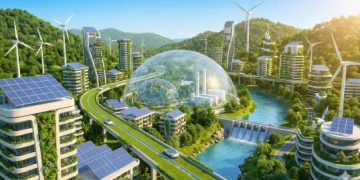
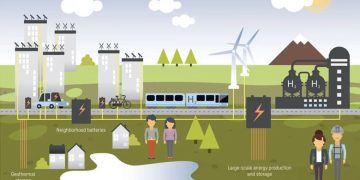
9.1 Energy Systems Become Smarter
Smart grids, IoT sensors, and predictive analytics improve:
- Energy efficiency
- Renewable energy integration
- Household consumption awareness
Local communities reduce waste while lowering energy costs.
9.2 Environmental Monitoring
Communities track:
- Water quality
- Soil health
- Wildlife patterns
- Pollution hotspots
This data informs local activism and policy.
9.3 Sustainability-Oriented Digital Economies
Circular economy platforms—digital swaps, repair networks, community recycling coordination—flourish. Digital marketplaces make reuse easier and normalize sustainable behaviors.
10. The Future: What Local Communities Might Become
Digital economies will continue evolving, and local communities will adapt in profoundly creative ways.
10.1 Local Production, Global Distribution
Communities may rely on micro-factories using 3D printing, shared robotics, and automated logistics. Local artisans become global creators. Hyperlocal food production integrates with digital supply chains.
10.2 AI-Augmented Community Services
AI copilots assist local governments, nonprofits, and small businesses. Community health monitoring improves. Digital twins help towns simulate development scenarios.
10.3 Digital Identity as Civic Infrastructure
Secure digital identities allow communities to participate in governance, access benefits, and build trust-based economies.
10.4 Community-Owned Digital Ecosystems
Cooperative platforms—owned by community members, governed democratically—may counterbalance corporate platform dominance.
Conclusion: The New Fabric of Community Life
Digital economies are not replacing local communities—they are reinventing them. They expand opportunities while deepening complexities. They allow people in remote villages to sell globally, help cities reimagine governance, give students infinite educational possibilities, and empower local cultures to flourish on international stages.
But they also require careful stewardship: equitable infrastructure, ethical governance, digital literacy, and cultural openness.
Local communities that thrive in the digital age will be those that understand:
Digital technology is not the destination.
Community is.
The digital economy is simply the newest loom weaving the fabric of local life—thread by thread, connection by connection.













Discussion about this post