







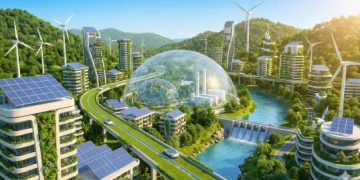
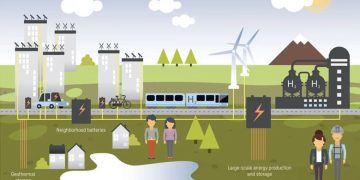

























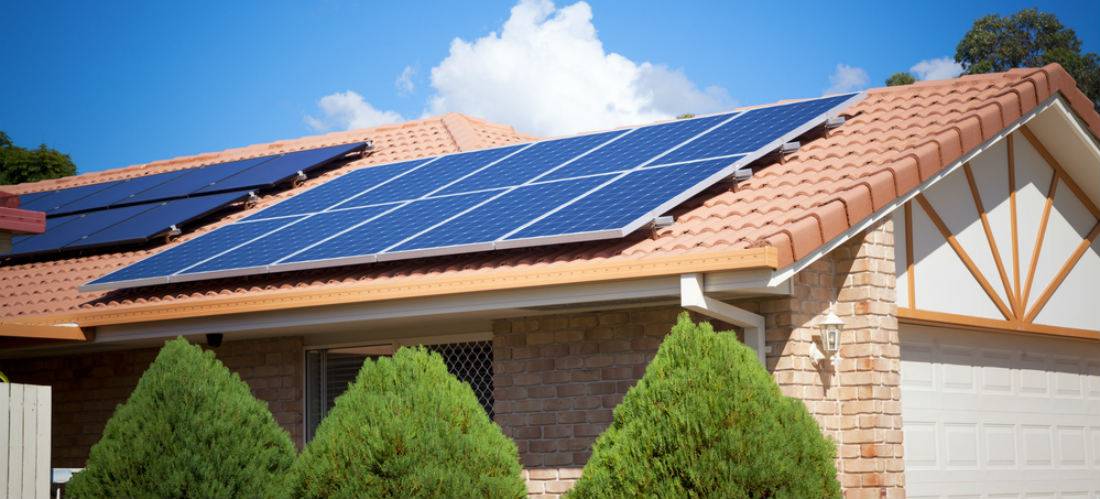
With the increasingly severe global climate change problem, the development and utilization of sustainable energy have become a focus of attention for countries around the world. Solar energy, as a clean and renewable energy source, is particularly valued in the field of construction. In recent years, the design and technology of solar roofs have made revolutionary progress, not only greatly improving efficiency, but also making breakthroughs in aesthetics, economy, and practicality. This article will explore the latest design concepts for solar roofs and how these innovations can help us build a greener future.
Design Innovation of Solar Roofs
Traditional solar panels are usually bulky, single blue black panels that often affect aesthetics when installed on roofs. Nowadays, designers and engineers have solved this problem. They have developed a solar roof solution that can be seamlessly integrated into architectural design, with Tesla’s solar tiles being a typical example. These solar tiles can not only simulate the appearance of traditional roof materials such as tiles, slate, and even wooden feel, but also provide energy conversion efficiency comparable to traditional solar panels.
Dual advantages of energy efficiency and economy
With the advancement of technology, the energy efficiency of solar roofs continues to improve. Some of the latest solar roof designs use efficient photovoltaic materials and innovative power storage systems, which enable houses to not only meet their own electricity needs, but even feed back excess electricity to the grid, achieving a positive energy cycle. At the same time, costs are also continuously decreasing. The government’s subsidy policies and large-scale production have reduced the installation cost of solar roofs, making this technology more affordable for a wider range of users.
Reduction of environmental impact
The popularization of solar roofs can help reduce dependence on fossil fuels and lower greenhouse gas emissions. According to relevant research, installing a solar roof in an ordinary household can reduce approximately 3 to 4 tons of carbon dioxide emissions per year, which is equivalent to planting dozens of trees. In addition, solar roofs have a long service life, low maintenance costs, and a small environmental footprint, making them a true green building solution.
Win win situation of social and economic benefits
Solar roofs are not only an environmentally friendly technology, but they can also bring significant social and economic benefits. On the one hand, the promotion of solar roofs has created a large number of job opportunities, involving a wide range of industries from research and development, manufacturing to installation and maintenance. On the other hand, users of solar roofs can enjoy long-term electricity savings, which will become more significant as electricity costs rise.
Future prospects
Future solar roof designs will place greater emphasis on integration with smart home systems. Through intelligent management, users can monitor energy consumption in real-time, optimize power usage, and even achieve energy sharing between home and office environments. In addition, with the development and application of new materials, there is still a lot of room for improvement in the conversion efficiency of solar roofs, which will further promote the popularization of this technology.
epilogue
Solar roofs represent an important direction for sustainable technological development. It not only helps to address climate change, but also enhances the aesthetics and functionality of buildings, bringing economic benefits. With the continuous advancement of technology and further cost reduction, solar roofs are expected to become a standard configuration for future buildings, providing strong support for our green future.













Discussion about this post