




















Introduction: The Intersection of AI and Creative Industries Like Art, Music, and Writing
Artificial Intelligence (AI) has made significant strides in recent years, transitioning from a tool primarily used in fields like finance, healthcare, and engineering to one that actively participates in creative industries. From painting to music composition and even writing, AI is now at the forefront of a creative revolution that challenges traditional notions of artistry and human creativity.
The intersection of AI and the creative world is a fascinating development, where machines are not just tools but active contributors to the process of creation. This convergence has raised many questions: Can AI generate true art? Can machines possess creative intuition? And how will AI reshape the future of artistic expression?
In this article, we will explore the various ways AI is transforming the creative industries, focusing on its role in visual arts, music composition, and creative writing. We will also examine the philosophical question of whether AI can truly “create” or if its outputs are simply sophisticated imitations of human art. Finally, we will look ahead to the potential future of AI as a collaborator in the creative process, integrating machine learning and human ingenuity in new and innovative ways.
AI in Visual Arts: Using Machine Learning to Generate Original Artwork
One of the most striking applications of AI in the creative world is in visual arts, where machine learning (ML) and deep learning techniques have enabled computers to generate original paintings, drawings, and digital artwork. Generative Adversarial Networks (GANs), a type of machine learning algorithm, have been particularly influential in this space. GANs work by using two neural networks: one that generates images and another that evaluates them. The two networks work together, with the generator trying to create artwork that can fool the evaluator into thinking it’s real, while the evaluator tries to distinguish between AI-created and human-made images.
This process leads to AI producing highly original and often surreal or abstract art. Some of the most notable examples of AI-created visual art include the works produced by Obvious, a French art collective that famously sold a portrait generated by AI at Christie’s auction house for over $432,000. The portrait, titled “Edmond de Belamy,” was generated by a GAN, and its success signaled the growing legitimacy of AI-generated art in the contemporary art world.
AI can also be used to emulate the styles of famous artists. Programs like DeepArt allow users to upload a photo and apply the artistic styles of figures like Van Gogh or Picasso. This fusion of machine learning and artistic style imitation has raised interesting questions about originality and authorship. Is an AI-generated painting that mimics a master’s style still considered original? Or is it simply a clever replication?
While the debate about whether AI can truly create “art” continues, there’s no denying the role of AI in expanding the possibilities of artistic creation. With AI tools, artists can now experiment with new forms of visual expression, blending traditional techniques with cutting-edge technology. For example, AI can help artists generate drafts, experiment with different styles or even create interactive installations where viewers engage with art powered by machine learning.
AI and Music Composition: How AI Algorithms Are Being Used to Compose Music
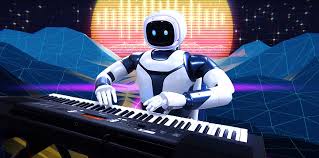
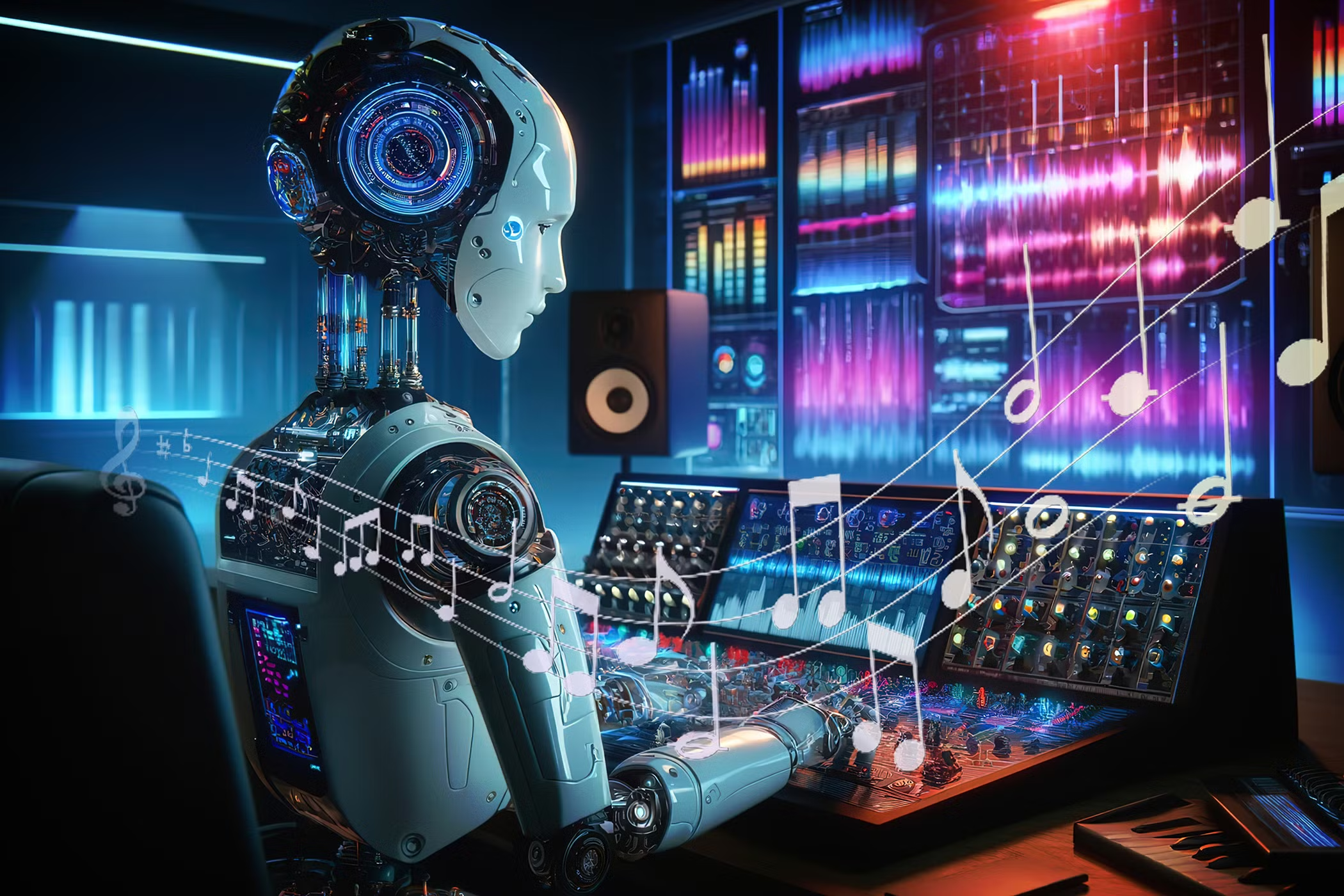
AI’s role in music composition is similarly transformative. For centuries, music composition was seen as the exclusive domain of human creativity. However, AI has begun to break down those boundaries, with algorithms capable of producing compositions in a wide variety of genres, from classical symphonies to electronic beats.
AI in music composition typically relies on algorithms like recurrent neural networks (RNNs) and generative models. These models are trained on large datasets of music, learning patterns of melody, harmony, and rhythm. One famous example is OpenAI’s MuseNet, an AI model capable of composing music in different genres, from jazz to pop, based on a set of input parameters. Another example is AIVA (Artificial Intelligence Virtual Artist), which is used to compose original pieces of classical music. AIVA has been trained on the works of great composers like Beethoven and Mozart, enabling it to generate symphonic music with complex structures and emotional depth.
AI is also used in music production, not just in composition but in the creation of beats, melodies, and arrangements. Tools like Amper Music and Jukedeck allow users to generate royalty-free music in real-time, offering customizable options for tempo, mood, and instrumentation. These AI platforms are increasingly popular among content creators, filmmakers, and advertisers, as they provide high-quality music production without the need for a human composer.
However, the question remains: Can AI truly compose music with the emotional depth and soul that human composers bring to their work? While AI has shown an impressive ability to create technically sound music, many argue that it lacks the emotional intuition and personal experiences that drive human composition. For now, AI compositions may be best viewed as inspirational tools or collaborative partners, offering novel sounds and ideas that human musicians can build upon.
AI in Writing: How AI is Assisting with Creative Writing and Content Generation
Creative writing has traditionally been viewed as one of the most deeply human forms of expression. But AI is now playing a growing role in content generation and storytelling. Using techniques like Natural Language Processing (NLP) and transformer models, AI systems like OpenAI’s GPT-3 and ChatGPT are capable of writing coherent, grammatically correct, and often creative texts across a wide variety of genres, from short stories to poetry and even novels.
AI writing assistants can help authors by generating ideas, outlining plots, or suggesting character dialogue. These tools don’t replace writers; rather, they act as creative collaborators, providing inspiration and helping to overcome writer’s block. For example, AI-powered tools like Grammarly assist with grammar, sentence structure, and style, while others, like Sudowrite, are designed specifically for fiction writers, offering suggestions for plot twists, character development, and more.
In the realm of journalism, AI has already made an impact, with news outlets like the Associated Press using AI to generate articles on topics like sports scores and financial reports. These AI systems use pre-existing data to write factual articles in real-time, allowing human journalists to focus on more in-depth reporting. However, AI-generated writing has raised ethical concerns regarding authorship and authenticity. Does an article written by an AI hold the same journalistic value as one created by a human reporter? And what happens when AI is used to manipulate narratives or produce misleading content?
In fiction writing, AI is still in the early stages of collaboration, but some authors are experimenting with AI-generated stories, using it as a creative partner to explore new narrative structures or genres. Still, the debate persists: can AI ever truly grasp the emotional nuances or the unique voice that writers inject into their work?
Human vs. AI Creativity: Can Machines Truly Create Art?
One of the most provocative questions raised by the rise of AI in creative fields is whether machines can truly be considered creative. After all, creativity has long been regarded as one of the most human traits, the product of intuition, emotional expression, and lived experience.
AI, by contrast, is inherently data-driven and operates based on patterns and algorithms. It doesn’t experience emotions, culture, or personal memories in the way humans do. So, when an AI generates a piece of artwork or composes a symphony, is it truly creating something new, or is it simply recombining existing data? Some argue that AI is only as creative as the data it has been trained on, and thus, it can never truly be considered “creative” in the human sense.
On the other hand, AI has shown an ability to produce outputs that are often indistinguishable from those created by human artists. In fact, many argue that AI’s ability to push boundaries and create in unexpected ways may be a form of creativity in itself, even if it doesn’t emerge from personal experience or emotion. Rather than competing with human creativity, AI can be viewed as a tool to enhance and complement the creative process, offering artists new ways to explore their ideas and break free from traditional conventions.
Conclusion: The Future of AI as a Collaborator in the Creative Process
As AI continues to evolve, its role in the creative industries is only set to grow. Rather than replacing artists, musicians, and writers, AI is poised to be a collaborator, enhancing the creative process and providing new tools for artistic expression. We are already witnessing AI in the visual arts, music, and writing, but the future holds even greater possibilities.
AI can inspire artists, musicians, and writers to experiment with new styles, forms, and methods. It can generate novel ideas, help with brainstorming, and even push creators to explore new dimensions of creativity that they might not have considered. The key to AI’s future in creativity lies in its ability to complement human intuition and provide innovative solutions to artistic challenges.
The future of creativity is not just about machines making art—it’s about humans and machines working together to unlock new creative potentials, creating a more collaborative and inclusive artistic landscape. Whether AI is composing symphonies, painting masterpieces, or writing stories, the possibilities for creative expression in the age of artificial intelligence are limitless.










Discussion about this post