






Introduction
The world of education is undergoing a seismic shift, driven by technological advances that promise to transform how knowledge is delivered, consumed, and experienced. Among the most exciting of these innovations is Virtual Reality (VR). While VR has primarily been associated with gaming and entertainment, its potential applications in education are vast and compelling. As we stand on the brink of the next educational revolution, it’s clear that VR will play a crucial role in reshaping how we learn, how we teach, and even how we conceptualize knowledge itself.
In this article, we will explore the transformative potential of VR in education. From creating immersive learning environments to providing access to remote or specialized education, VR promises to change the way students and educators interact with the learning process. But how exactly will it unfold? What are the specific applications of VR in the classroom, and what challenges might stand in its way?
By the end of this exploration, we’ll have a clearer picture of the future of education with Virtual Reality at its core.
The Evolution of Virtual Reality in Education
A Leap from Passive Learning to Active Engagement
Historically, education has been a passive experience for students, with textbooks, lectures, and worksheets being the primary modes of knowledge transmission. In recent decades, however, the rise of digital technologies like computers, the internet, and interactive multimedia began to shift the landscape towards more engaging and participatory learning experiences. VR takes this evolution a step further.
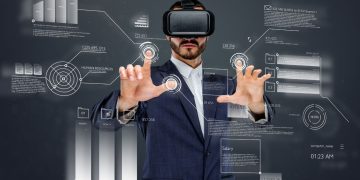
Unlike traditional digital tools, which often mediate content through screens, VR allows students to fully immerse themselves in a 3D, interactive environment. This immersion can promote active learning, a concept that has been shown to improve understanding and retention. By allowing students to engage directly with complex subjects, VR removes the barrier between abstract ideas and hands-on experience, helping learners visualize and interact with concepts in ways that were previously impossible.
For instance, students studying biology can explore the intricacies of a cell’s structure in three dimensions, or history students can “walk” through ancient civilizations, experiencing history firsthand. These interactive experiences are designed to engage multiple senses, increasing the likelihood of deep learning and knowledge retention.
Bridging the Gap Between Theory and Practice
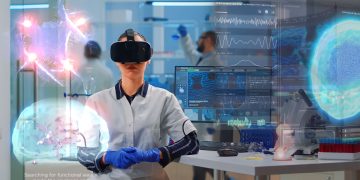
While textbooks and theoretical knowledge can provide a foundation, real-world application is often the missing piece. In fields such as medicine, engineering, or environmental science, it is not always feasible for students to gain hands-on experience in a controlled environment. This is where VR truly shines.

For example, medical students can use VR simulations to practice surgery or diagnose patients in a safe, risk-free setting. Engineering students can use virtual models to test the behavior of structures without needing physical prototypes. In this way, VR bridges the gap between theory and practice, allowing students to experiment and make mistakes in a virtual environment where failure doesn’t carry real-world consequences.
Global Access and Equal Opportunities
Another transformative potential of VR in education is its ability to provide access to learning experiences that may be out of reach for many students. Traditional education often requires students to be in a specific location, attend a physical school, or have access to expensive resources. However, VR can break down many of these barriers.
Consider the example of students in rural or underprivileged areas. With VR, they can attend virtual classrooms led by world-class instructors, participate in field trips to museums thousands of miles away, or explore complex scientific concepts without needing expensive lab equipment. By democratizing access to high-quality educational resources, VR can help reduce the inequality that currently exists within education systems around the world.
Real-Time Feedback and Personalization
One of the most significant advantages of VR is the ability to offer real-time feedback and personalized learning experiences. In traditional classroom settings, teachers are often overwhelmed with large class sizes and limited time, making it difficult to give individual attention to each student. With VR, however, learning experiences can be tailored to the unique needs of each student, providing immediate feedback and adjusting difficulty levels based on performance.
For example, language learners can use VR applications that simulate real-world conversations, allowing them to practice speaking and comprehension in context. The system can track their progress, adjust the difficulty level, and offer corrective feedback in real time. Similarly, students studying math or physics can engage with interactive simulations that provide instant feedback, helping them to correct mistakes and build confidence as they progress.
The Specific Applications of VR in Education
Immersive History Lessons
Imagine being a history student not just reading about ancient Rome, but actually walking through the Roman Forum or sitting in a Senate session as a Roman citizen. VR enables this kind of immersive experience, making abstract historical events and figures tangible and real. Rather than relying on textbooks and lectures alone, students can immerse themselves in different time periods, experiencing history from the perspective of the people who lived it.
Such experiences are incredibly valuable for students who struggle to connect with abstract historical facts. By experiencing the sights, sounds, and even the emotional atmosphere of a particular era, students are more likely to develop a deeper understanding of historical events, cultures, and people.
Virtual Labs for STEM Education
Science, Technology, Engineering, and Mathematics (STEM) fields require a combination of theoretical knowledge and practical application. However, many STEM fields require access to specialized labs, equipment, and resources that may not be available to all students. Virtual labs can solve this problem by providing students with an opportunity to conduct experiments and simulations in a fully interactive virtual environment.

Students can test chemical reactions, experiment with physics principles, or design virtual engineering projects without the need for expensive lab equipment or risking hazardous situations. These experiences not only allow students to gain a deeper understanding of STEM concepts, but they also help foster a sense of creativity and innovation.
Language Learning through Immersive Environments
Language acquisition is another area where VR holds significant promise. Learning a language often requires more than just memorizing vocabulary and grammar; it requires real-world practice and cultural immersion. VR allows language learners to immerse themselves in virtual environments where they can practice speaking, listening, and reading in a foreign language.
For instance, students learning Spanish might “visit” a virtual Spanish-speaking village where they can interact with native speakers, navigate a marketplace, or engage in everyday activities. These real-world contexts provide a more authentic learning experience, reinforcing the language and culture in a way that traditional classroom settings cannot.
Virtual Field Trips and Global Collaboration
One of the most exciting possibilities offered by VR is the ability to go on virtual field trips. These could range from visiting famous landmarks like the Great Wall of China to exploring the Amazon rainforest, all without leaving the classroom. Virtual field trips provide students with experiences that might otherwise be logistically or financially impossible.
Additionally, VR can connect classrooms from around the world, allowing students to collaborate with peers in real-time, regardless of location. Students in Japan can team up with students in Brazil for a virtual science experiment or join a global debate on climate change. This kind of global collaboration fosters cultural exchange, mutual understanding, and cooperative problem-solving, which are invaluable skills in today’s interconnected world.
Teacher Training and Professional Development
Teachers themselves can benefit from VR in a variety of ways. VR can be used to simulate classroom scenarios, giving educators a chance to practice classroom management and teaching strategies in a risk-free environment. New teachers can use VR to prepare for common classroom challenges, such as dealing with disruptive students or managing diverse learning needs, before they encounter them in the real world.
Additionally, VR can be a valuable tool for professional development, allowing teachers to observe best practices from top educators, participate in virtual workshops, and collaborate with peers around the world.
Challenges to Overcome
Cost and Accessibility
While the potential of VR in education is vast, there are still significant barriers to widespread adoption. The initial cost of VR hardware, including headsets, computers, and software, can be prohibitive for many schools and educational institutions, especially those in low-income areas. Additionally, access to high-speed internet and the technical infrastructure necessary to support VR programs is not universally available.
Content Creation and Curriculum Integration
The development of high-quality VR content is another challenge. While there is a growing number of VR educational tools and applications, much of the content is still in its infancy. Developing VR content that aligns with existing curriculums and learning standards is time-consuming and expensive. There is also the challenge of ensuring that VR content is accessible to students with different learning needs and abilities.
Teacher Training
Teachers need to be trained in how to effectively integrate VR into their classrooms. This requires professional development and support, as well as time for teachers to become familiar with the technology and pedagogical strategies associated with VR-based learning.
Health and Safety Concerns
While VR has the potential to transform education, there are also concerns related to health and safety. Prolonged use of VR headsets can lead to eye strain, motion sickness, and other physical discomforts. Educators and developers will need to address these issues to ensure that VR is used in a way that is safe and comfortable for students.
Conclusion
Virtual Reality is poised to revolutionize education in ways that were once the stuff of science fiction. By offering immersive, hands-on learning experiences, breaking down geographical and financial barriers, and enabling personalized education, VR has the potential to create a more engaging, accessible, and effective educational system.
However, for VR to fulfill its promise, significant investment in infrastructure, content development, and teacher training will be required. As these challenges are met, the future of education may be one where the classroom is no longer confined to four walls, and learning is no longer limited by geography or resources.
In the end, VR holds the potential to make learning more dynamic, experiential, and exciting—an evolution that could benefit not just students, but society as a whole.






Discussion about this post