






























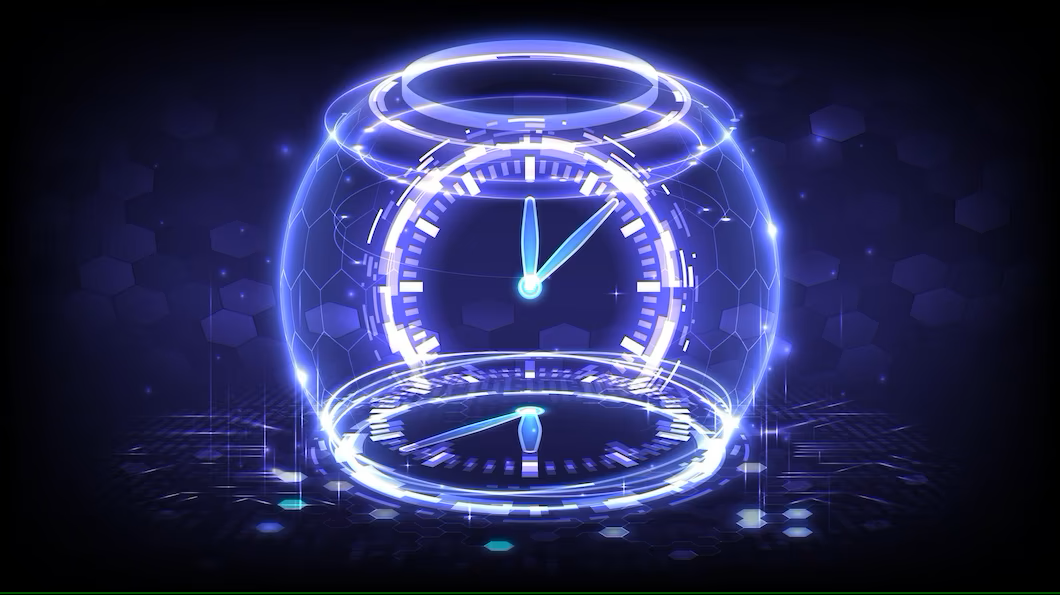
In the age of hyperconnectivity, digital screens, and an incessantly buzzing world, it’s easy to lose track of time. From the moment we wake up, we’re immediately immersed in a stream of messages, notifications, and demands. The constant flow of information and the endless buzz of activity make it harder and harder to define where time starts and ends. Our once clearly delineated days are slipping through our fingers like sand. Are we losing our sense of time in a world that never sleeps? And if so, what does that mean for our productivity, our well-being, and our future?
The Collapse of Traditional Time Structures
Time has traditionally been understood as something linear — a sequence of moments that progresses in a predictable, measurable manner. From sunrise to sunset, from work hours to leisure hours, life followed a natural rhythm that was dictated by external forces: the sun, the seasons, and the demands of daily life.
However, with the rise of the digital era, these traditional markers of time have become less relevant. For example, we no longer live by the strict boundaries of “work hours.” Emails, messages, and notifications seep into our evenings, weekends, and even our vacations. The divide between work and personal time has become porous, with technology enabling us to be “on” 24/7.
Smartphones, the internet, and social media have blurred the lines between what we once considered “public time” (spent at work, in school, or engaging with others) and “private time” (spent relaxing or engaging in leisure activities). It’s no longer unusual for someone to check work emails late at night, scroll through Instagram first thing in the morning, or participate in virtual meetings across different time zones. Time has become something that no longer obeys the rhythms of nature, but rather the unrelenting pace set by our gadgets and notifications.
This is particularly evident in the context of the global economy. As businesses expand internationally and global commerce becomes more interconnected, the need for round-the-clock availability increases. This creates an environment where time zones no longer matter — a meeting might happen at any time of day, in any part of the world. The result is a world that is always in motion, a “24-hour society” where rest and relaxation are considered luxuries, and productivity is the ultimate virtue.
The Illusion of “Time Saved”
Modern technology offers us numerous ways to “save time.” From food delivery apps to personal assistants, we are constantly being sold the idea that we can accomplish more with less effort. But in many cases, this promise of time-saving efficiency is an illusion. While these technologies may help us eliminate certain tasks, they often introduce a new set of demands that eat up even more of our attention and focus.
Take, for example, the rise of the gig economy. The idea of being your own boss and working on your own schedule seems appealing, but in practice, it often results in a life where work never truly ends. With the constant access to apps and platforms, workers are expected to be available around the clock, creating an environment where the boundaries of time become even more fluid.
Similarly, while streaming platforms allow us to watch entire seasons of a show at once, the concept of “binge-watching” has emerged, where we feel compelled to consume content continuously, often to the detriment of other activities. We’ve created a cycle of instant gratification that can distort our perception of time, leaving us feeling as though time is slipping away faster than we can keep up.

The Psychological Toll of a “Timeless” World
The constant bombardment of stimuli can have profound effects on our mental health and well-being. When our sense of time becomes fragmented, it can lead to feelings of stress, anxiety, and burnout. The blurring of work and personal life means that it’s harder for us to switch off, and the constant exposure to screens can make it difficult for our brains to rest.
Moreover, the rise of “always-on” digital culture can lead to a phenomenon called “time poverty.” Time poverty is the feeling that we never have enough time to do the things we want to do. It’s the overwhelming sense that time is running out, and that no matter how hard we try, we can’t seem to catch up. This is exacerbated by the fact that many of us are perpetually multitasking, which, while appearing efficient on the surface, can actually diminish our ability to focus and manage time effectively.
The paradox of “time saved” is that the more we try to manage time efficiently, the more we seem to lose it. Ironically, the tools that were designed to give us more free time often end up trapping us in a cycle of endless work, distraction, and stress.
The Shift in Time Perception: Instant Gratification vs. Long-Term Fulfillment
In our “always-on” world, the concept of time has shifted from long-term planning to instant gratification. Social media platforms, for example, thrive on delivering quick hits of pleasure through likes, shares, and notifications. This creates a feedback loop where our brains become conditioned to expect constant rewards and instant responses. The idea of waiting for something — whether it’s a goal, a personal achievement, or simply a moment of reflection — becomes less appealing in the face of a world that delivers immediate results.
This shift in time perception has consequences. We are less likely to make long-term plans or think about the future. Instead, we live in the now, reacting to the immediate needs of the moment. And while this can lead to a more spontaneous and exciting life, it can also result in a lack of deeper purpose or fulfillment. We may feel as though we are busy, but we often end up feeling unproductive or unaccomplished in the long run.
The Impact of Technology on Time Management
In a world that never sleeps, time management has become an essential skill. With so many distractions and demands on our attention, it can be easy to lose focus and fall into a state of perpetual “busyness.” But effective time management, like any skill, requires discipline and a conscious effort to take control of our schedules and prioritize what truly matters.

However, the rise of technology has complicated this process. While productivity apps and tools are designed to help us manage our time more effectively, they can often become just another layer of complexity in an already overstimulated world. Notifications, reminders, and alerts can pull us in multiple directions at once, creating an environment where it’s harder to focus on one task at a time.
The key to effective time management in the digital age may lie not in doing more, but in doing less. By learning to say no, to set clear boundaries, and to disconnect from the constant stream of notifications, we can regain control over our time. This requires a mindset shift — one that prioritizes quality over quantity and emphasizes the value of mindfulness and presence in each moment.
Reconnecting with Time: The Power of Slowing Down
In a world where speed and efficiency are prized, slowing down can feel counterintuitive. But there’s growing evidence to suggest that slowing down may actually be the key to reestablishing a healthy relationship with time. Practices such as mindfulness, meditation, and time-blocking are gaining popularity as ways to create space in our lives and regain a sense of control over our time.
For example, many people are turning to “digital detoxes” — periods of time where they disconnect from their devices entirely. These breaks allow individuals to reset their internal clocks and rediscover the simple joys of being present in the moment. By stepping away from the constant pull of technology, we can become more attuned to the natural rhythms of life, and in turn, better manage our time.
Likewise, many experts suggest that we need to rethink the way we measure productivity. Instead of focusing on how many tasks we can check off a to-do list, we should focus on the quality and impact of the work we do. By shifting our focus from doing more to doing less but with greater intention, we can begin to reclaim a sense of time that feels fulfilling rather than frantic.
The Future of Time: A World Without Clocks?
As technology continues to evolve, it’s hard to predict where the future of time management is headed. One possibility is that, as we become more integrated with artificial intelligence and automation, our traditional sense of time will continue to erode. With more tasks being handled by machines, we may find ourselves freed from the daily grind — but whether this will lead to more leisure time or merely more distractions remains to be seen.
In any case, one thing is clear: The pace of life is unlikely to slow down. The key to surviving and thriving in this 24/7 world will be learning to manage our relationship with time, rather than trying to “beat” it. It will involve a balance of speed and stillness, action and rest, productivity and presence. The challenge will be not to lose ourselves in the rush of the modern world but to carve out moments of clarity, calm, and purpose amidst the noise.
Conclusion: Time as a Resource to Be Cultivated, Not Consumed
The digital age has brought with it a host of benefits — convenience, connectivity, and the ability to accomplish more than ever before. But it has also reshaped our relationship with time, turning it into a commodity that is constantly in flux. In this world that never sleeps, it’s easy to lose track of time, to feel as though it’s slipping through our fingers.
However, with awareness and intention, we can regain control of our time. By disconnecting from the constant demands of technology, setting boundaries, and focusing on what truly matters, we can create a life that is not defined by “doing” but by “being.” In the end, it’s not how much time we have, but how we choose to use it, that will determine our sense of fulfillment and well-being in this fast-paced world.













Discussion about this post