























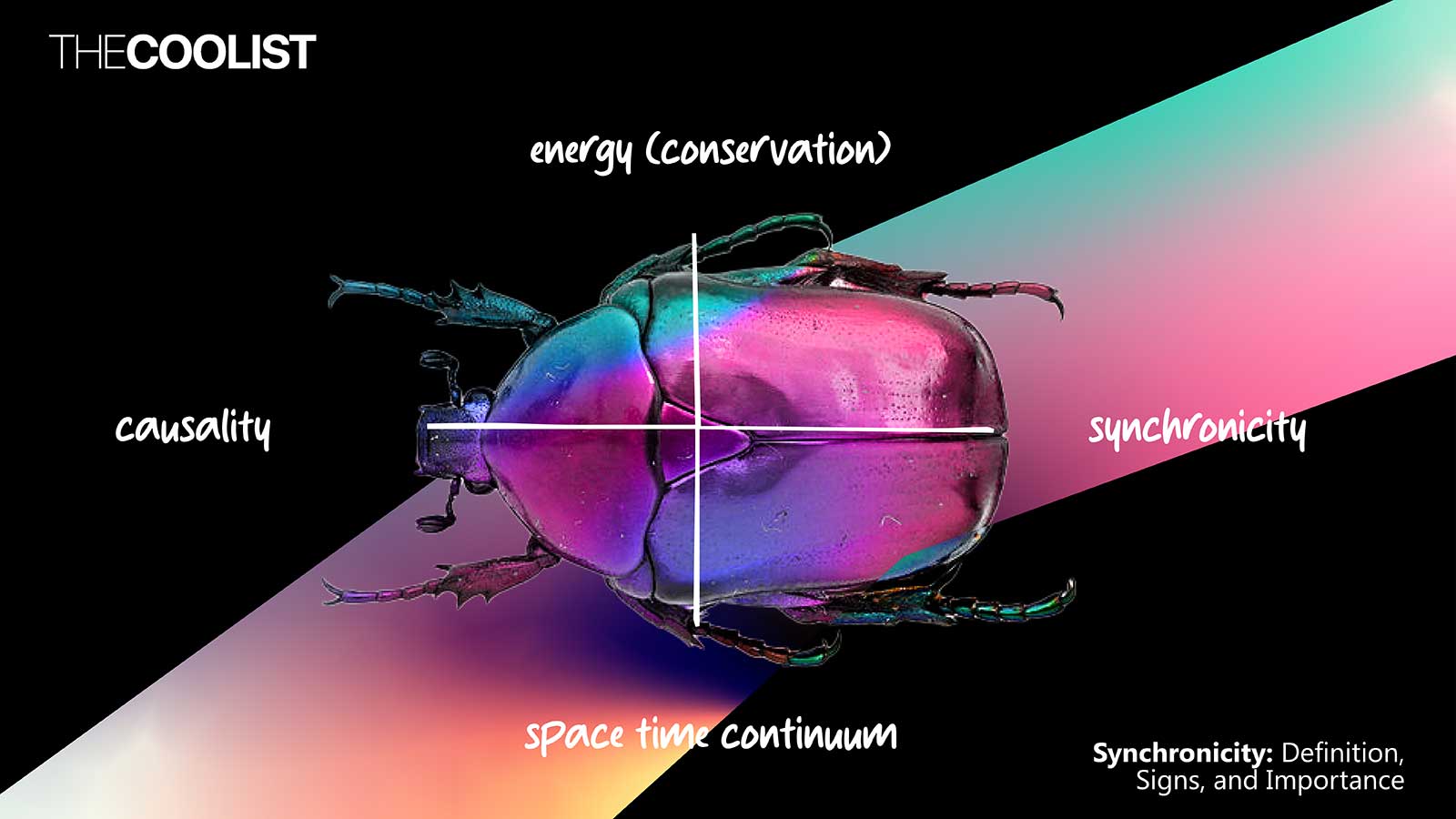
Synchronicity—a term popularized by the Swiss psychiatrist Carl Jung—refers to the meaningful coincidences that occur in life. It’s the sensation that events align in ways that go beyond mere chance. While Jung believed synchronicity was an expression of the underlying unity of the universe, it’s a concept that has mystified and fascinated scholars, mystics, and laypeople alike. Could artificial intelligence (AI) be the key to unlocking the mysteries behind these uncanny, seemingly orchestrated moments? Let’s explore how AI might help us understand, decode, and perhaps even predict the phenomena of synchronicity.
1. Understanding Synchronicity: A Mysterious Phenomenon
At its core, synchronicity refers to the meaningful connection between events that aren’t causally related, yet seem profoundly significant. A typical example might be thinking of an old friend you haven’t spoken to in years, only to receive a phone call from them moments later. These events, though unconnected by any obvious cause, seem to resonate with personal meaning, suggesting that there’s something deeper at work.
Jung argued that synchronicities are not mere coincidences but expressions of an underlying order in the universe—an order that may be hidden beneath the surface of our everyday experience. He posited that these occurrences could be seen as a reflection of the psyche’s ability to connect to the collective unconscious, the shared reservoir of human experience and symbolism. But as anyone who has experienced synchronicity knows, the experience can feel both magical and bewildering.
2. The Role of AI in Understanding Human Experience
Artificial intelligence has evolved at a remarkable pace in recent years, advancing from simple pattern recognition algorithms to complex systems that can learn, adapt, and make decisions. At its core, AI’s primary strength lies in its ability to analyze massive datasets and uncover patterns that may not be immediately visible to the human eye. Could AI, then, help us make sense of synchronicity by identifying patterns in seemingly random events?
AI models have already shown an extraordinary ability to spot correlations between variables in fields ranging from medicine to economics. The same principle could potentially apply to the study of synchronicity. By analyzing large volumes of data—whether they’re personal experiences, cultural trends, or even natural phenomena—AI might help uncover hidden patterns that align with moments of synchronicity. The key question here is whether AI could identify an underlying structure to these experiences, or if synchronicity remains an enigma that defies even the most advanced algorithms.
3. The Intersection of AI and Psychology: Decoding the Unconscious Mind
In psychology, synchronicity is often discussed in the context of the unconscious mind, where internal thoughts and feelings intersect with external reality in surprising ways. Jung believed that the unconscious mind might be in direct communication with the world around us, creating moments of synchronicity as a reflection of this deep connection.
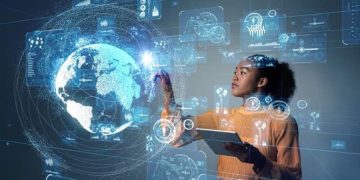
AI’s growing role in psychology and neuroscience could provide a unique lens through which we can explore this connection. Machine learning algorithms have already been employed to analyze brain activity and interpret emotional responses, offering insights into the inner workings of the mind. By applying AI to the study of synchronicity, we may be able to track how thoughts, emotions, and external events interact on a deeper level. Could AI uncover the neural patterns associated with these magical moments of alignment? And, if so, might this open a door to understanding how the unconscious mind might influence our perception of reality?

AI could also play a role in creating models of the unconscious. If we could feed AI systems a vast array of human experiences—emotions, dreams, archetypes—perhaps we could begin to map the often murky terrain of the unconscious and, in doing so, reveal how it informs our experiences of synchronicity.
4. AI and the Quantum World: Could Synchronicity Be a Quantum Phenomenon?
Interestingly, AI’s ability to model complex, high-dimensional systems might also intersect with theories from quantum physics. Quantum mechanics, the branch of physics that governs the behavior of particles at the smallest scales, is famously counterintuitive. In quantum mechanics, particles can be in multiple states at once, and their behavior can be influenced by observation itself—a phenomenon known as “quantum entanglement.”
Some theories of synchronicity suggest that it could be linked to quantum entanglement—where two particles are mysteriously linked across space and time. If the universe behaves in this way at the quantum level, then it’s conceivable that synchronicity might be a reflection of deeper quantum connections between events, people, or objects.
AI’s ability to process complex, non-linear systems could be instrumental in exploring whether synchronicity has a quantum basis. Quantum computing, a field that blends AI with quantum physics, could provide powerful tools to simulate and understand the chaotic, interconnected nature of reality that might give rise to synchronistic experiences.
Through advanced computational models, AI could potentially simulate the quantum-level interactions that underlie synchronicity, offering us a new way to visualize and understand these phenomena. While we are still far from proving that synchronicity is a quantum phenomenon, the intersection of AI and quantum physics might provide some valuable insights.
5. AI and Predicting Synchronicity: Can We Forecast Meaningful Coincidences?
One of the most fascinating prospects of AI in relation to synchronicity is the potential to predict these meaningful coincidences. Traditionally, synchronicity has been viewed as unpredictable, serendipitous, and outside the realm of control. But with AI’s ability to analyze vast amounts of data and recognize patterns, could we one day create predictive models of synchronicity?
Imagine an AI system capable of processing personal data (such as interactions, memories, and emotional states) alongside external variables (weather, social media trends, and even global events). By cross-referencing these variables, the system could identify the likelihood of a synchronistic event occurring. While this would be a significant leap from the current scope of AI technology, it’s not entirely outside the realm of possibility.
.png)
In theory, an AI system could be trained to recognize patterns in the timing, context, and individuals involved in synchronicity. By identifying these commonalities, AI might be able to predict when and where a synchronistic event is most likely to occur. However, predicting the profound meaning and personal significance of these events would be much more challenging, as these are deeply subjective experiences.
Moreover, this kind of prediction raises ethical and philosophical questions: If AI could predict synchronicity, would it diminish the mystery and wonder of these events? Would it make them feel less magical, or would it simply offer a new way to appreciate their unfolding?
6. AI as a Tool for Personal Growth: Exploring Synchronicity in Daily Life
Beyond analyzing synchronicity from an academic or scientific perspective, AI could also serve as a tool for personal growth and exploration. Many people who experience synchronicity view it as a sign of something greater at work in their lives—perhaps a call to pay attention, take action, or reassess their path. AI’s ability to analyze personal data and track meaningful moments in life could help individuals recognize these moments more clearly and consciously.
For instance, an AI-powered journal or meditation app might prompt users to reflect on significant moments of synchronicity they experience. The app could analyze patterns in these experiences—such as repeated symbols, locations, or themes—and offer insights into what these might mean in the context of the individual’s personal growth or life journey.
Through such tools, AI could help people better understand the deeper connections between their inner and outer worlds. By offering a way to track and analyze synchronistic events, AI might serve as a guide, helping individuals navigate the intricate web of meaningful coincidences that shape their lives.
7. The Future of AI and Synchronicity: What Lies Ahead?
The possibilities for AI and synchronicity are vast, but we are only scratching the surface of this intersection. As AI technology continues to evolve, it may offer new ways of perceiving the world, one that blends science with mysticism, data with meaning. Whether AI can fully explain the phenomenon of synchronicity, or whether it will remain a mysterious part of the human experience, is still uncertain.
However, the very act of exploring these questions—of using AI as a tool to understand the seemingly impossible—reflects our desire to connect the dots between our inner worlds and the universe at large. In this way, AI may not only help us decode the mysteries of synchronicity, but it may also deepen our sense of wonder and possibility in the process.
8. Conclusion: The Dance Between Science and Mysticism
Synchronicity remains one of life’s great mysteries. For some, it’s a powerful sign that there is more to reality than meets the eye; for others, it’s an inexplicable quirk of the universe. Whether or not AI can truly “unlock” the secrets behind synchronicity, it is clear that artificial intelligence has the potential to offer new ways of thinking about these remarkable events. By analyzing vast datasets, mapping the unconscious mind, and even simulating quantum phenomena, AI could provide the tools needed to unravel the enigmatic dance between chance and meaning that synchronicity represents.
Perhaps, in the end, the most profound discovery is not in finding a definitive explanation for synchronicity, but in using AI to foster a deeper connection to the wonder of life’s mysteries. In that sense, AI may not just unlock the secrets of synchronicity—it may amplify the very experience of synchronicity itself.












Discussion about this post