
































Introduction: The Power of Collective Genius
Modern science rarely operates in isolation. Unlike the lone genius of classical narratives, today’s breakthroughs emerge from complex webs of collaboration spanning institutions, disciplines, and continents. From the decoding of the human genome to the creation of quantum computers, the story of progress is inseparable from teamwork. But why is collaboration so vital? And how does it shape the trajectory of discovery in the 21st century?
Collaboration is more than just working together; it is the fusion of diverse perspectives, skills, and methodologies into a single, coherent effort. It turns incremental progress into exponential leaps. In a world where scientific problems are increasingly intricate, no single mind—or even a single institution—can tackle them alone.
Section 1: Historical Context of Scientific Collaboration
The notion of collaboration is hardly new. In the early 20th century, laboratories like those at Cambridge and Göttingen became hubs where physicists, chemists, and mathematicians exchanged ideas freely. The Manhattan Project, despite its controversial outcome, exemplified the power of massive, coordinated effort—hundreds of scientists working under a unified goal, each contributing specialized expertise.
Yet, early collaborations were often geographically constrained. Letters, journals, and occasional conferences were the primary means of exchanging ideas. The pace of discovery depended heavily on personal networks, making collaboration both a privilege and a necessity.
Section 2: Collaboration in the Age of Big Data
Today, science has transformed dramatically with the rise of big data. Fields such as genomics, climate modeling, and astrophysics generate datasets of staggering complexity. These datasets are often too vast for one researcher—or even one team—to analyze.
Take genomics, for example. The Human Genome Project, completed in 2003, involved thousands of scientists from multiple countries. Sharing data across borders allowed the project to map the entire human genome far faster than any isolated effort could have achieved. Collaborative databases, cloud computing, and standardized protocols have since accelerated the pace of research.
In essence, big data has made collaboration not just beneficial but indispensable. Modern breakthroughs rely on networks of expertise rather than isolated flashes of insight.
Section 3: Multidisciplinary Synergy
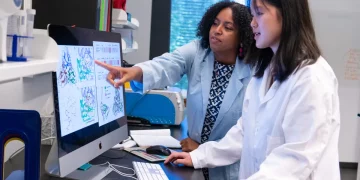
Many modern scientific breakthroughs exist at the intersection of multiple disciplines. Consider the development of AI-driven drug discovery: it combines biology, chemistry, computer science, and statistics. A biologist understands protein structures, a chemist models reactions, and a machine learning specialist develops predictive algorithms. Separately, each contribution is valuable; together, they can revolutionize medicine.

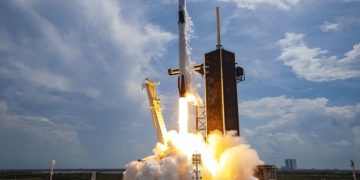
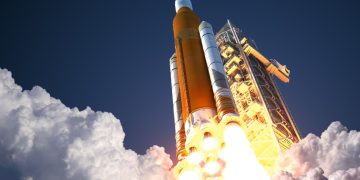
This synergy extends to space exploration as well. NASA’s Artemis program, for example, integrates astrophysicists, engineers, software developers, material scientists, and medical researchers. Every breakthrough—from safer spacecraft to radiation-resistant habitats—requires insights from a kaleidoscope of expertise.
Section 4: The Role of Digital Tools in Modern Collaboration
The digital age has made collaboration faster, more seamless, and more global. Cloud-based platforms allow scientists to share results instantly, while virtual labs enable experiments to be simulated and analyzed remotely.
Open-access journals and preprint servers democratize knowledge, allowing researchers worldwide to build on one another’s work without the traditional delays of publication. Collaborative coding platforms, like GitHub, facilitate the development of scientific software in a distributed, transparent way.
Moreover, AI tools are increasingly mediating collaboration, suggesting experiments, detecting patterns in datasets, and even drafting research proposals. Technology doesn’t just support collaboration—it amplifies it.
Section 5: Collaboration Across Borders and Cultures
Modern scientific collaboration transcends borders. International consortia such as CERN (European Organization for Nuclear Research) or the International Space Station exemplify large-scale, multicultural cooperation. Scientists from dozens of countries contribute to projects that no single nation could manage alone.
These collaborations foster cultural exchange, generate shared problem-solving approaches, and distribute costs and risks. Yet they also require careful coordination, diplomacy, and clear communication—skills as critical as technical expertise.
Section 6: Collaboration vs. Competition
While collaboration drives discovery, competition often catalyzes it. The balance between these forces is delicate. Open collaboration accelerates knowledge sharing, but too much openness can create conflicts over credit and intellectual property.
Modern frameworks often combine the two: collaborative “pre-competitive” research pools resources for foundational discoveries, while individual labs compete to apply these insights commercially or clinically. This hybrid model maximizes efficiency and innovation.

Section 7: Case Studies in Collaborative Breakthroughs
1. CRISPR Gene Editing:
The development of CRISPR-Cas9 technology illustrates how collaboration accelerates innovation. Researchers across genetics, microbiology, and biochemistry shared insights in real-time, leading to transformative applications in medicine and agriculture.
2. COVID-19 Vaccines:
The rapid creation of mRNA vaccines was possible because pharmaceutical companies, universities, and governments shared viral data, research findings, and clinical trial results globally. Collaboration turned a years-long process into months.
3. Gravitational Wave Detection:
LIGO, a collaboration involving thousands of scientists worldwide, detected gravitational waves for the first time in 2015. This achievement required coordinated engineering, data analysis, and theoretical modeling on a global scale.
These examples underscore a consistent pattern: large-scale, multi-institutional collaboration is often the defining feature of modern breakthroughs.
Section 8: Challenges in Collaborative Science
Despite its advantages, collaboration poses challenges:
- Coordination Complexity: Large teams require sophisticated project management and communication protocols.
- Data Ownership: Sharing sensitive data across borders raises legal and ethical questions.
- Credit Allocation: Ensuring fair recognition in multi-author publications can be contentious.
- Cultural Differences: Scientists from different backgrounds may approach problems differently, which can slow consensus.
Addressing these challenges requires institutional support, clear frameworks, and a culture that values both collective success and individual contribution.
Section 9: The Future of Collaborative Science
The next frontier of scientific collaboration will likely involve even greater integration of AI and automation. Imagine distributed AI networks coordinating global experiments, optimizing research paths, and dynamically allocating resources.
Virtual and augmented reality may allow “remote labs” where scientists manipulate experiments together in immersive environments. Blockchain technology could provide transparent systems for credit allocation, ensuring contributors are recognized fairly.
Moreover, as global challenges like climate change, pandemics, and space colonization demand interdisciplinary approaches, collaboration will not just be beneficial—it will be existentially necessary.
Conclusion: Collaboration as the Engine of Progress
Modern scientific breakthroughs are rarely the work of isolated individuals. Collaboration—across disciplines, borders, and technologies—is the engine driving discovery today. From decoding genomes to exploring distant planets, collective intelligence multiplies human potential, transforming abstract ideas into tangible realities.
The message is clear: if science is a symphony, collaboration is the orchestra. Individual brilliance shines, but only together can we compose the masterpieces that define our era.













Discussion about this post