













The rise of artificial intelligence (AI) has introduced groundbreaking advancements across many sectors, from healthcare to transportation, and it’s starting to make waves in the world of art, music, and design. For years, AI has been utilized in creative fields, with machines producing stunning pieces of art, composing symphonies, and designing innovative products. But as these algorithms become increasingly sophisticated, a pressing question emerges: can machines truly be creative, or are they simply mimicking human ingenuity?
In this article, we explore the intersection of AI and human creativity, investigating the boundaries between machine learning and human expression. We will delve into AI’s role in the creative industries, evaluate whether machines can be considered “truly creative,” and discuss the impact of AI-generated art on traditional concepts of creativity.
The Rise of AI in Creative Industries
AI’s integration into creative fields began with the automation of mundane tasks such as image editing or sound mixing. However, over time, AI systems have evolved from simple tools to active collaborators in the creative process. One of the earliest examples of AI in art was the development of neural networks capable of producing original artworks. These AI-generated pieces, often created through the manipulation of vast datasets of existing artwork, sparked debates about whether these machines could ever replace human artists or merely assist them.
In music, AI has been utilized to compose original compositions by learning from existing music styles and patterns. Algorithms like OpenAI’s MuseNet or Sony’s Flow Machines can compose melodies, harmonies, and even full pieces of music, all without human input. These compositions range from classical symphonies to contemporary pop hits, showcasing the vast range of creativity AI can produce. Similarly, in design, AI systems can analyze and generate new product designs, architecture, and even fashion, creating innovative concepts that push the boundaries of traditional design principles.
However, while AI can generate art, music, and design, the question remains whether it can exhibit true creativity or whether it is simply replicating patterns it has learned from human work. Is AI simply an extension of human creativity, or does it possess the potential to create something entirely new, independent of its programming?
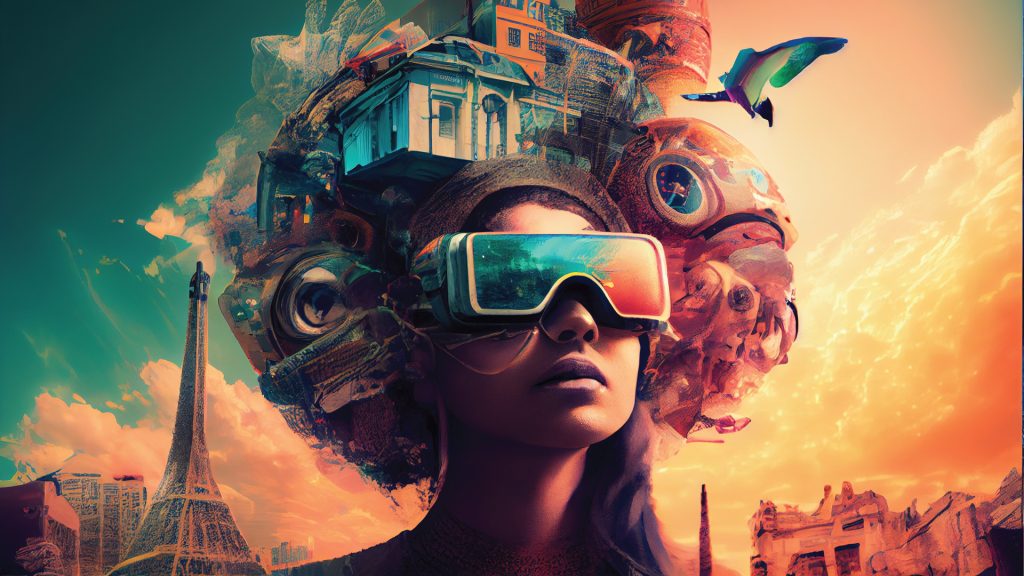
Machine Learning and the Mimicry of Human Creativity
To understand whether AI can be truly creative, it’s essential to examine how machine learning works. Machine learning algorithms, especially deep learning, learn from vast datasets and refine their models by identifying patterns and relationships within that data. In the case of art, for example, an AI model trained on thousands of paintings will begin to recognize certain brushstrokes, color palettes, and compositions, and use that information to generate new pieces of artwork.
This process is essentially one of pattern recognition and reproduction. The AI is not “thinking” or “feeling” in the way humans do; rather, it is using mathematical models to predict what comes next based on past data. Some argue that because AI relies heavily on data created by humans, it lacks the ability to produce truly original ideas. In this sense, AI might be seen as a mirror of human creativity, replicating styles and themes but unable to surpass the boundaries set by its training data.
For example, AI-generated art often appears derivative, as it pulls from existing works of art and adapts them to new contexts. Similarly, AI compositions are often criticized for lacking the emotional depth and spontaneity that human composers bring to their work. The “creativity” displayed by AI might be better described as an imitation or a remix, rather than an independent creative act.
The Concept of Originality in AI-Generated Work
One of the defining characteristics of human creativity is the ability to generate novel ideas and concepts that are not directly tied to past works. In the realm of art, music, and design, originality is often seen as the highest form of creativity—something that pushes boundaries and challenges conventions. When humans create, they are influenced by their experiences, emotions, and cultural contexts, which results in truly unique works.
AI, on the other hand, is limited by its training data and the algorithms that guide it. While it can create novel combinations of existing elements, it is often constrained by the data it has been fed and the rules defined by its programmers. For example, AI-generated paintings might be striking, but they rarely evoke the same sense of emotional resonance or personal expression that a human artist’s work does. Similarly, AI-generated music can be impressive in its technical complexity but may lack the emotional depth or unpredictability found in compositions by human musicians.
Despite these limitations, some AI systems have been able to push the envelope of creativity by introducing unexpected results. AI-generated art and music can offer surprising interpretations, leading to new forms of expression. However, the originality of these works is still debated. Are they genuinely innovative, or are they simply novel reconfigurations of existing patterns? Can AI be considered truly creative if it cannot deviate from its programming or offer insights beyond what it has learned?
Collaboration Between AI and Human Creators
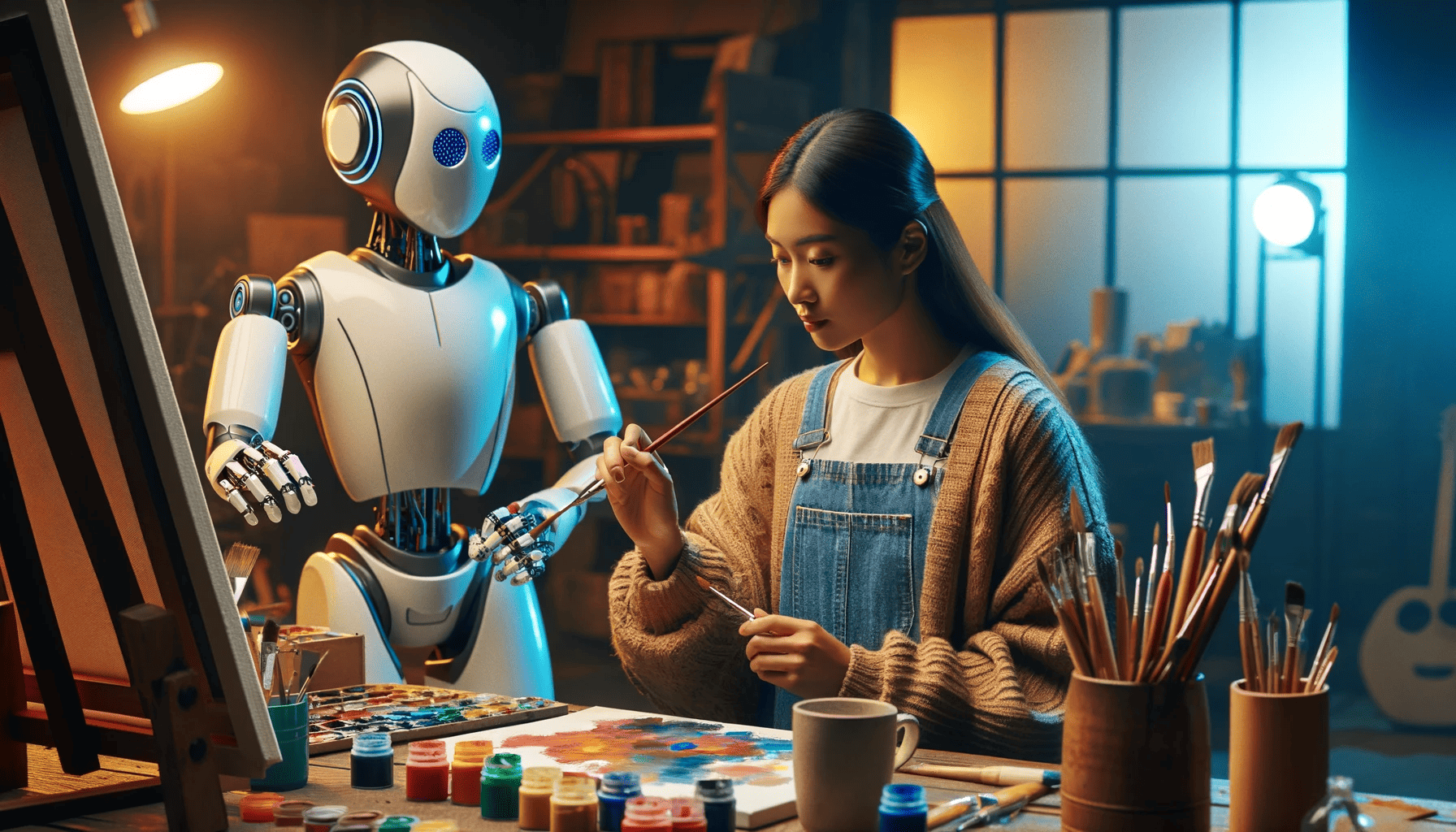
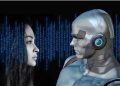
While AI may not yet be able to match human creativity on its own, many see its true potential in collaboration with human creators. By working alongside AI, artists, musicians, and designers can push their own creative boundaries and discover new possibilities that would not be possible without the aid of advanced algorithms. This collaboration allows humans to leverage the strengths of AI—such as its ability to analyze vast amounts of data and generate countless variations of a design or melody—while maintaining the emotional and conceptual depth that humans bring to creative work.
For instance, in music, AI can be used to generate new melodies or suggest harmonies, while the human musician can shape and refine the final composition. In visual art, AI can assist with generating abstract forms or patterns, allowing artists to focus on the emotional and conceptual elements of their work. Similarly, in product design, AI can be used to generate novel concepts or optimize existing designs, while designers can focus on user experience and aesthetics.
Through this collaboration, AI enhances human creativity by offering new tools and insights, but the final product remains grounded in human ingenuity. Rather than replacing human artists, AI acts as a catalyst, expanding the possibilities of what can be created.
The Ethical Implications of AI in Creative Fields
The rise of AI-generated art raises important ethical questions. If AI can create art, who owns the rights to that work? Should the creators of AI systems be credited for the work that their algorithms produce, or should the credit go to the human artists who collaborated with the AI? As AI continues to blur the lines between human and machine-generated content, these questions will become increasingly complex.
Additionally, there are concerns about the potential for AI to displace human artists, musicians, and designers. If AI becomes proficient enough at generating high-quality creative works, could it lead to a devaluation of human creativity and a loss of jobs in creative industries? Conversely, could AI democratize access to creative tools, enabling individuals who might not have the traditional skills to create their own art, music, or designs?
These ethical considerations underscore the need for thoughtful discussions about the role of AI in creative industries and how society should navigate the integration of machines into artistic endeavors.
Conclusion: Can Machines Be Truly Creative?
AI’s involvement in art, music, and design is undoubtedly revolutionizing the creative landscape. However, the question of whether machines can truly be creative remains a matter of debate. While AI can generate impressive works of art and music, it still lacks the emotional depth, intentionality, and originality that characterize human creativity. AI is limited by the data it is trained on and the algorithms it follows, making it more of a tool for human creators than an independent source of creativity.
Nevertheless, AI’s role in creative fields is undeniable. It is an exciting collaborator that opens up new possibilities for artists, musicians, and designers. While machines may not yet be capable of true creativity, they are reshaping the way we think about the creative process and enabling humans to push the boundaries of what is possible. Ultimately, the future of creativity may lie not in whether machines can create on their own, but in how humans and AI work together to forge new paths in art and design.








Discussion about this post