






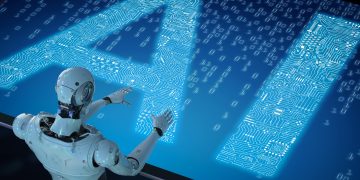






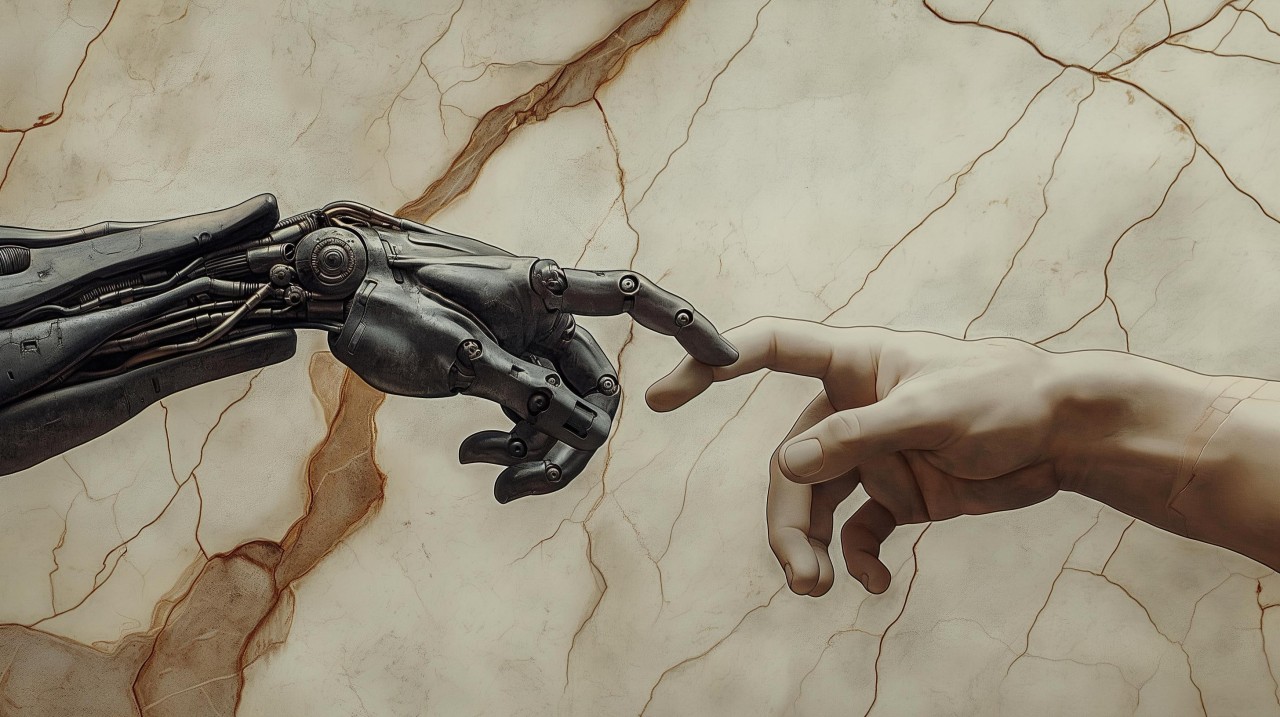
In the realm of art, we often turn to human creativity for inspiration—expressions of inner emotions, raw experiences, or abstract concepts that transcend mere representation. From cave paintings to Renaissance masterpieces, from surrealist revolutions to modern installations, art has always been an evolving reflection of human consciousness. But in the age of Artificial Intelligence (AI), we are left to ponder: Will AI ever create art that challenges our understanding of reality?
The Intersection of Art and AI
Art has long been a space where the impossible meets the tangible. Whether it’s Picasso bending perspective, or Dali distorting time itself, artists have pushed the boundaries of what we perceive as real. But now, the question of how far AI can stretch those boundaries is becoming increasingly relevant. AI-driven art is not just a product of algorithms; it is a fascinating intersection of technology, creativity, and philosophy.
At first glance, the notion of machines creating art may seem odd. Art is often defined by its deeply human roots, emotions, and experiences. How can an AI, a machine devoid of consciousness, intuition, or subjective experience, produce something as profound as a human artist? However, the reality is more complex than it appears. The AI does not generate art from emotions or lived experience, but rather from patterns, data, and learned aesthetics. It uses vast datasets to recognize trends, structures, and styles, then combines these elements in ways that can mimic or even innovate upon traditional human art forms.
The Genesis of AI Art
To understand how AI art challenges our conception of reality, it’s crucial to explore the journey of its creation. AI art typically relies on machine learning algorithms, particularly neural networks, that are trained on enormous databases of visual material. These networks learn patterns, styles, colors, shapes, and textures by analyzing millions of images and then use this knowledge to generate new pieces of art. This process is iterative, with the AI constantly refining its creations.
One prominent example is the use of Generative Adversarial Networks (GANs), a type of AI that pits two neural networks against each other—one generates images, and the other evaluates them for authenticity. This back-and-forth allows the AI to produce ever-more convincing artwork, whether it’s abstract, photorealistic, or even avant-garde.
But the real question is not how AI creates art, but whether the art it produces can transcend human understanding and challenge our perception of reality.
A New Dimension of Reality?
Traditional art is shaped by the creator’s experiences, perspective, and worldview. This has led to a rich diversity of artistic styles, each with its own rules, philosophies, and cultural context. AI art, however, is born from an entirely different foundation: an infinite pool of information, patterns, and mathematical algorithms that are free from the constraints of human experience. AI, in a sense, operates in a space where reality itself becomes malleable, able to bend and twist in ways that human artists might not imagine.

This concept introduces an intriguing philosophical question: If art is a reflection of reality, then what does AI-generated art say about reality itself? Can a machine’s interpretation of the world present a reality that we, as humans, cannot perceive on our own?
Consider the world of abstract AI art. When AI algorithms generate abstract patterns or surreal landscapes, they often do so in ways that humans cannot easily predict or replicate. The result is a form of art that both defies and redefines our understanding of what is possible. AI doesn’t “see” the world as we do; it doesn’t experience color, depth, or texture in the way that human eyes and brains do. And yet, the images it creates can challenge our sense of space and perception, pushing us to think differently about reality.
AI as a Mirror, Not a Creator
Some critics argue that AI cannot truly be said to create art, because it lacks intention, consciousness, and self-awareness. While this critique holds weight, it overlooks an important point: AI art doesn’t need to be conscious to be meaningful. In fact, AI-generated art can act as a mirror, reflecting our own biases, preferences, and blind spots. Since AI art is based on data derived from human culture, it inadvertently carries with it the imprints of our collective identity. In this sense, AI-generated works may highlight the very things that we fail to notice or consider in our day-to-day lives.
Moreover, AI art presents a new kind of collaboration: one where the human creator and the machine are equal partners in the creative process. Artists can guide the AI by selecting parameters, curating datasets, and providing feedback on its creations. In this collaboration, the AI serves not as a mere tool, but as a co-creator that offers fresh perspectives, unexpected outcomes, and unconventional interpretations of the world. This partnership may ultimately lead to works that challenge not only our understanding of art but also our understanding of the role of the artist in the creative process.
The Role of the Viewer in AI Art
If AI art challenges our perception of reality, then what about the role of the viewer? In traditional art, the viewer’s personal experiences and emotions play a significant part in how they interpret the work. This relationship is often intimate, as the viewer brings their own life story to the experience of art.

AI art complicates this dynamic. Since AI does not have emotions, and its “intention” is a mere product of data analysis, the viewer’s interpretation may become even more significant. AI art removes the artist’s personal identity from the equation, offering a kind of “blank slate” for the viewer. This forces the audience to focus not on the artist’s intentions, but on the work itself. This shift may lead to a deeper, more open-ended engagement with the art, where the viewer becomes an active participant in interpreting meaning, rather than passively receiving it.
Furthermore, because AI art often pushes the boundaries of what we perceive as reality, it can create a sense of disorientation or awe in the viewer. When faced with an AI-generated work, we are not just encountering a new aesthetic; we are confronting an alternate version of reality. The familiar can seem strange, the ordinary extraordinary. And this, perhaps, is where AI art truly challenges our understanding of reality—by presenting us with a world that we recognize, but one that is subtly altered, unfamiliar, and full of new possibilities.
The Limitations of AI Art
Despite its potential to redefine art and reality, AI-generated art is not without limitations. One of the most significant challenges is that AI is fundamentally bound by the data it learns from. While this allows it to generate new combinations of existing elements, it also restricts the AI to the constraints of human knowledge and creativity. AI cannot go beyond what it has been taught or what has already been created by humans. In other words, it can remix and reimagine reality, but it cannot invent something truly new or entirely break free from human influence.
Another limitation is that AI art lacks the inherent emotional depth and narrative that often underpins human-created art. While AI can produce visually stunning pieces, it lacks the conscious intention to evoke emotions or convey personal stories. For all its technical brilliance, AI-generated art can sometimes feel hollow, devoid of the raw humanity that makes art so deeply resonant. This raises the question: can art truly challenge our understanding of reality if it is not imbued with the personal and emotional experiences that make us human?
A New Frontier
As AI technology continues to evolve, its potential to challenge our understanding of reality will only increase. With advancements in machine learning, neural networks, and generative algorithms, AI art will likely continue to push the boundaries of what we consider possible in the creative world. It may not provide the same emotional depth as human art, but it offers something equally profound: a new way of seeing and understanding the world around us.
In the coming years, AI-generated art could increasingly reflect complex realities—realities that exist not just in the physical world, but also in the digital, virtual, and augmented realms. As AI learns to interpret data from these new domains, it could create art that challenges not only our understanding of physical reality but also our perceptions of the digital and metaphysical realms.
This will likely lead to a broader philosophical question: If AI can create art that is entirely novel and different from anything humans have imagined, does it change our understanding of creativity itself? Are we on the brink of entering a new era of artistic expression, where machines and humans work together to redefine reality?
Conclusion
AI-generated art holds the potential to challenge, if not completely reshape, our understanding of reality. By offering us a window into a machine’s perception of the world—one devoid of human emotions, but rich with mathematical possibilities—AI art asks us to reconsider the very nature of creativity, perception, and existence. While AI may never truly experience the world as we do, its art can force us to question what is real and what is imagined. In doing so, it opens up new realms of possibility, where reality is not a static thing, but a fluid, ever-evolving concept.




Discussion about this post