



































In a world dominated by screens, sensors, and invisible waves of data, wearable technology has emerged as the quiet revolution reshaping our human experience. From the first step of a pedometer to the sophisticated neuro-sensing headsets of today, wearables have been more than fashion statements—they are instruments of potential, nudging the boundaries of human capability. But could these devices actually unlock hidden human abilities? And if so, what might that mean for the future of work, sports, learning, and even the human mind itself?
The Evolution of Wearable Technology
To understand how wearable tech might enhance our abilities, we must first trace its journey. Wearable technology isn’t new; it’s simply evolving at unprecedented speed. Early wearables were mechanical—a pedometer counting footsteps, or a heart rate monitor in the form of a bulky chest strap. They were functional but limited, giving us a glimpse into our physiology without fully interacting with it.
The modern era, however, introduced a radical shift. Miniaturization of sensors, wireless connectivity, AI integration, and cloud computing have transformed wearables from passive trackers into active enhancers. Smartwatches, smart glasses, and even clothing embedded with nanotechnology now provide real-time insights into everything from glucose levels to brain activity. But the question remains: could these devices go beyond tracking and actually unlock latent human abilities?
Cognitive Enhancement: Hacking the Brain
One of the most tantalizing possibilities of wearable tech lies in cognitive enhancement. Devices that monitor and stimulate brain activity are no longer confined to science fiction. Transcranial Direct Current Stimulation (tDCS) headsets, for instance, use mild electrical currents to enhance neural activity. Studies suggest this could improve learning, memory retention, and problem-solving speed. Imagine wearing a headset that helps you learn a new language in weeks instead of months or one that amplifies your creative thinking during a brainstorming session.
Neurofeedback wearables, which track brainwave patterns, can train the mind to enter optimal states of focus or relaxation. Athletes, pilots, and even surgeons have experimented with these devices to sharpen their performance under pressure. While the science is still evolving, the underlying concept is thrilling: wearables as extensions of our brain, nudging dormant neural circuits into action.
Physical Amplification: Beyond Human Limits
Cognitive power is only half the story. Wearables are also on the verge of redefining physical performance. Exoskeletons, which were once the stuff of blockbuster films, are now lightweight, practical, and wearable in industrial, medical, and military contexts. These devices amplify strength, endurance, and precision. Factory workers can lift heavy machinery with less strain, and patients recovering from injuries can regain mobility faster than ever.
On a subtler level, wearable garments embedded with sensors can provide real-time biomechanical feedback, allowing athletes to perfect posture, reduce the risk of injury, and train more efficiently. The line between human limitation and technological augmentation is blurring—our muscles, joints, and reflexes could one day operate in concert with sensors and actuators, transforming raw human potential into calibrated excellence.
Sensory Expansion: Seeing, Hearing, and Feeling More
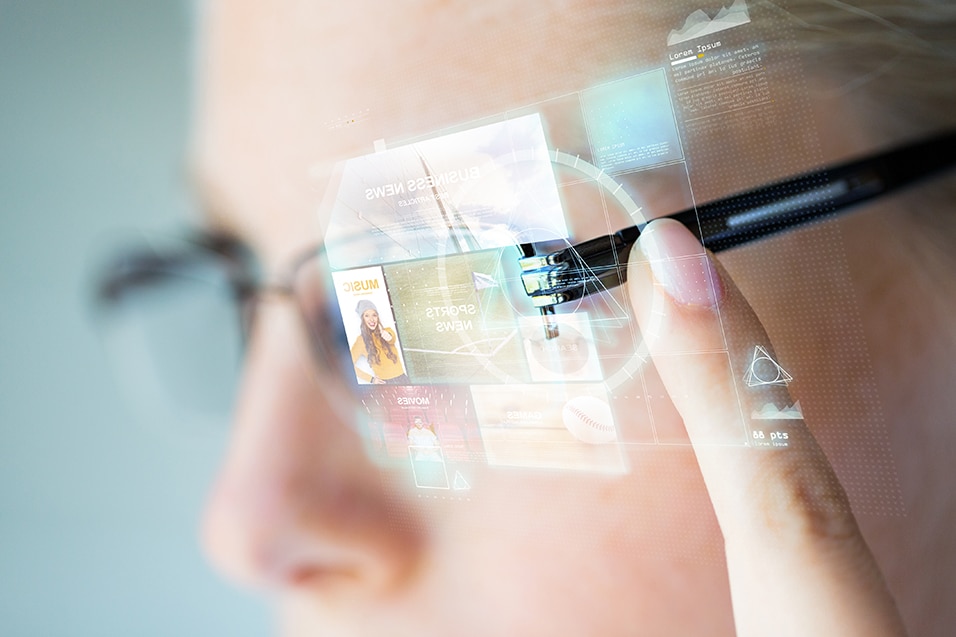
Human senses are impressive, but inherently limited. Wearable tech is poised to extend them into realms previously inaccessible. For example, smart glasses with augmented reality overlays can highlight objects, people, or hazards invisible to the naked eye. Similarly, devices that translate sound frequencies into haptic vibrations can give the deaf an entirely new way of perceiving music or speech.
Even touch can be enhanced. Haptic suits simulate textures and forces, offering immersive experiences that transcend reality. This sensory amplification has implications beyond entertainment—it could transform professions where acute perception is critical, from surgery to deep-sea exploration.
Emotional Intelligence and Social Interaction
Wearable tech may not just improve what we can see, hear, or lift—it could refine how we understand and connect with others. Devices capable of tracking physiological markers of emotion—heart rate variability, skin conductance, or subtle facial microexpressions—can help users understand their own emotional states and respond more empathetically to others. Imagine a wristband that gently alerts you when stress is rising or a smartwatch that helps you calibrate your tone during a tense negotiation.
In the future, wearables could serve as social translators, interpreting unspoken cues and enhancing human interaction. For professionals, caregivers, and educators, such technology could unlock abilities to navigate complex emotional landscapes with unprecedented precision.
The Ethics of Enhancement
With every leap in capability comes a surge of ethical questions. Should wearable technology be used to enhance humans beyond their natural limits? Could these devices exacerbate social inequalities, favoring those who can afford access to cognitive or physical enhancements? And what about privacy? A wearable that reads your emotions or tracks your brainwaves carries intimate data—who should have control over it?
As wearables move from passive trackers to active enhancers, society must grapple with these questions. Ethical frameworks, regulations, and guidelines will be essential to ensure these technologies empower humanity rather than exploit it.
Wearables and the Future of Learning
Education stands to benefit enormously from wearable tech. Neuroadaptive learning systems, paired with brain-monitoring headsets, could tailor instruction to individual cognitive rhythms. Instead of a one-size-fits-all classroom, students could experience personalized learning cycles, maximizing retention and minimizing fatigue.
Beyond the classroom, wearables could unlock latent abilities in professional training. Surgeons, pilots, and engineers could practice complex tasks in virtual or augmented reality environments, with real-time feedback fine-tuning every decision. The boundary between simulation and reality may blur, accelerating skill acquisition and enhancing human proficiency in critical domains.
The Intersection with AI: A Symbiotic Relationship
Wearable technology’s true potential often comes to life when paired with artificial intelligence. AI can analyze vast streams of physiological, environmental, and behavioral data, providing predictive insights and actionable guidance. For instance, a smart shirt could detect muscle strain in real time and instruct the wearer on corrective exercises before injury occurs. Similarly, AI-driven cognitive wearables could suggest optimal times for learning, meditation, or creative work based on neural patterns.
This creates a symbiotic loop: the human provides data, the AI interprets and guides, and the wearable delivers feedback. Over time, this could unlock abilities we didn’t know we had—faster learning, heightened perception, improved decision-making—all orchestrated by a seamless interplay of biology and technology.
Health Optimization: Unlocking Longevity and Resilience
One of the most profound ways wearables could unlock hidden human abilities is by optimizing health. Continuous glucose monitors, heart rate variability sensors, sleep trackers, and stress monitors already allow for hyper-personalized health management. The future promises predictive wearables that anticipate illness before symptoms manifest, or metabolic sensors that suggest real-time dietary adjustments to maximize energy and resilience.

By maintaining the body in peak condition, wearables effectively give us the “hidden ability” of superior physiological performance. This isn’t superhuman in the fantasy sense—it’s superhuman in the practical, everyday sense: living longer, performing better, and recovering faster.
Creativity, Flow, and Enhanced Experience
Wearable technology could also unlock abilities that are less tangible but no less powerful: creativity and flow. By monitoring neural activity and environmental factors, wearables could identify conditions where creativity peaks and suggest ways to enter or maintain a flow state. Writers, artists, designers, and innovators could use these insights to push the boundaries of imagination.
Moreover, wearables could enhance experiential perception. Imagine a hiker whose wearable translates subtle atmospheric changes into tactile or visual cues, enriching the connection with nature. Or a musician whose wearable interprets ambient data into harmonic inspiration. These technologies could transform how we experience the world itself, revealing layers of reality we’ve never consciously perceived.
Limitations and Challenges
Despite the promise, wearable tech faces limitations. Sensor accuracy, battery life, and comfort are ongoing engineering challenges. More critically, the science behind cognitive and physical enhancement is still developing. Neural stimulation may yield inconsistent results across individuals, and physical augmentations require careful calibration to avoid injury or dependence.
There’s also a psychological dimension: reliance on wearable enhancements could diminish innate abilities or create dependency. Users must balance augmentation with maintaining natural skills, ensuring technology enhances rather than replaces human potential.
The Social and Cultural Impact
If wearable tech can unlock hidden human abilities, the societal implications are enormous. Workplaces may evolve as employees leverage cognitive and physical enhancements. Sports competitions could see ethical debates over augmented performance. Education may shift to fully personalized, tech-driven learning pathways. Even social norms could change as we navigate an era where emotional, cognitive, and physical capabilities are amplified by devices.
The potential for positive transformation is vast—but so too is the potential for disruption. Societies will need to adapt policies, ethics, and cultural expectations to accommodate these new dimensions of human ability.
The Road Ahead: Integration and Human-Centric Design
To truly unlock hidden abilities, wearable technology must prioritize human-centric design. Devices should be intuitive, unobtrusive, and responsive, blending seamlessly into daily life. The future isn’t about strapping on clunky exoskeletons or invasive neural implants—it’s about creating a subtle, symbiotic relationship between human and technology.
Integration across multiple systems—health, education, sports, entertainment—will be key. A network of interconnected wearables, powered by AI, could orchestrate a holistic enhancement of human ability, from cognitive acuity to physical performance, emotional intelligence, and sensory perception. This is not just technology—it’s a new chapter in human evolution, where our latent potential is amplified, guided, and refined.
Conclusion: A New Era of Possibility
Wearable technology is on the brink of transforming not just how we live, but what we are capable of. From enhancing cognitive function to amplifying physical performance, expanding sensory perception, and deepening emotional intelligence, the possibilities are staggering. While challenges in ethics, design, and science remain, the trajectory is clear: wearables could unlock human abilities that have lain dormant, revealing new dimensions of potential.
The future may not be about humans versus machines—it may be about humans augmented by machines, exploring the hidden capabilities within us. Our biology, once a limit, could become a foundation for expansion, guided by wearable devices that monitor, inform, and enhance. In this vision, unlocking hidden abilities is not science fiction—it is the next step in human evolution.













Discussion about this post