















In the world of technological advancements, artificial intelligence (AI) has progressed by leaps and bounds. Its ability to perform complex tasks, analyze massive datasets, and even simulate human-like thinking has raised an intriguing question: Is AI ready to replace human creativity?
Creativity has long been viewed as a uniquely human trait, something that sets us apart from other species. Whether in the arts, sciences, or day-to-day problem-solving, our ability to generate new ideas and make unexpected connections is a cornerstone of human innovation. But with AI’s growing capabilities, the line between machine-generated and human-created ideas is becoming increasingly blurred.
This article explores AI’s role in creative industries, the limitations it still faces, and whether it could ever truly replace the profound depth of human creativity.
The Rise of AI in Creative Fields
In recent years, AI has entered the world of creativity with impressive results. Algorithms powered by deep learning models, such as neural networks, are capable of producing music, art, poetry, and even writing stories. One of the most notable advancements is in the realm of visual arts. AI tools can generate realistic paintings and digital art pieces based on inputs like colors, styles, and themes. Programs like DALL·E and DeepArt have demonstrated that AI can mimic the techniques of famous artists, blending them with new forms to create original artworks.
Music has also become a playground for AI innovation. Platforms like OpenAI’s MuseNet can generate compositions in a variety of genres, from classical symphonies to modern pop tunes. These AI systems analyze large datasets of existing music to create melodies, harmonies, and rhythms that sound both familiar and fresh.
In literature, AI’s contributions are less widely recognized but equally impressive. Tools like GPT-3 have generated entire paragraphs of prose that closely resemble human writing. While these AI-generated texts often lack emotional depth or the nuance of human experiences, they are undeniably coherent and well-structured.
These examples demonstrate AI’s growing influence on the creative process, allowing creators to explore new territories and augment their work. But this raises the critical question: Can AI replace the human touch in creativity, or is it simply a tool for enhancement?
Human Creativity vs. AI Creativity: What Sets Us Apart?

At first glance, the output of AI systems in creative domains is undeniably impressive. However, the essence of human creativity is often more than the sum of its parts. It is deeply tied to our emotions, experiences, culture, and the intangible spark that drives innovation.
Humans create from a place of lived experience. Our ideas are born from moments of joy, pain, surprise, and curiosity. These experiences are not easily quantifiable or replicable by AI, which works by analyzing existing data and making predictions based on patterns. AI, for all its computational power, lacks true subjective experience. It cannot feel joy, sorrow, or nostalgia, and therefore cannot inject those emotions into its creative output.
Moreover, humans possess a unique ability to think outside the box, making leaps of logic or forming connections that may seem nonsensical to an AI. Creativity often arises from breaking the rules or embracing paradoxes, something that AI algorithms might struggle with. While AI can follow a set of instructions and generate something new within those parameters, it is not capable of true spontaneous insight or understanding of context in the way humans are.
Example: In literature, a human writer may draw from personal experiences, societal issues, or subconscious emotions to craft a narrative that resonates with others. A machine, however, might simply churn out a story based on a set of syntactic rules and word patterns, devoid of the emotional depth that makes human stories so relatable.
AI: A Tool for Human Creativity
While AI may not yet possess the emotional and intuitive depth of human creativity, it can certainly augment and support the creative process. Artists, musicians, and writers have begun using AI as a collaborator rather than a replacement. By generating new ideas, offering suggestions, or automating repetitive tasks, AI allows creators to push their work in new directions without being bogged down by technicalities.
For example, musicians use AI to explore new compositions and soundscapes, sparking new ideas they might not have considered. Similarly, visual artists can experiment with AI-generated designs as a starting point or inspiration for their work. The key here is that AI acts as a tool for enhancement rather than a substitute for the artist’s unique vision.
In literature, AI can assist writers by suggesting word choices, generating plot ideas, or even helping with dialogue. It can also help in breaking writer’s block by offering different scenarios or twists. However, the writer’s voice, perspective, and emotional depth still define the final piece. The collaboration between AI and the human artist enhances creativity rather than replacing it.
Limitations of AI in Creative Fields
Despite its potential, AI still faces significant limitations when it comes to creativity. These limitations are rooted in both the technological constraints of current AI systems and the inherent differences between human and machine cognition.

- Lack of True Understanding: AI does not “understand” its creations in the same way humans do. It is programmed to detect patterns, but it doesn’t comprehend context, nuance, or the emotional weight of its work. A painting or a poem generated by AI may be aesthetically pleasing, but it lacks the depth of meaning that a human artist imparts through their personal experience and worldview.
- Innovation and Originality: AI operates within the parameters set by its training data. It can only create based on what it has learned from existing examples. While this can lead to novel combinations of existing ideas, true innovation—creating something entirely new—is still beyond AI’s reach. AI lacks the capacity to invent ideas that have never been thought of before, a skill that is central to human creativity.
- Ethical Concerns: The rise of AI-generated content has also raised ethical issues. Who owns the rights to an AI-generated painting or piece of music? If AI is responsible for creating a work, can it be considered truly “original”? As AI systems become more capable, society will need to address questions about authorship, creativity, and intellectual property in new ways.
Can AI Ever Truly Replace Human Creativity?
The question of whether AI can ever fully replace human creativity is complex and multifaceted. AI has undoubtedly revolutionized the way we approach creativity, making it easier to generate ideas, experiment with new concepts, and collaborate with technology. But even with all its advancements, AI remains a tool, not a creator in its own right.
For AI to truly replace human creativity, it would need to replicate not just the technical aspects of creation, but also the emotional and experiential depth that comes with it. This is an area where AI is still severely lacking. Creativity is more than just combining existing ideas; it is about understanding the human experience, the subtleties of emotion, and the context in which we live.
In some cases, AI may continue to play an increasing role in the creative process, but it is unlikely to replace human creators entirely. Instead, AI and humans will likely work together, each bringing their strengths to the table. Human creativity, fueled by emotions and insights drawn from lived experiences, will continue to drive innovation, while AI will act as a powerful tool for enhancing and expanding creative possibilities.
Conclusion: A Partnership, Not a Replacement
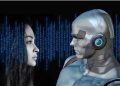
AI is an incredibly powerful tool with the potential to reshape the creative landscape. It has already proven its ability to generate impressive works in art, music, and literature. However, it is unlikely to ever fully replace the human touch. Creativity, after all, is about more than just output—it’s about the emotional depth, the context, and the intuitive leaps that come from lived experience.
Rather than replacing human creativity, AI will likely serve as a partner, helping to unlock new possibilities and push the boundaries of what we can create. In this sense, the future of creativity may not lie in competition between humans and machines, but in a harmonious collaboration where both contribute in their own unique ways.









Discussion about this post