





























A Journey to the Edge of Everything We Can Know
Stand outside on a clear night, far from city lights, and look up. The sky seems calm, even familiar—pinpoints of light scattered across a dark canvas. Yet this quiet view hides a staggering truth: everything you can see, from the Moon to the faintest galaxy, occupies only a tiny region of a much larger cosmic story. The question that has haunted philosophers, astronomers, and physicists for centuries is deceptively simple:
What lies beyond the known universe?
This is not merely a question of distance. It is a question about limits—of light, time, information, and imagination. The “known universe” is not defined by a physical wall or a cosmic fence. Instead, it is bounded by what the universe has allowed us to see since the beginning of time. Beyond that boundary may lie more space, more universes, unfamiliar laws of physics, or perhaps nothing that can meaningfully be called “something.”
In this article, we will explore the frontier beyond the observable universe using modern physics, cosmology, and carefully constrained speculation. We will move from solid, testable science into the foggier territory where theory stretches ahead of evidence. Along the way, we will ask not only what might be out there, but also whether we could ever know.
1. Defining the Known Universe
Before asking what lies beyond, we must clarify what we mean by the “known universe.”
The Observable Universe
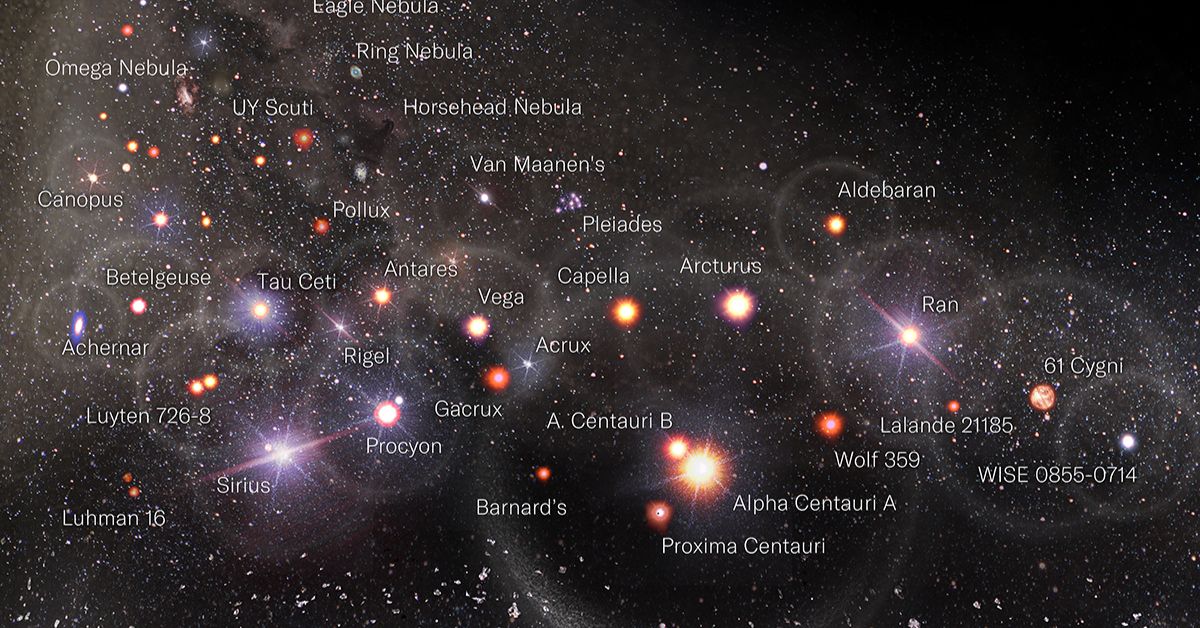
The observable universe is the region of space from which light has had time to reach us since the beginning of cosmic expansion. The universe is approximately 13.8 billion years old, but the observable universe has a radius of about 46 billion light-years. This apparent contradiction arises because space itself has been expanding while light travels through it.
Every telescope, every detector, and every measurement we have ever made is confined within this cosmic bubble.
Beyond it, light has simply not had enough time to arrive.
Not a Physical Edge
It is crucial to understand that the observable universe is not the entire universe, nor is its boundary a physical edge. It is a horizon—much like the horizon you see at sea. The ocean does not end where your vision does, and neither does the universe end where our observations stop.
The known universe is defined by causal contact. Beyond it, events may exist, but they cannot influence us—at least not yet, and perhaps not ever.
2. The Cosmic Horizon: A Boundary of Information
Light as a Messenger
Light is the universe’s primary courier of information. Every photon that reaches Earth carries a message from the past: the composition of a star, the motion of a galaxy, the echo of the Big Bang itself.
But light has a finite speed. This creates a fundamental limit on what we can know.
The Particle Horizon and the Event Horizon
Cosmology distinguishes between two important horizons:
- The particle horizon: the maximum distance from which light has reached us since the beginning of the universe.
- The cosmic event horizon: the maximum distance from which light emitted now will ever reach us in the future.
Due to the accelerating expansion of the universe, driven by dark energy, some regions of space are receding from us so quickly that their light will never arrive, no matter how long we wait.
This means parts of the universe are not just unknown—they are unknowable in principle.
3. Is There More Universe Beyond What We See?
Most cosmologists believe the answer is yes.
Spatial Continuation
The simplest possibility is that space continues beyond the observable universe in much the same way it exists within it. The same physical laws, the same kinds of particles, the same cosmic structures—just more of them.
If this is true, then beyond our cosmic horizon lie countless galaxies, stars, and perhaps planets, all forever inaccessible.
This idea is deeply unsettling. It suggests that the universe may be vastly larger than anything we can ever observe, making our visible cosmos an almost negligible fragment of the whole.
Finite or Infinite?
Is the universe finite or infinite?
- A finite universe could still be unbounded, like the surface of a sphere—finite in area, but without an edge.
- An infinite universe would contain an endless amount of matter, energy, and space.
Current observations cannot distinguish between these possibilities. The geometry of space appears very close to flat, which allows for both extremely large finite universes and truly infinite ones.
4. The Shape and Topology of the Universe
Even if the universe extends beyond what we see, its large-scale shape remains an open question.
Beyond Simple Geometry
When people think of shape, they imagine spheres or cubes. In cosmology, shape refers to topology—how space connects to itself on the largest scales.
Space might be:
- Simply connected, extending endlessly.
- Multiply connected, looping back on itself in complex ways.
- Structured in higher dimensions beyond our perception.
In some topologies, traveling far enough in one direction could, in principle, bring you back to your starting point—though the distances involved might exceed the observable universe many times over.
If the universe has such a topology, regions beyond our horizon might actually be repeats of regions we already see, rearranged in ways we cannot yet detect.
5. Inflation and the Vastness Beyond
The Inflationary Epoch
One of the most important ideas in modern cosmology is cosmic inflation—a brief period of extremely rapid expansion that occurred fractions of a second after the Big Bang.
Inflation explains why the universe appears:
- Remarkably uniform in temperature.
- Geometrically flat.
- Free of certain predicted defects.
But inflation has another profound implication: it suggests that the universe beyond our observable region may be enormously larger than the part we can see.
Eternal Inflation
Some versions of inflation propose that it never completely ends. Instead, inflation stops locally in certain regions—creating “bubble universes”—while continuing elsewhere.
Our universe may be one such bubble.
Beyond our observable universe, inflation may still be occurring, generating vast regions of space that are causally disconnected from us forever.
6. The Multiverse: Beyond One Universe
The idea that there may be more than one universe—collectively called the multiverse—is one of the most controversial and fascinating concepts in theoretical physics.
Types of Multiverse
Physicists have proposed several kinds of multiverses:
- Spatial multiverse
Different regions of an infinite universe have different initial conditions. - Inflationary multiverse
Bubble universes form through eternal inflation, each with potentially different physical constants. - Quantum multiverse
All possible outcomes of quantum events exist in separate branches of reality. - Mathematical multiverse
Every mathematically consistent structure corresponds to a physical universe.
In many of these models, what lies beyond the known universe is not just more space—but entirely different universes with different laws of physics.
Scientific or Speculative?
The multiverse sits at the boundary between science and philosophy. While it arises naturally from some well-developed theories, it currently lacks direct experimental confirmation.
Nevertheless, it profoundly reshapes our understanding of what “beyond” might mean.
7. Different Laws Beyond Our Horizon?
If regions beyond the observable universe exist, must they obey the same physical laws?
Not necessarily.
Variable Constants
Some theories suggest that fundamental constants—such as the strength of gravity or the charge of the electron—could vary across different regions of a larger cosmos.
In this view, the laws we observe are local environmental conditions, not universal truths.
The Anthropic Perspective
This leads to the anthropic principle: we observe a universe compatible with life because only such universes can host observers.
Beyond our cosmic horizon may lie regions where:
- Stars cannot form.
- Chemistry is impossible.
- Time behaves differently.
Such regions would be forever silent, invisible, and uninhabitable from our perspective.

8. Dark Energy and the Fate of the Beyond
The Accelerating Universe
Observations show that the expansion of the universe is accelerating, driven by dark energy—a mysterious component that makes up about 70% of the universe’s total energy content.
Dark energy reshapes what lies beyond the known universe in a profound way.
Isolation of Cosmic Islands
As expansion accelerates:
- Distant galaxies will slip beyond our event horizon.
- Future observers will see fewer galaxies.
- Eventually, only our local group may remain visible.
In the far future, the observable universe will shrink in content, even if the universe itself continues to grow.
What lies beyond will not only be unknown—it will become increasingly irrelevant to any physical process we can experience.
9. Time Beyond the Known Universe
Space is not the only dimension with boundaries.
The Temporal Horizon
Just as there is a spatial limit to what we can see, there is a temporal limit to what we can know about the past.
We can observe back to about 380,000 years after the Big Bang, when the universe became transparent to light. Before that, the universe was opaque.
Beyond this temporal horizon lies a realm we can only explore indirectly, through subtle imprints on cosmic radiation and matter distribution.
Before the Beginning?
What, if anything, existed before the Big Bang?
Possibilities include:
- A previous contracting universe.
- A quantum vacuum fluctuation.
- A timeless phase where classical concepts of cause and effect do not apply.
In some models, “before” the Big Bang is as meaningless as “north of the North Pole.”
10. Information Limits and Cosmic Censorship
The Universe as an Information System
Physics increasingly suggests that the universe has fundamental limits on how much information can be stored, transmitted, and processed.
The observable universe may represent the maximum amount of information accessible to us.
Beyond it, information exists, but cannot cross the boundary imposed by cosmic expansion.
Black Holes as a Metaphor
Black holes provide a useful analogy. Information beyond an event horizon still exists, but it cannot influence an outside observer in any practical way.
Similarly, regions beyond our cosmic horizon may be physically real, yet forever separated from us by the structure of spacetime itself.
11. Can We Ever Know What Lies Beyond?
This is perhaps the most important question of all.
Observational Limits
No telescope, no matter how powerful, can see beyond the cosmic horizon. This is not a technological limitation—it is a physical one.
Indirect Clues
However, physicists search for indirect evidence:
- Patterns in the cosmic microwave background.
- Statistical anomalies in large-scale structure.
- Consistency or inconsistency in physical constants.
These clues may hint at what lies beyond, even if we never observe it directly.
The Role of Theory
In regions forever beyond observation, theory becomes our primary guide. Mathematical consistency, explanatory power, and internal coherence take on greater importance.
This does not mean abandoning science—it means redefining its frontier.
12. Philosophical Implications: Meaning at the Edge
What does it mean for humanity if most of reality lies forever beyond our reach?
Cosmic Humility
The idea that the known universe is only a tiny patch of a vastly larger reality invites humility. Our theories, our measurements, and even our existence may be local phenomena in an unimaginably larger whole.
The Power of Questions
Yet the very act of asking what lies beyond is a testament to human curiosity. We are finite beings, living in a bounded region of space and time, yet capable of contemplating infinity.
The known universe may be limited, but our questions are not.
13. Beyond Science: Imagination as a Tool
While science sets strict rules for what we can claim, imagination plays a crucial role in exploring the unknown.
Science fiction, philosophy, and art have long ventured beyond the observable universe, proposing:
- Other dimensions brushing against our own.
- Universes connected by subtle bridges.
- Realities governed by unfamiliar logics.
These ideas are not answers—but they expand the space of questions we are willing to ask.
Conclusion: Standing at the Cosmic Shore
The known universe is not a destination; it is a shoreline. Beyond it stretches a vast ocean of possibility—some of it governed by the same laws we know, some of it radically different, and some of it perhaps forever beyond comprehension.
What lies beyond the known universe may include more galaxies, other universes, different laws of physics, or structures we lack the language to describe. Or it may include nothing at all in any meaningful sense.
What matters is not that we have reached the limit of observation, but that we recognize it as a frontier rather than a wall.
The universe has not ended where our knowledge stops. It has merely invited us to imagine, to theorize, and to continue asking the deepest questions we can conceive.
And in that sense, the true boundary of the known universe is not written in the stars—but in the reach of human understanding.










Discussion about this post