





























Introduction: The Cosmic Temptation
Imagine staring at the night sky, the vast canvas of the universe stretching infinitely beyond the Milky Way, and wondering: what if we could just… get there? Not in decades, not in centuries, but in the blink of an eye—or at least close enough. For centuries, interstellar travel has belonged to the realm of science fiction, relegated to novels, films, and dreams. But recent advances in physics, particularly in the quantum realm, are beginning to challenge our assumptions. Could the bizarre rules that govern the smallest scales of reality actually hold the keys to the largest scales of exploration?
The universe, as it turns out, is not the smooth, clockwork machine classical physics once imagined. Quantum mechanics tells us that reality is probabilistic, interconnected, and often counterintuitive. These peculiar properties may one day allow humanity to circumvent the seemingly insurmountable distances between stars. This article delves into the tantalizing possibility that quantum physics could unlock intergalactic travel, exploring the principles, the hurdles, and the speculative technologies that could make this dream a reality.
1. Quantum Mechanics: The Universe at Its Strangest
At its core, quantum mechanics is a theory that describes how matter and energy behave on the smallest scales. Particles can exist in multiple states simultaneously—a phenomenon called superposition. They can be entangled across vast distances, meaning that the state of one particle instantaneously influences another, no matter the separation. And until measured, particles occupy a cloud of probabilities rather than a defined position.
Now, you might wonder: how could these microscopic oddities matter for interstellar travel? The key lies in the potential to manipulate reality in ways that bypass classical limitations. If we could harness entanglement on a macroscopic scale, or create quantum states capable of sustaining stable, controlled wormholes, we could theoretically “fold” space, making intergalactic distances far less daunting.
2. Entanglement: Spooky Action for Cosmic Journeys
Albert Einstein famously referred to quantum entanglement as “spooky action at a distance.” In essence, two entangled particles share a connection so deep that measuring one immediately affects the other, regardless of separation. This phenomenon has been experimentally verified over hundreds of kilometers.
For interstellar travel, entanglement could underpin communication or even transportation methods that defy classical constraints. Imagine a system where quantum states are entangled between Earth and a distant star system. Updates, information, or perhaps even matter encoded into quantum states could be transmitted instantaneously, circumventing the need for near-light-speed travel. While teleporting humans remains wildly speculative, the foundational physics hints at revolutionary possibilities.
3. Quantum Tunneling: Passing Through the Impossible
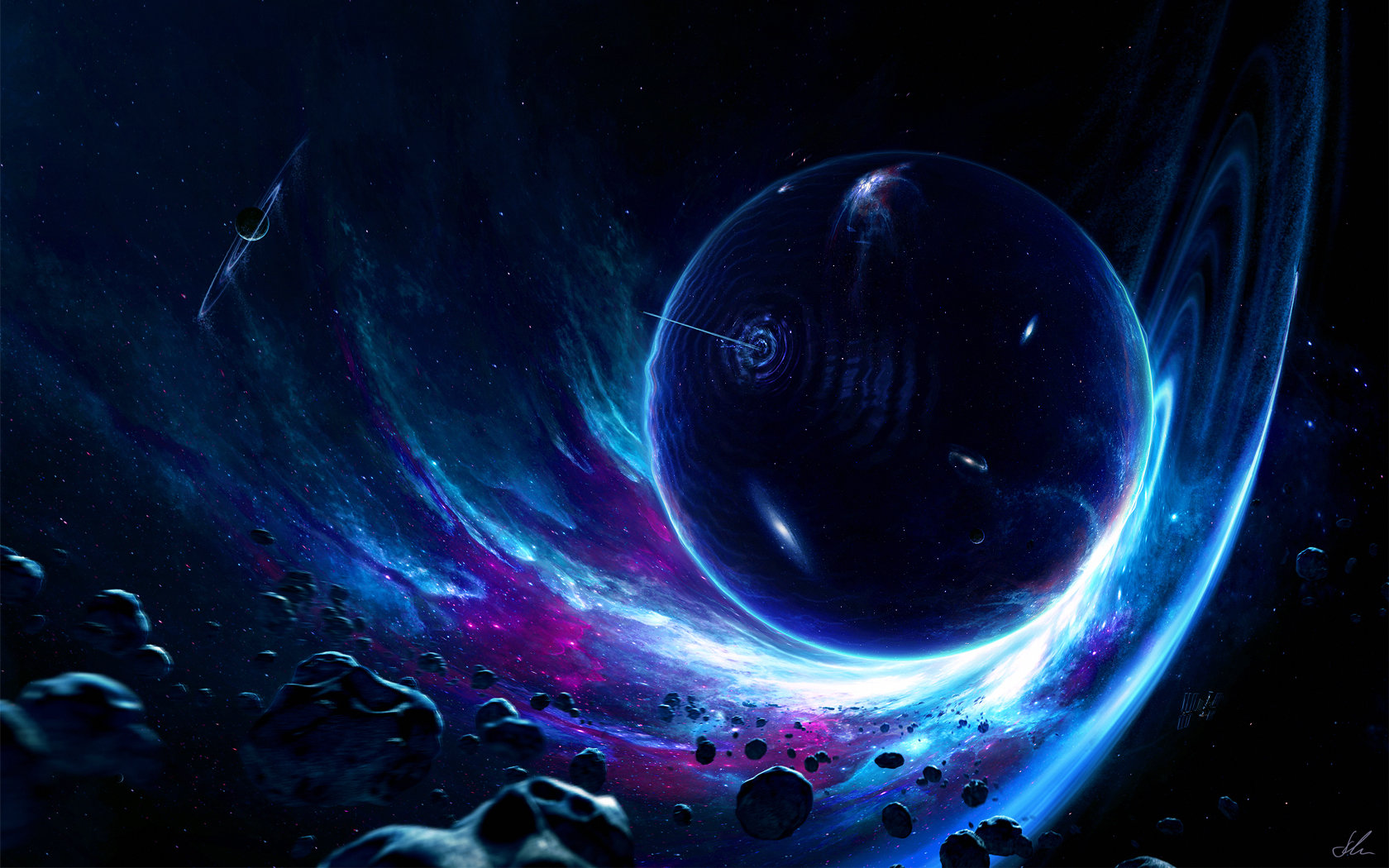
Another cornerstone of quantum mechanics is tunneling. At microscopic scales, particles can penetrate energy barriers that would be insurmountable in classical physics. Electrons tunnel through insulating materials in your electronics every second, yet the principle could, in theory, be scaled up.
If we could engineer macroscopic tunneling—or at least exploit the mathematical principles to manipulate spacetime—interstellar barriers might no longer be absolute. Spacecraft could traverse regions of space by taking “shortcuts” through quantum fluctuations, reducing travel times from millennia to mere decades or even less. While the engineering requirements are astronomical, the underlying physics is sound.
4. Quantum Vacuum and Zero-Point Energy: The Cosmic Fuel
Intergalactic travel isn’t just about distance—it’s about energy. Classical propulsion methods rely on reaction mass, which becomes impractical across star systems. Quantum physics, however, suggests a tantalizing alternative: zero-point energy.
Even the emptiest vacuum is not truly empty. Quantum fluctuations mean that particles are constantly popping in and out of existence, creating a sea of energy that permeates all space. Theoretically, if we could tap into this energy, a spacecraft could propel itself indefinitely, without the need for fuel in the traditional sense. While no one has built a zero-point engine yet, research in quantum field theory and exotic propulsion concepts is beginning to illuminate the possibilities.
5. Wormholes: Bridging Cosmic Chasms
Perhaps the most famous theoretical bridge between quantum physics and interstellar travel is the wormhole. Predicted by solutions to Einstein’s general relativity equations, wormholes are tunnels connecting distant points in spacetime. However, classical wormholes are inherently unstable and collapse before anything can pass through.
Quantum physics offers potential stabilization mechanisms. Negative energy—something allowed in quantum fields—might keep a wormhole open. Entanglement and quantum superposition could play roles in creating or maintaining traversable shortcuts. If such a structure could be engineered, humanity could cross entire galaxies in a single leap, transforming intergalactic travel from fantasy into physics-guided reality.
6. Quantum Computation: Simulating the Cosmos
Designing quantum-based propulsion or navigation systems is not trivial. Enter quantum computers. Unlike classical computers, which process one state at a time, quantum computers exploit superposition and entanglement to process vast arrays of possibilities simultaneously.
For intergalactic travel, quantum computing could simulate complex spacetime geometries, optimize wormhole stability, or model exotic propulsion methods before attempting any real-world application. Essentially, we might need quantum intelligence to control quantum journeys—a feedback loop of theory, simulation, and experimentation that classical computers could never handle efficiently.
7. Challenges and Limitations: Quantum Dreams vs. Cosmic Reality
As exciting as the prospects are, there are substantial hurdles. Macroscopic entanglement is notoriously fragile; any interaction with the environment can destroy delicate quantum states—a phenomenon known as decoherence. Engineering a stable wormhole, manipulating zero-point energy, or safely transmitting humans via quantum states are challenges at the very edge of known physics.

Furthermore, ethical and practical questions arise. Even if we could achieve intergalactic travel, what responsibilities would come with it? How would we prevent catastrophic effects on both the travelers and the cosmos itself? Quantum physics may offer the tools, but wisdom and caution will be essential companions.
8. Inspirations from Nature and Quantum Biology
Interestingly, some of the universe’s quantum tricks are already in play at the biological level. Photosynthesis, bird navigation, and even human consciousness show subtle quantum effects. Learning from these natural systems could guide engineers in creating resilient quantum technologies capable of withstanding the harsh environments of deep space. After all, evolution has had billions of years to solve problems of efficiency and stability—why not take a page from nature’s quantum playbook?
9. Beyond Physics: Philosophy of Cosmic Travel
Quantum intergalactic travel forces us to rethink fundamental philosophical assumptions. If distances can be bypassed, if time can be manipulated, if reality is probabilistic rather than deterministic, what does it mean to journey? Space exploration becomes not just a technological challenge, but an existential question: what is our place in a universe where even the most basic notions of motion and location can be fluid?
Exploring these ideas could be as transformative as the travel itself. Humanity may discover that intergalactic travel is not merely a physical endeavor but a journey of consciousness, perspective, and imagination.
10. The Road Ahead: From Theory to Practice
While the notion of hopping between galaxies might seem like science fiction, the roadmap begins with rigorous experimentation in quantum mechanics. Labs around the world are pushing the boundaries of entanglement, quantum tunneling, and exotic energy manipulation. Future decades may see incremental advances that, step by step, turn today’s speculation into tomorrow’s engineering.
Quantum physics may not offer a simple blueprint for building a starship tomorrow, but it gives humanity the most intriguing set of tools ever imagined. The principles are known, the equations are tested, and the universe itself seems willing to cooperate—if only we can decipher its quantum whispers.
Conclusion: A Quantum Leap Toward the Stars
Intergalactic travel remains the ultimate frontier, but the marriage of quantum mechanics and cosmic ambition makes the dream feel less like fantasy and more like an eventuality. From entanglement to tunneling, zero-point energy to wormholes, the quantum realm offers not only mysteries but tangible pathways to traverse the unimaginable distances between stars.
The journey will be long, the challenges immense, and the risks unprecedented. Yet, the potential rewards—a universe within our reach, exploration at unimaginable scales, and a profound understanding of reality itself—are equally staggering. Quantum physics may not provide a spaceship today, but it might just provide the map, compass, and engine for humanity’s next great adventure.













Discussion about this post