


































Unraveling the Mysteries of Rhinoceros Beetle Flight
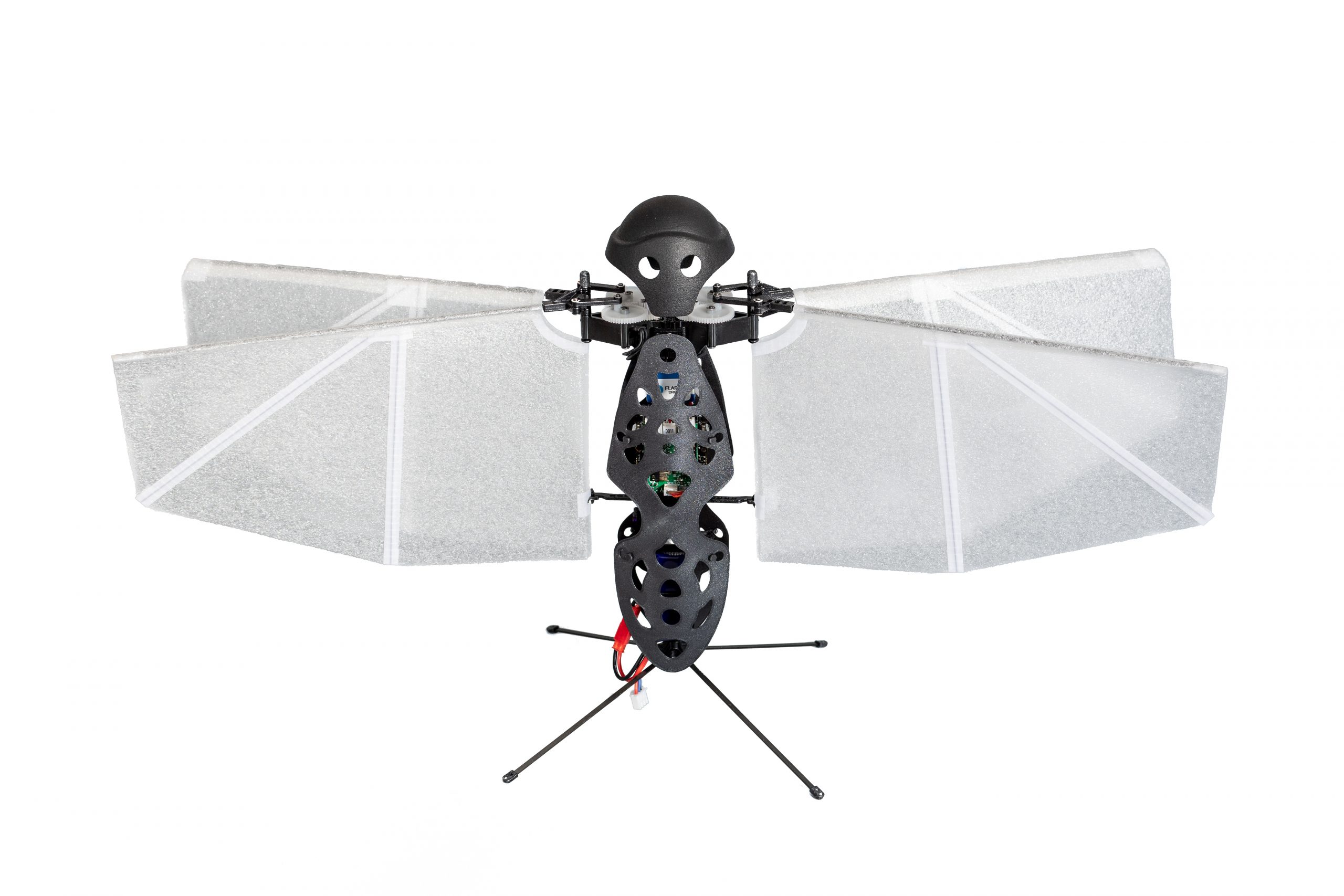
A groundbreaking study published online in the international journal Nature reveals the enigmatic process of wing flapping and tucking in the rhinoceros beetle, inspiring advancements in flapping-wing drone (ornithopter) technology.
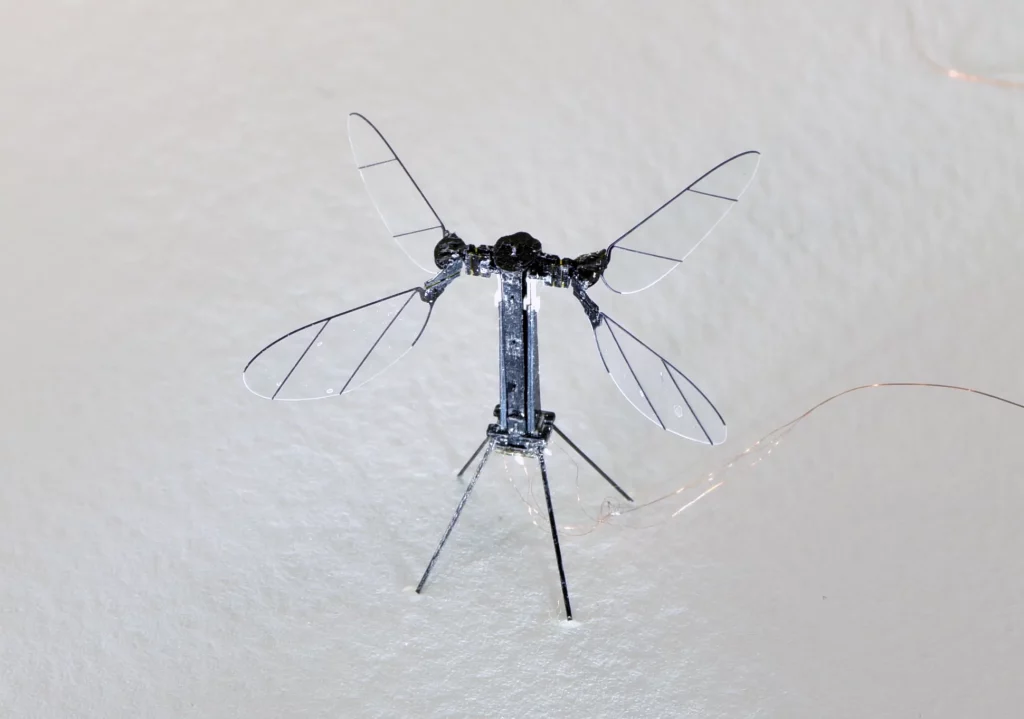
Flapping-wing drones surpass fixed-wing and rotorcraft in several aspects: they boast higher efficiency in flight, better stealth, enhanced maneuverability, and greater adaptability. The wings of such drones flutter up and down, flexibly adapting to the needs of flight as do the wings of birds or insects.
Despite a decade of progress in which scientists have developed a variety of insect-mimicking flapping wing robots, these devices have been unable to retract their wings in the manner of their biological counterparts. Today’s ornithopters employ persistently fully extended wings during operation.
Hoang-Vu Phan from the École Polytechnique Fédérale de Lausanne (EPFL) in Switzerland along with colleagues, investigated the rhinoceros beetle’s wing flapping and folding mechanisms using high-speed cameras.
Employing their latest findings, they have crafted miniaturized ornithopters capable of swiftly closing their wings within 100 milliseconds while permitting wing release at various frequencies within a single flapping cycle.
Hoang-Vu Phan spoke to Pengpai Technology about these diminutive robots’ potential use in spaces inaccessible to humans, such as search-and-rescue operations in collapsed structures. In such environments, after flight, the fragile wings of these robots could fold and safely tuck away for easier navigation and reduced damage risk. They could also aid biologists in studying insect flight mechanics and exploring wild insect behavior in forests—feats unreachable for conventional rotor drones.
Mimicking Nature’s Flight Engineers
Birds and bats, with their well-developed pectoral and flying muscles, manage to stretch their wings for flight and fold them close to the body during rest. While insects share this flapping and tucking capability, the precise mechanisms remained a mystery until now.
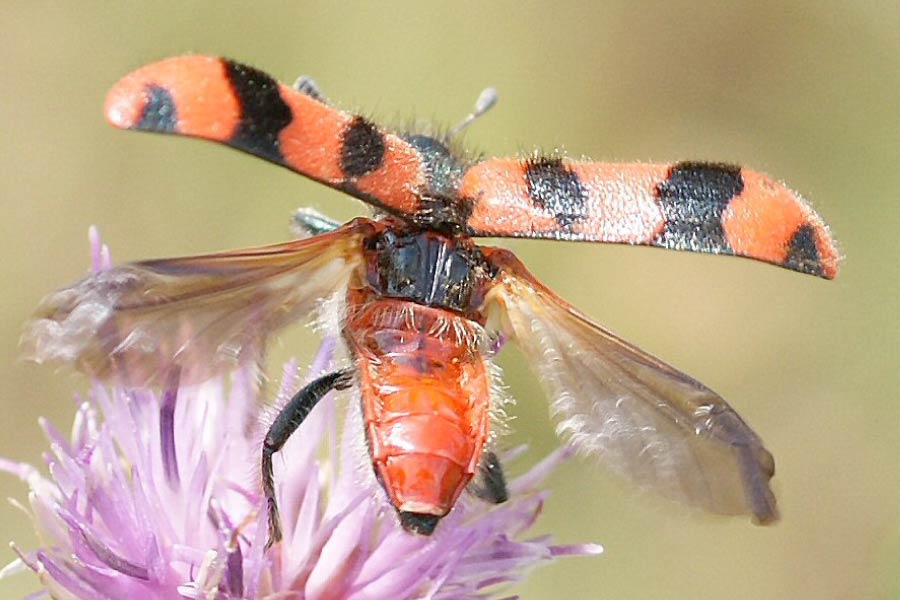
The rhinoceros beetle, colloquially known as the “unicorn beetle,” boasts two sets of wings: a thick forewing (elytron) serving as a shield and a pair of thin, foldable hindwings resembling origami creations.
In flight, the beetle must hoist its elytra before unfurling its comparatively large hindwings, which it vigorously flaps to power flight, enabling maneuvers like take-off and hovering. Upon landing, it manages to neatly fold its hindwings underneath the protective elytra.
Phan and colleagues have discovered that the beetle’s unfolding maneuver progresses in two phases, with the completion of hindwing actions not requiring muscle control.
They have noted that the beetle’s wing release and unfolding is a passive process, as is the folding action. Without the elytra, the hindwing remains raised, suggesting that, during the first phase, the beetle’s hindwings partially spring open like an under-damped spring-mass system when the elytra are opened.
Researchers found that the beetle’s hindwings unfold fully only when they start flapping. This means that, during the second phase, as the beetle flaps its wings, the base of the hindwings lifts and the wingtips spread, readying the beetle for flight.
The beetle’s wing-folding relies on the elytra’s push, using one leading edge to drive the other. To test this, Phan and colleagues removed one of the beetle’s elytra and observed that without it, the beetle could not retract its hindwing.
Previously, the mechanism behind the beetle’s wing elevation to flight position and subsequent re-folding was poorly understood. While some research suggests that thoracic muscles might drive the movements at the base of the beetle’s hindwings, empirical support for this theory was scant. However, this new study demonstrates that the hindwing release and folding are elytra-driven.
Inspired by these observations, Hoang-Vu Phan and his team have engineered a micro-robot that passively unfolds and retracts its wings, mimicking the beetle. The robotic creation has successfully achieved flight stability.
During an interview with Pengpai Technology, Hoang-Vu Phan noted that their robot’s wing “armpits” are equipped with elastic tendons, replacing the beetle’s elytra, facilitating rapid closure of the wings within 100 milliseconds. This innovation not only makes the robot more insect-like but also allows for passive wing deployment during take-off, steady hovering, and prompt wing retraction during landing or collisions mid-flight, all without additional mechanisms.











Discussion about this post